Cash on Delivery in Europe: More Than a Trend, a Culture
· by Lucas Reda · in Cash on Delivery · 11 min read
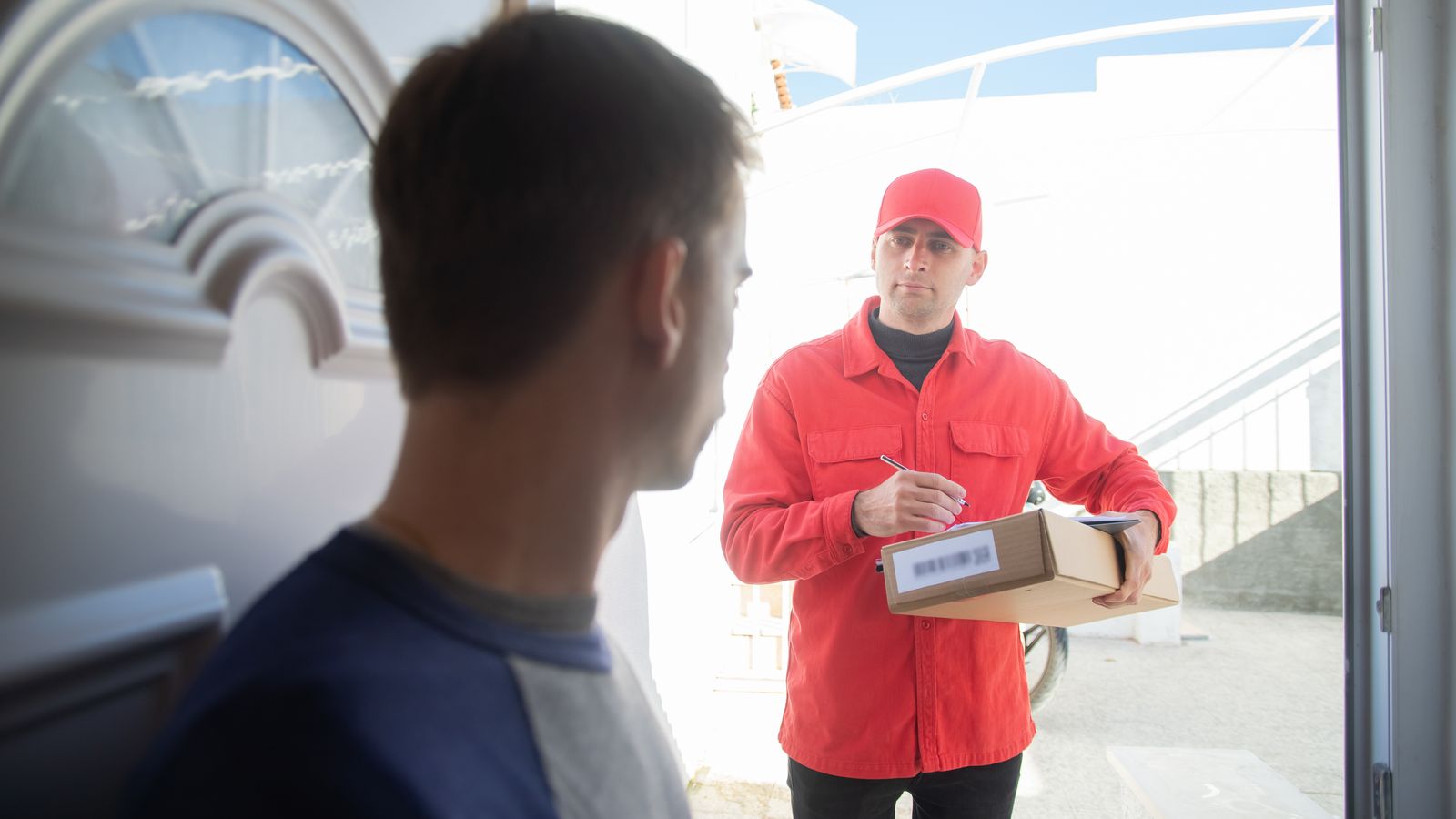
In Romania, between 60% and 65% of online orders are paid on delivery. European cash on delivery is not a backwardness to be outgrown: it is a habit with its own name in every language, and understanding it changes your unit economics.
In Bucharest, someone buys a pair of sneakers at ten at night and never types a card number. Three days later they open the door, look at the box, count out the cash and pay the driver. That is cash on delivery — COD, payment on delivery — and for that person it is not an alternative payment method: it is how you buy.
Operators coming from outside these markets tend to read European cash on delivery as a backwardness that will pass — a stage before cards, instant transfers and wallets. It is a comfortable reading, and a wrong one. Payment on delivery survived the arrival of all of them across much of Central and Southern Europe, and it did not survive out of inertia: it solves a problem no payment technology solves, which is trusting a seller you have never seen.
This article is about why the practice is culture rather than trend, what that changes in your operation, and which single number decides whether it adds up.
What cash on delivery is, in one sentence
Cash on delivery — COD, or payment on delivery — is the arrangement where the customer places the order without paying anything and settles the amount when the product arrives, directly with the courier.
The technical consequence is the whole difference: the money enters through the logistics chain, not through the payment gateway. The local carrier collects from the consumer and remits to the seller later, net of fees. Everything that follows in this article — the higher conversion, the higher cost, the slower cash — comes out of that one sentence.
Every language has its own word for it
The strongest sign that cash on delivery is not a passing fashion is not in any data table. It is in the vocabulary.
- Germany: Nachnahme
- Italy: contrassegno
- Spain: contra reembolso
- Poland: pobranie
- Romania: ramburs
Notice what that means. A new payment method arrives with an English name and keeps it — nobody translated buy now, pay later. A practice that earned a native, short, everyday word in each language did not show up in the last decade: it predates e-commerce, came out of mail-order catalogues and the postal service, and online retail simply inherited a habit that already existed.
You are not entering a market that has not discovered cards yet. You are entering a market that has its own word for the way it has always bought at a distance.
Where it is the majority, and where it barely exists
Here a caution that almost every article on the subject skips: two different metrics circulate as if they were the same thing. One is the share of stores that offer cash on delivery. The other is the share of orders actually paid that way. They are not comparable, and confusing them produces wrong revenue forecasts.
How many stores offer the option
Research by ECDB, published in 2025, on the share of online stores offering COD:
| Country | Stores offering COD |
|---|---|
| Greece | 85.6% |
| Bulgaria | 80.3% |
| Slovakia | 80.1% |
| Serbia | 69.2% |
| Lithuania | 64.9% |
| Poland | 60.7% |
How many orders are actually paid that way
This number is harder to obtain and exists for few markets. In Romania, the national association of online stores (ARMO) estimates that between 60% and 65% of orders are paid on delivery, while PayU GPO data indicates that only 35% of Romanians choose to pay online — two figures that agree with each other, seen from opposite sides. Romanian e-commerce moved EUR 11.5 billion in 2024, equivalent to 3.42% of the country's GDP, according to research compiled by The Paypers.
And the other side of the continent
In the north and west the practice has all but disappeared: in Sweden, Norway and the United Kingdom, fewer than 10% of online stores even offer the option. Europe does not have one payment behaviour — it has at least two, and the border between them is neither the European Union nor the currency.
Treating "Europe" as a single market is the most expensive mistake a cash on delivery operation can make in planning. Greece and Sweden sit in the same economic bloc and on different planets when the subject is paying at the door.
Why culture does not move at the speed of technology
Three forces sustain the practice, and none of them is lack of access to a card.
Trust, not banking access. Consumers in these countries have accounts and cards. What they do not have is willingness to hand money to an unknown store in advance. Cash on delivery removes exactly that risk: if the product never arrives, or arrives wrong, there is no money to claw back — because no money went out. In markets with a history of economic and institutional instability, that distrust is learned, not irrational.
The first purchase. Even where cards dominate total volume, COD tends to survive on the first purchase from a new store and in categories where trust is the obstacle — supplements, cosmetics, electronics. That is why Poland looks contradictory: by transaction volume the market is dominated by BLIK and account-to-account transfers, and still 60.7% of stores keep the pay-at-the-door option. It is not the primary method; it is the method that unlocks the first-time buyer.
The logistics ecosystem. Local carriers in these countries built operations, technology and cash flow around collecting money. The driver is equipped to take payment, reconciliation is routine, and the consumer sees the method as normal precisely because the entire chain treats it as normal. That is the part that most surprises newcomers: it is not a concession the market makes, it is its default infrastructure.
The number that decides whether the operation adds up: refusals
If you keep one number from this article, keep this one.
In Romania, the return rate on purchases paid on delivery is 11%, against 4% to 5% for purchases paid online. Same product, same country, same ad — the only thing that changes is when the money moves. When the customer has spent nothing to buy, they also lose nothing by saying "I don't want it" at the door.
That difference is not an operational detail, it is the entire economics of the method. A refused order consumes outbound shipping, the COD fee, return shipping and warehouse handling, and returns exactly zero revenue. In a thin-margin operation, each percentage point of refusals eats more result than any ad optimisation gives back.
The practical reasoning is simple: cash on delivery has to convert significantly better than prepayment just to break even. If conversion rises a little and refusals rise a lot, the method destroys margin while looking like growth — because order count goes up, and order count is precisely the metric that misleads.
When it pays off — and when it does not
Cash on delivery is not better than prepayment. It is better in some situations and clearly worse in others.
It tends to pay off when:
- The destination country has an established culture of paying on delivery, not merely the option available.
- The product margin absorbs the COD fee and the cost of refusals, not just the fee.
- The offer is impulse-driven, and card friction kills conversion before the purchase happens.
- You are entering a market where you have no brand recognition yet.
It tends not to pay off when:
- The margin is too thin to absorb double-digit refusals.
- The ticket is high, and money sitting on the street becomes cash risk.
- Buyers in that market already pay by card without hesitating.
- You need the money in the bank on the day of the sale.
The fourth item on the second list is the most underestimated. In cash on delivery the money only exists after the customer pays at the door and the carrier remits. The cash cycle is structurally longer than with prepayment, and no negotiation changes that — it is a property of the design, not an inefficiency to fix.
How the money actually moves
- Order created with no payment. The order comes in flagged as COD and goes to the warehouse closest to the destination. Nothing is charged to the customer at this point.
- Delivery and collection. The local carrier delivers and collects the amount at the door, in whatever payment method that country uses — which is not always physical cash, and increasingly includes a card terminal in the driver's hand.
- Reconciliation and payout. The collected amount is reconciled order by order against what the carrier actually remitted, net of operating fees.
Step three is where amateur operations break. Without tying each amount received to the order that generated it, the gap between what was delivered and what was remitted does not show up as a gap: it disappears inside a total that looks plausible. Discovering that three months later, in a spreadsheet, is too late to dispute.
That is why the N1 Cash on Delivery operation treats delivered, refused and returned as distinct statuses rather than variations of "not delivered" — and why the European warehouse network has to take back what was refused, inspect it and return it to stock.
So is cash on delivery dying?
It is shrinking slowly, and that deserves to be said plainly: as digital ecosystems mature, some retailers withdraw the option, because it is operationally more complex and slower on cash.
But "shrinking slowly" is not "ending". The practice has been declared dead with every new wave of payment technology for two decades and remains the majority of orders in entire markets. And there is a useful irony: several of the countries where it is strongest are among the fastest-growing e-commerce markets on the continent. Cash on delivery is not the residue of a backward market — in many cases it is what is making that market grow.
For a seller, the practical conclusion is not to pick a side. It is to recognise that the payment method is a decision per market, made with that market's data, and not a global company policy.
Frequently asked questions
Are cash on delivery, COD and payment on delivery the same thing?
Yes, all three describe the same arrangement. COD is the abbreviation of cash on delivery. Each European country also has its own term — ramburs in Romania, contrassegno in Italy, contra reembolso in Spain.
Does the customer have to pay in physical cash?
Not always. The method was born in cash, but across much of Europe the driver already carries a card terminal, and the customer can pay by card at their own front door. What defines cash on delivery is not the form of payment, it is the moment: on delivery, not at purchase.
How long until the seller gets the money?
Longer than with prepayment, always. The amount only exists after the customer pays and the carrier remits, and the remittance term varies by operator and by country. Planning cash flow on prepayment assumptions is one of the most common mistakes newcomers to COD make.
What is an acceptable refusal rate?
There is no universal number — it depends on country, category, ticket size and traffic quality. What does exist is an order-of-magnitude reference: Romanian data points to 11% returns on cash on delivery against 4% to 5% on online payment. If your refusal rate is far above that, the problem is rarely the method; it is usually the traffic source or the promise the ad made.
Can you run cash on delivery and prepayment at the same time?
Yes, and it is the most common setup. The method is defined per order, so the same operation can sell by card in markets where that works and on delivery in those where demanding prepayment kills conversion.
In which European countries is cash on delivery available?
It depends on the carrier serving each destination — not every country accepts collection on delivery, and availability changes by warehouse and by value band. Confirming destination by destination before advertising is what stops you promising an option on the page that does not exist at checkout.
What to do with this
If you are evaluating entry into a European market with cash on delivery, three questions settle most of the decision:
- In that specific country, is cash on delivery the norm or merely an available option? The answer changes your conversion forecast.
- Does your margin survive a double-digit refusal rate, and not just the COD fee?
- Can your cash flow absorb the gap between the sale and the payout, without depending on the money from that sale?
If all three answers are yes, cash on delivery stops being a cultural obstacle and becomes what it actually is in those markets: the normal way to buy.