How to earn in euros online from anywhere: 6 routes and what each one takes
· by Ariel Patrício · in Cash on Delivery · 19 min read
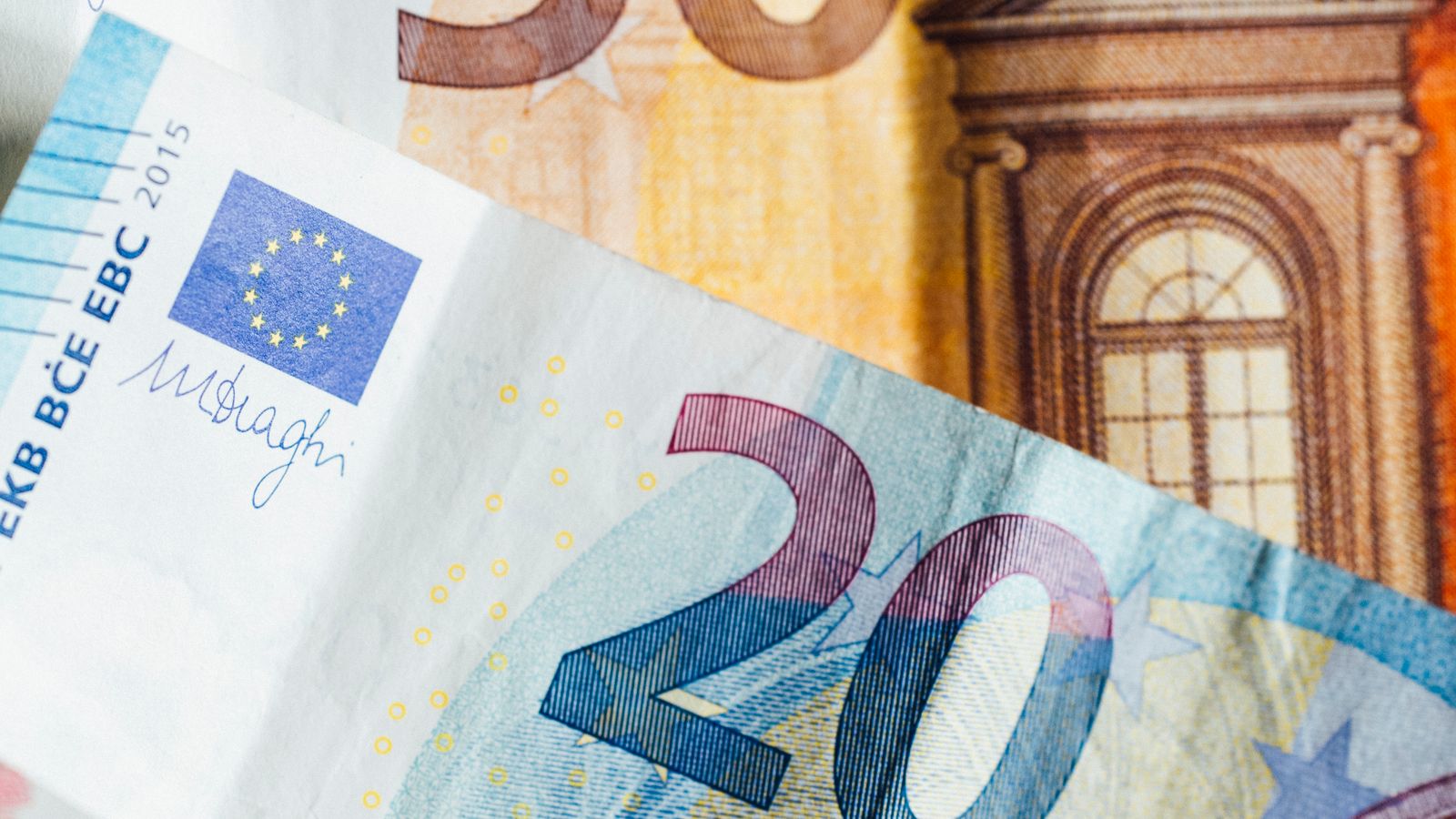
Remote work, freelancing, services, affiliate programs and selling in Europe: the 6 routes to earning in euros without moving, compared by what each one demands. Plus how to receive euros, what to ask about tax and how to spot income promises.
You can earn in euros online from anywhere through six routes: remote work for a European company, international freelancing, selling a service, a European affiliate program, physical-product affiliate offers paid on delivery, and selling in Europe as a merchant. They differ in language, starting capital, time to the first euro and risk. None of them guarantees income.
Updated on November 11, 2026.
Search for "how to earn in euros" and the results fall into three groups: remote job boards, personal finance posts about multi-currency accounts, and ads for courses that promise "euro income" in a few weeks. None of them answers the question that comes first: which route fits what you have today? Fluent English, a degree, a skill clients pay for, money for paid ads, or none of these.
This guide sorts the routes by what each one demands, not by what it promises. For each route: the language you need, the money to start, how long the first euro usually takes, the risk that sinks most beginners and how the money reaches you. Then come the practical parts that rarely sit on the same page: how to receive euros without losing too much on conversion, what to ask your tax adviser and how to tell a real opportunity from an income-promise course. It is written for readers outside the EU, whether you live in India, Nigeria, Pakistan, Latin America or anywhere else.
Disclosure: N1 runs an affiliate system for physical products paid on delivery in Europe, which is one of the six routes in the table. Rules from payment providers and public bodies quoted here come from their official pages, checked on November 11, 2026. Fees change: check the source before you decide.
Can you earn in euros without living in Europe?
Yes, and without a visa: on every route in this guide you work from your own country, and the person paying is in Europe or sells to Europe. The euro is the currency of 21 of the 27 European Union countries since Bulgaria joined the euro area on January 1, 2026, according to the European Central Bank. That is 21 markets paying in the same currency, over the same bank transfer system.
What changes from route to route is who your customer is. In remote work and freelancing, the customer is a company buying your time. In service selling, it is a company buying an outcome. On the two affiliate routes, the buyer is a European consumer, and you earn a commission for bringing that sale. As a merchant, the consumer buys from you, and the whole operation is yours.
That difference drives everything else: how much language you need, how much money you put at risk and how long you wait. One detail people forget: not all of Europe uses the euro. Poland, Romania, Hungary and Czechia, for example, keep their own currencies. If your route involves selling to consumers there, they pay in zloty, leu, forint or koruna, and the conversion happens somewhere along the way.
What are the ways to earn in euros online?
There are six ways to earn in euros online, and the table compares what each one demands from someone living outside the EU. There is no average income column because no reliable public data exists: any "how much you can make" figure would be made up.
| Route | Language needed | Starting capital | Time to the first euro | Main risk | How you get paid |
|---|---|---|---|---|---|
| Remote job at a European company | Fluent English or the company's language, including in interviews | Almost none | Weeks to months of hiring process | Roles that require EU residence, or offers that never close | Salary by international transfer or through a hiring platform |
| International freelancing | English for proposals, calls and delivery | Low: portfolio and equipment | Weeks, after the first reviews | Global price competition and platform fees | Through the platform, then withdrawal to a euro account or local currency |
| Selling a service directly | The client's language | Low | Weeks to months to close the first contract | Late or missing payments, collections in another country | Invoice and transfer to euro account details with an IBAN |
| European affiliate program | The language of the market you target | Low with content, medium with paid ads | Months with content, weeks with paid ads | Small commission per sale, program rules and holding periods | Depends on the program: bank transfer, PayPal or other |
| Physical-product affiliate, paid on delivery | Little: sales page and creatives come ready in the local language | Medium: ad budget | After delivery, payment at the door and the payout set in the offer | Refusal at delivery: a refused order earns no commission | Commission set in euros in each offer; payout under the offer's rule |
| Selling in Europe as a merchant | The country's language on the page and in support | High: stock, shipping, tax and compliance | Months until the operation turns | Unsold stock, VAT, returns and product rules | Payment gateway, marketplace or cash on delivery payout |
Three quick readings of the table:
- The work routes trade language for capital. Remote jobs, freelancing and services need little money but require English or the client's language at meeting level.
- The selling routes trade capital for reach. Affiliates with paid ads and merchants need money for media or stock, but do not depend on you talking to anyone in the customer's language.
- Only one route takes language off your plate without asking for stock: the physical-product affiliate offer that already comes with a sales page and creatives in each country's language.
If that is the route that fits you, you can see the offers before deciding: See the showcase and try Pro free for 15 days.
Remote job at a European company
This is the route that dominates search results, and the most selective one. The company hires you as a contractor or through an international hiring platform, and the process is the same as for someone living in Europe: CV, interviews, technical test. Many "remote" roles require residence or a work permit in the EU, even when the title does not say so. It works best for people who already have a profession with international demand, such as software, design, data, marketing or customer support, and who are comfortable in English meetings.
International freelancing
Freelancing on global platforms is the easiest entry point for anyone with a deliverable skill: video editing, translation, design, programming. The catch is that you compete with the whole world, and at first the competition is on price. The platform takes a fee and decides how you withdraw. The first euro tends to arrive after a few good reviews, not on day one.
Selling a service directly
Here you leave the platform and sell straight to a European business: ad management, creative production, outsourced customer support, content. You gain margin and lose protection. Contracts, collections and late payers are your problem, in another country, under another legal system. To get paid, the client transfers to euro account details, so you need to have them (see the section on receiving euros below).
European affiliate program
European shops, software companies and brands pay commission to whoever brings a sale through their link. With content (a website, YouTube, Instagram), capital is low and the timeline is long, because the audience takes time to grow. With paid ads, the timeline shortens and the risk rises. In many programs the commission is a small percentage of the order value, and each program has its own holding period and payment rule.
Physical-product affiliate, paid on delivery
The European consumer places an order without paying, receives it at home and pays the courier. This is cash on delivery, or COD. You send traffic to the offer's sales page, and the commission exists once the order is delivered and paid. It requires no stock and no store, and the next section explains why it requires less language.
Selling in Europe as a merchant
This route gives you the most control and asks the most of you: product, stock, store, shipping, tax, support and returns. To sell to EU consumers, you deal with each country's VAT and with product safety rules that require an economic operator established in the EU, covered in our post on GPSR and the EU responsible person. If you want to sell without buying stock, there is a middle path, described in how to sell in Europe without inventory.
Which route needs the least language and the least capital?
The route that needs the least language, without asking for stock, is the physical-product affiliate offer that already comes with a sales page and creatives in the country's language. The route that needs the least capital is freelancing, but it demands English.
The reason is simple. On the work routes, your product is the conversation: interviews, proposals, meetings, client emails. Without English or the client's language at a good level, the route closes. As a merchant, you have to write the page, answer customers and handle returns in their language. On a well-built physical-product affiliate offer, the local-language work is already done: the sales page and creatives come ready, and delivery and payment collection at the door are handled by the operation. Your job is traffic, and the ad managers of the big platforms work in many languages.
That does not make language irrelevant. You still need to understand what the ad says, reply to comments with a translator and notice when a creative sounds odd to a Polish or Italian reader. But the barrier drops from "speaking the language" to "working with ready-made material in that language".
Capital, on the other hand, does not disappear. Paid traffic costs money before it turns into commission, and with payment on delivery there is a gap between the order and the payout: the order has to be confirmed, delivered and paid. The mistake we see most often among beginners is scaling ad spend before understanding that gap. Start with a budget you can afford to lose while you learn how the money comes back.
How do you earn in euros as an affiliate?
You earn in euros as an affiliate in two ways: by promoting a European program that pays commission on online sales, or by promoting a physical product sold in Europe with payment on delivery. Both pay per sale, but the moment the sale becomes real is different.
| European online-sale program | Physical product paid on delivery | |
|---|---|---|
| When the customer pays | At checkout, by card or digital wallet | At the door, on delivery |
| When the commission exists | Payment approved, subject to refunds | Order delivered and paid |
| What cancels the commission | Refunds and chargebacks | Refusal at delivery |
| Who builds the page and creatives | Usually you | In a ready offer, the operation |
| Most common traffic | Content, SEO and paid search | Facebook and TikTok with a page in the local language |
With prepayment, an approved checkout is already a sale. With cash on delivery affiliate offers in Europe, there are three steps between the order and the commission: order confirmation, delivery with payment at the door, and reconciliation of the amount collected. That is why COD affiliates watch conversion rate less and the COD refusal rate more: many orders with many refusals pay less than fewer orders that get delivered. The path of the money, from the customer's door to the payout, is explained in COD reconciliation and payout.
In return, this model reaches buyers that cards do not. In several countries in Eastern and South-Eastern Europe, paying on delivery is still a common way to shop online, as our analysis of COD by country in Europe shows. The customer buys from a brand they do not know because they only pay if the product arrives.
To choose a product, our guide to physical product affiliate programs shows how to assess a physical offer: approval, delivery, refusal, order value and ad rules. If you are still deciding between being an affiliate and running your own store, affiliate marketing vs dropshipping puts the two models side by side.
How N1 Affiliates Pro works
N1 Affiliates Pro is the subscription that gives you access to affiliation with exclusive products that already operate from our warehouses in Europe. N1 delivers and collects payment at the door, and the end customer pays in euros or in the local currency. Each offer's commission is set in euros, even when the customer pays in zloty or lei, and it counts per delivered and paid order. A refused order earns no commission, and payouts follow the rule recorded in each offer.
- Without a subscription, the showcase is visible, including which product sells most, shown in relative terms. You can look before you decide.
- Subscribers get the link, pixel, creatives and sales page ready in the country's language.
- Each offer's conditions (commission in euros per delivery, payout rule and payment method) are shown in the showcase, offer by offer.
- The first subscription comes with a 15-day free trial.
N1 runs cash on delivery in 16 markets: 12 in Europe and 4 in the Gulf. See the showcase and try Pro free for 15 days.
How do you receive euros from outside Europe?
To receive euros from outside Europe, you need either euro account details with an IBAN that European payers can send to, or a payment platform that accepts European transfers and lets you withdraw to your local bank. Wise and Payoneer are two common options where they are available, and the rules depend on where you live.
| Option | What the official page says | What to check first |
|---|---|---|
| Wise | EUR account details include an IBAN. Receiving euro transfers from within the euro area is free; receiving by Swift costs 2.39 EUR, plus possible correspondent bank fees. Wise keeps a public list of the countries where residents can hold money | Whether your country is on that list and whether EUR details show up for your registered address |
| Payoneer | Receiving accounts give local account details in 13 currencies, including the euro. Receiving in a currency that is not your local one costs 1% (minimum 1 USD), and Payoneer states that fees vary by country and currency | The exact fee shown in your account and the cost of withdrawing to your local bank |
| PayPal | Each country has its own fee page for receiving commercial payments and converting currency | The international receiving fee, conversion fee and withdrawal fee on your country's page |
Sources for the table: Wise, receiving with EUR account details, Wise, where you need to live to hold money, Payoneer, receiving accounts and Payoneer, pricing.
Two points apply whatever you choose:
- A euro balance is not money in your local bank. While the balance stays in euros, nothing has been converted. When you convert to your currency, that transaction's rate and fees apply. Compare the final amount you receive, not just the advertised rate.
- Before sharing your details, ask how the payer pays. A company in the euro area usually pays by euro bank transfer inside Europe. A freelance platform may have its own withdrawal method. An affiliate program sets the payment method in its terms. Pick the account to match the payer, not the other way round.
How much is 1,000 euros in your currency?
It depends on the day's rate, so there is no point memorising a number. The math is: 1,000 € × the day's euro rate for your currency = gross amount, before fees. The ECB publishes daily euro reference rates for a set of major currencies; for others, check your central bank or your bank. What lands in your account is lower, because the intermediary charges for conversion and its own fee.
Do you pay tax on income earned in euros?
As a general rule, income you receive from abroad is taxable in the country where you are resident, and each country has its own rules on how to report it, when to pay and whether to invoice as an individual or a company. This guide does not interpret any country's tax law. Your starting point is your national tax authority and a local accountant.
Three questions to take to an accountant before your first payment:
- How do I report income received in euros? Ask which exchange rate is used to convert it to your currency, and as of which date.
- Should I get paid as an individual or as a company? It depends on volume and on the route. A remote salary, an invoiced service and an affiliate commission can be treated differently.
- What about money I keep in euros outside my country? Some countries treat a foreign account balance, and the interest it earns, differently from the income itself.
Keep proof of every payment, with the date and the amount in euros. It is the first thing any accountant will ask for.
How do you spot scams and "euro income" promises?
The clearest sign of a scam is a promise of guaranteed income. The US Federal Trade Commission lists the patterns of fraudulent business offers and coaching programs, and they show up in "earn in euros" courses sold worldwide:
- Guaranteed income or a "proven system". None of the six routes in this guide guarantees income. Whoever promises a monthly figure is selling the course, not the result.
- Pressure. "Last spots", "price goes up tonight". The pressure is there so you pay before you research.
- Vague details. If they cannot explain what you will do, for whom and how the money reaches you, there is no method.
- Costs that keep growing. The cheap course leads to expensive coaching, which leads to a "VIP group". If every step asks for more money to make the last one work, stop.
- Testimonials without proof. A dashboard screenshot or a travel video does not show how much was spent on ads or how much came back as refunds or refusals.
Two more signs that are common on social media: the promise of earning in euros "with zero investment" using paid ads (paid ads are an investment by definition), and any offer that asks you to pay a fee to "release" your commission or withdrawal. A serious platform deducts its fee from the amount; it does not charge you to release your own money.
A real opportunity usually looks like the opposite: written rules on when a commission exists, when it is paid and what cancels it; a dashboard with orders, deliveries and refusals; and no income promises.
Which route should you start with?
Answer in this order:
- Do you speak English or the client's language at meeting level? If yes, remote work, freelancing and services are open to you. If not, look at the selling routes first.
- How much can you afford to lose while you learn? With no capital, freelancing and services. With some money for ads, affiliate offers. With money for stock and operations, merchant.
- Do you already know how to buy traffic? If yes, physical-product affiliate offers use that skill without requiring a store, stock or the language. If not, start with a small budget and learn the cycle before scaling.
- How long can you wait for the first euro? Remote hiring can take months. With payment on delivery, the money arrives after delivery and payout. Build that gap into your plan.
- Do you know how you will get paid and report it? Open the account and talk to an accountant before the first payment.
Frequently asked questions
How to earn in euros from India?
Through any of the six routes in this guide, working from India. For receiving, check which of Wise, Payoneer or PayPal serves Indian residents for euro payments and what each charges; Wise's list of countries where residents can hold money includes India with a specific note, so read it before signing up. Income from abroad is generally taxable where you live, so confirm the treatment with a local accountant.
How to earn in euros from Nigeria?
The routes are the same. What changes is how you receive: check which providers serve Nigerian residents for euro payments, and compare the total cost of receiving and converting. Freelancing and service selling need English, which is an official language in Nigeria, while physical-product affiliate offers need ad budget more than language.
How to earn in euros from Pakistan?
Work for clients, or sell to consumers, in Europe from Pakistan through any of the six routes. Before your first payment, confirm which euro-receiving options are available to Pakistani residents and what each one costs, and ask a local accountant how foreign income is reported.
Do I need to live in Europe to earn in euros?
No. Every route in this guide works from outside Europe. The exception is remote jobs that require EU residence or a work permit: read the whole listing before you apply.
Can I earn in euros without speaking English?
Yes, on the routes where the local language is already handled. With a ready physical-product affiliate offer, the sales page and creatives come in the country's language, and your job is traffic. Remote jobs, freelancing and service selling almost always require English or the client's language.
What is the easiest way to earn in euros online?
There is no easy route, only routes that fit different starting points. Freelancing needs the least money but requires English. Physical-product affiliate offers need the least language without stock, but require an ad budget and patience for the delivery and payout cycle.
Next step
If the route that fits you is physical-product affiliate offers in Europe, look at the offers before deciding anything: the showcase shows which products sell most, even without a subscription. See the showcase and try Pro free for 15 days. If you have questions about an offer or the model, message us on WhatsApp.
Sources
- European Central Bank: Bulgaria introduces the euro (January 1, 2026)
- European Central Bank: The euro and the countries that use it
- European Central Bank: Euro foreign exchange reference rates
- Wise: How do I receive money with my EUR account details?
- Wise: Where do I need to live to hold money with Wise?
- Payoneer: Receiving accounts
- Payoneer: Pricing
- FTC: When a Business Offer or Coaching Program Is a Scam