How to sell in Europe without inventory in 2026: 4 models compared
· by Lucas Reda · in Cash on Delivery · 20 min read
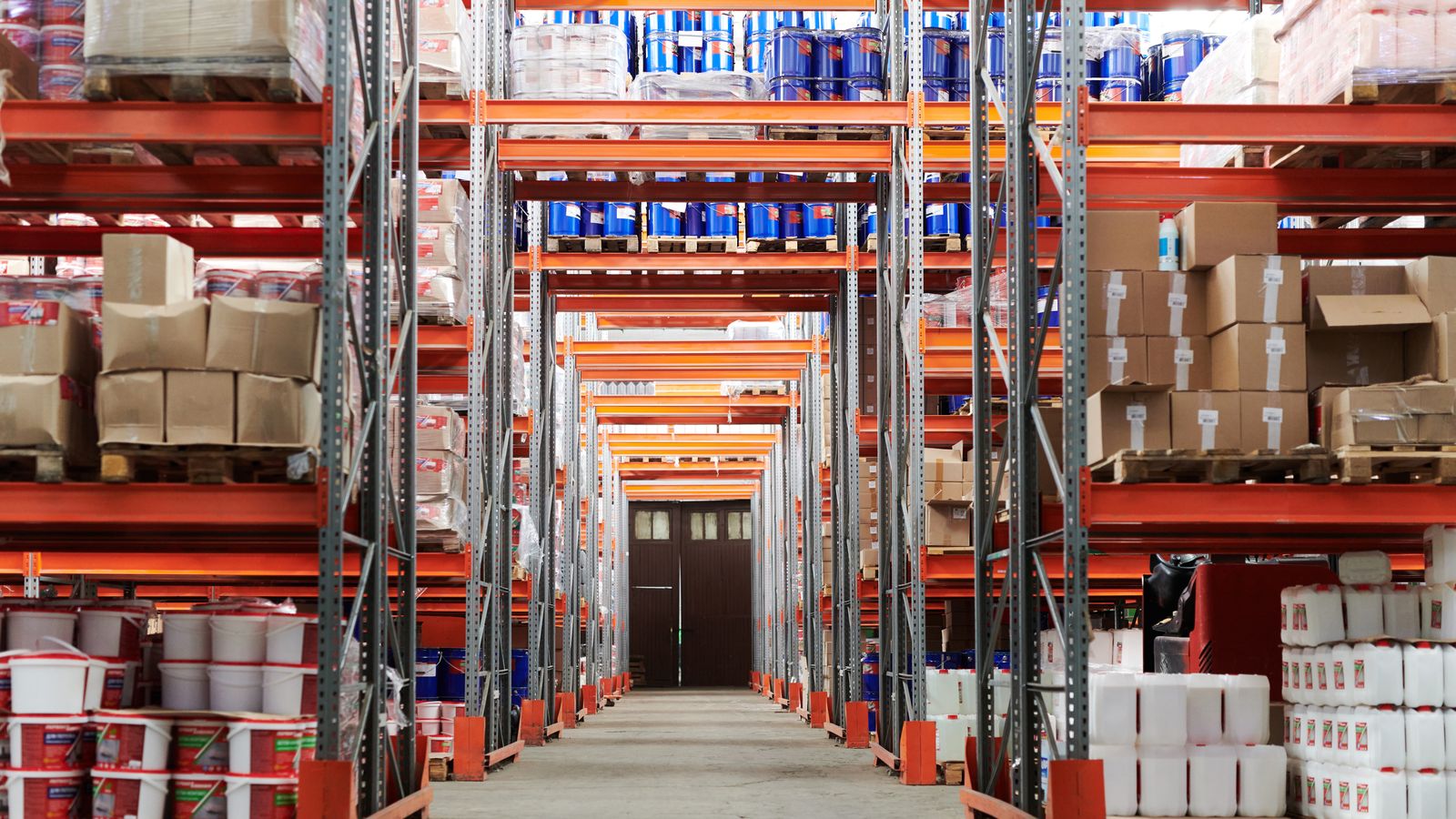
"No inventory" almost always means no inventory of your own. Compare the 4 ways a non-EU seller can sell physical products in Europe without buying stock: who sells, who pays tax, delivery time, RTO and capital.
You can sell in Europe without owning inventory, but not without inventory existing somewhere. Since 1 July 2026, every parcel of up to 150 euros shipped from outside the EU pays VAT from the first euro plus a 3 euro customs duty per item. The models that work keep the product in a European warehouse owned by someone else: a supplier, a brand or a platform.
Updated on November 3, 2026.
Search "sell in Europe without inventory" and you get two kinds of results: generic dropshipping explainers and course pages promising 40% to 60% margins on a small budget. Very few of them mention VAT, the new 3 euro duty, the GPSR, the 14-day withdrawal right or the customer who refuses a cash on delivery (COD) parcel at the door. Those rules are what decide whether a non-EU seller makes money.
This post does not repeat our overview of cash on delivery in Europe. It focuses on one modifier, "without inventory": which models really let you skip buying stock, who carries the risk in each, how much money you need, and a 30-day plan to start on the lowest-risk path.
What does "without inventory" mean in Europe in 2026?
"Without inventory" means you do not buy or hold the product. It does not mean the product can be nowhere. Someone has to own the stock, and the real question is where it sits and who answers for it.
Until 2021, a non-EU seller could ship cheap goods into Europe with little friction. That ended in three steps:
- VAT from the first euro. Since 1 July 2021 there is no VAT exemption for imports of up to 22 euros, as the European Commission records on its VAT One Stop Shop portal. For distance sales of up to 150 euros, the seller can charge VAT at checkout through the Import One Stop Shop (IOSS). A seller based outside the EU normally has to appoint an EU-established intermediary to use it.
- A 3 euro customs duty per item. Since 1 July 2026, parcels of up to 150 euros sold at a distance and shipped from outside the EU pay a flat 3 euro duty per item, declared and paid by the seller or importer, according to the European Commission. An "item" is each tariff classification in the parcel, not each unit: five identical T-shirts cost 3 euros, three T-shirts and a watch cost 6. The DG TAXUD guidance names Council Regulation (EU) 2026/382 as the legal basis and 1 July 2028 as the end date of this temporary measure. Our post on the EU de minimis removal and the 3 euro duty has the details.
- A 2 euro handling fee per item, in force since 1 November 2026. Commission Delegated Regulation (EU) 2026/2152 of 21 September 2026, published in the Official Journal on 22 October, sets the Union handling fee at 2 euros per item (Art. 1) and applies from 1 November 2026 (Art. 2). It covers distance sales of imported goods regardless of value, including above 150 euros, and comes on top of the 3 euro flat duty on consignments of up to 150 euros. The Commission's EU customs reform page summarizes both measures. Put both amounts in the spreadsheet for every order that crosses the border on its own.
Two more rules apply wherever the product ships from. Consumers have 14 days to withdraw from an online purchase without giving a reason under Directive 2011/83/EU, and the Your Europe portal explains how that works. And Regulation (EU) 2023/988, the General Product Safety Regulation (GPSR), applicable since 13 December 2024, requires an economic operator established in the EU for each product in scope (Article 16) and requires distance-sale listings to show manufacturer, responsible person and warnings (Article 19). Our guide to the GPSR and the EU responsible person turns that into a checklist.
Now add cash on delivery, the payment method that wins the first purchase in many Eastern and Southern European countries. With COD the customer pays only when the parcel arrives. Every day between the click and the door is a day to cool off, find it cheaper or forget. A parcel that takes weeks and arrives with tax to pay is a return to origin (RTO) waiting to happen.
The practical conclusion: in Europe in 2026, "without inventory" works when the inventory belongs to someone else and sits close to the customer.
What are the 4 ways to sell without your own inventory?
The four models without your own stock are: dropshipping from China, Latin America or the US; dropshipping through a supplier with EU stock; COD affiliate marketing; and selling from the catalog of a COD platform with local stock. They look the same in an ad. At the customer's door they are different businesses.
1. Cross-border dropshipping from outside the EU
You open a store, run ads and pass each order to a supplier outside the EU that ships parcel by parcel. This also covers sellers in Brazil, Mexico or the US shipping by national post: the customs rule is the same for any parcel coming from outside the EU.
You are the seller towards the customer and towards the tax authority. VAT is yours (through IOSS or collected from the customer on delivery), the 3 euro duty per item is yours, and so is the duty to show in the listing who the GPSR economic operator is. If nobody in the chain is established in the EU, the product simply has no such operator.
It needs the least capital to start and it is the worst match for COD. Our post on COD dropshipping in Europe explains why in detail.
2. Dropshipping through a supplier with EU stock
The supplier keeps the product in a warehouse inside the EU and ships on your behalf. Delivery drops to days. This is what many people mean by "European dropshipping" today.
You are still the seller towards the consumer. The tax side is more complex than it looks: once goods ship from inside the EU, VAT follows the rules for domestic sales or intra-EU distance sales, and a non-EU seller may need a VAT registration in the country the goods ship from, or the Union OSS. Validate your case with an accountant who knows EU VAT.
Ask the supplier in writing: who is the GPSR economic operator for the product, where do 14-day returns go, and do they support cash on delivery. Many dropshipping suppliers only work with prepaid orders.
3. COD affiliate
You have no store, no product and no stock. You pick an offer from a brand that already operates with local stock, get a tracking link and send traffic. The brand is the seller towards the customer and the tax authority. The operation delivers and collects at the door. You earn a commission per delivered and paid order, not per click or per order created.
It is the model with the least regulatory responsibility and the least capital locked up. The trade-off: the brand is not yours, and you do not control price, product or how long the offer stays live. The full mechanism of commission, confirmation and payout is in our guide to the cash on delivery affiliate model in Europe.
4. Catalog of a COD platform with local stock
A middle ground between affiliate and own brand. The platform keeps a catalog of products already sitting in its warehouses. You link a product to your operation, sell it in your store, set the consumer price and pay product and fulfillment cost per order. You never buy a batch. In our help center, browsing the catalog and requesting a product link show how that works in practice.
Here you are the seller towards the consumer again: the store and the price are yours, and your listing must carry the information GPSR Article 19 requires. The product's economic operator is whoever placed it on the EU market, not you and not necessarily the platform. Ask who it is before you advertise. Who pays return freight on a refusal, and when the item goes back into stock, varies by contract. Read it before you sign.
How do the 4 models compare side by side?
The difference between the models comes down to three questions: where the stock sits, who is the seller towards the consumer and the tax authority, and how much money is locked up while an order is not yet cash. The table sums it up.
| Criterion | 1. Cross-border dropshipping | 2. Supplier with EU stock | 3. COD affiliate | 4. COD catalog with local stock |
|---|---|---|---|---|
| Who holds the stock | Supplier outside the EU | Supplier, in an EU warehouse | The brand, inside the COD operation | Platform or product owner, in a local warehouse |
| Who sells to the consumer | You | You | The brand | You |
| Who handles VAT and customs | You: VAT from euro one, 3 euros per item, IOSS with an EU intermediary | You: VAT based on where in the EU goods ship from | The brand | You for the sale VAT; the batch import belongs to whoever brought the product in |
| GPSR economic operator | Often missing | Must be named by the supplier | The brand's | Whoever placed the product on the market; never assume |
| Delivery time | Weeks | Days | Days | Days |
| Supports cash on delivery | In practice, no | Some suppliers | Yes, by design | Yes, by design |
| RTO risk | High: long transit and tax at the door | Medium: depends on real delivery time and COD | Your risk is commission that never comes | Yours: a refused order costs freight with no revenue |
| Where refusals and returns go | Back outside the EU, or written off | Supplier warehouse, if the contract says so | The brand's stock | Local stock, per the contract |
| Capital locked up | Paying the supplier before the customer pays you | Paying the supplier before the customer pays you | Ad spend until the commission clears | Ad spend plus per-order cost until payout |
| What usually goes wrong | Delays, surprise tax, refusals, product with no EU operator | Stock-outs without notice, returns with nowhere to go | Picking a weak offer and overpromising in ads | Mispricing and refusals left out of the math |
| Who it suits | Prepaid only, light products, no COD | Sellers who want a store brand with EU delivery times | Media buyers with no product | Sellers who want their own store without buying stock |
Look at the row "Who sells to the consumer". In models 1, 2 and 4 you are the store: the withdrawal right, GPSR info in the listing and sale VAT are yours. Only in model 3 do those obligations sit with someone else. That is why the COD affiliate model is the lowest-risk starting point for a non-EU seller.
Does dropshipping in Europe still work in 2026?
It works with prepayment, light products, a ticket that can absorb 3 euros per item and a customer willing to wait. With cash on delivery and shipping from outside the EU, the numbers rarely close.
Tax is not the only reason. Eurostat shows that in 2025, 78% of EU internet users bought online, and the problem they reported most was delivery slower than promised, cited by 20% of buyers. European shoppers compare your delivery time with local stores. With card payment, a delay becomes a complaint. With COD, it becomes an RTO.
The mistake we see most often in new sellers is treating "dropshipping" and "without inventory" as the same thing. When an order ships from a European warehouse, whether the supplier's, the brand's or the platform's, delivery takes days and a refused parcel goes back on a shelf. When it ships from Asia or Latin America, the return freight rarely pays for itself. The full order-to-payout flow is in how dropshipping with COD works.
How much money do you need to start selling without inventory?
There is no single number. Starting capital is the sum of ad testing, tools, localized creatives and the working capital that covers the gap between paying for ads and getting the money back. Anyone quoting a fixed figure is selling something else.
The components, usually from biggest to smallest:
- Ad testing budget. The biggest line. Rule of thumb: you need enough delivered orders to read a result, not clicks. If your acceptable CPA is X per order created and you want at least 30 to 50 orders per winning creative, your test budget is X times that number, multiplied by the creatives you plan to test. Use your own CPA, not a screenshot from a course.
- COD working capital. With COD, money comes back after delivery and reconciliation. Ads are paid today. Budget at least one full delivery and reconciliation cycle. Even with payout on D+2, as at N1, the cycle starts at the click, not at delivery.
- Per-order cost (models 2 and 4). When you are the store, you pay product and fulfillment per order before the customer pays at the door. That multiplies the working capital above.
- Creatives and landing page in the local language. Raw machine translation raises refusals: the customer confirms something they did not fully understand.
- Tools. Store or landing page, domain, tracking. An affiliate often only needs the offer page.
- Accountant and tax setup. At home, to declare income from abroad. In Europe, if you are the store and have VAT obligations.
- A buffer for mistakes. Rejected creatives, a blocked ad account, a country that did not respond. It happens to everyone in the first months.
We leave out amounts on purpose. Ad costs in Poland are not the same as in Italy, and your CPA depends on the product and your skill. To run the math with your own numbers, follow how to calculate COD margin.
The 40% to 60% margin: where does that number come from?
The 40% to 60% margin you see on course pages is the gap between the product's purchase price and its selling price. It is not profit. It ignores VAT, freight, refusals, returns, ad spend and customs duty.
Here is a fully hypothetical example with round numbers, for a store selling from local stock with cash on delivery:
- Consumer price: 45 euros including VAT. With a hypothetical 23% VAT rate, 36.60 euros of net revenue remain per delivered order.
- Product cost: 18 euros. The "course margin" would be (45 − 18) ÷ 45 = 60%.
- Out of 100 orders created, 85 pass confirmation and ship, 64 are delivered and paid, 21 are refused.
- Ad spend: 5 euros per order created.
- Outbound freight with collection: 6 euros per shipped order. Return freight: 3 euros per refusal.
| Line | Calculation | Amount |
|---|---|---|
| Revenue net of VAT | 64 × 36.60 euros | 2,342 euros |
| Product sold | 64 × 18 euros | −1,152 euros |
| Outbound freight | 85 × 6 euros | −510 euros |
| Return freight | 21 × 3 euros | −63 euros |
| Ad spend | 100 × 5 euros | −500 euros |
| Result | 117 euros |
The "60% margin" became 5% of revenue. And that is before 14-day returns, platform fees or items damaged on the way back.
Now change only the product cost to 9 euros. The result jumps to 693 euros, close to 30% of revenue. The real levers are not the margin on the course slide. They are three numbers: landed product cost, delivery rate and CPA per delivered order. Our guide to the COD refusal rate shows how to measure and lower RTO.
In model 1 the math gets worse: add 3 euros per item, import VAT and refusals that never return to stock. In model 3 the math is different: commission per delivered order minus CPA per delivered order. If 64% of orders created end up delivered and you pay 5 euros per order created, each delivery cost 7.81 euros in ads. The commission has to clear that with room to spare.
Which model should you start with?
Pick based on what you already have, not on what a course ad promises:
- You have traffic skills but no product: COD affiliate. It is the only model where you are not the store.
- You want your own store brand without buying stock: a COD catalog with local stock. You set the price and answer for the store.
- You already have a supplier with EU stock and sell prepaid: EU-stock dropshipping, with VAT, GPSR and returns settled in writing.
- You want to ship from China or Latin America: use prepayment and IOSS, and price in the 3 euros. Do not switch on COD.
Once a product is validated, the next step is your own brand with local stock, which is no longer "without inventory". Before choosing a product, check what Europeans actually buy in our post on the best-selling products in Europe.
How do you start as a COD affiliate in 30 days?
In 30 days you can pick an offer, run a controlled test and read one full cycle of order, delivery and commission. You cannot scale in that time. This is the plan we would follow.
Days 1 to 7: offer, country and accounts
- Pick one country and one offer. Not three. Live offers and their countries are in the product catalog.
- Read the offer's rules: the event that triggers commission, how returns are handled, when the commission clears.
- Work out your maximum CPA per order created: commission times expected delivery rate, with margin for error. Without your own data, start conservative.
- Set up ad accounts, tracking and domain. Check that the ad platform accepts the product category in that country.
- Check currency and language. In Hungary the customer pays in forint (HUF), so a euro price in the ad causes friction at the door. The COD Europe map 2026 lists currency and COD habits by country.
Days 8 to 14: creatives and a small test
- Produce 3 to 5 creatives in the local language, with the price in local currency and the total due on delivery.
- Promise only what the product delivers. Overpromising becomes an RTO, and an RTO pays no commission.
- Disclose the ad. In the EU, undisclosed affiliate marketing can be an unfair commercial practice. The Commission sums up the rules in its Influencer Legal Hub.
- Launch with a small, equal daily budget per creative.
Days 15 to 21: read the funnel, not the clicks
- Track per creative: orders created, confirmed, shipped, delivered and refused.
- Kill the creative that drives many orders and few deliveries. It is buying curiosity, not intent.
- Compare CPA per delivered order with the commission. That is the only number that pays the bills.
Days 22 to 30: first closed cycle and a decision
- Check the first cleared commission against delivered orders, and learn the schedule in COD reconciliation and payout.
- Decide: scale the winning creative, switch offer or switch country. Do not change all three at once.
- Talk to an accountant in your home country about declaring commission received from abroad.
If your traffic is short-form video, our post on TikTok Shop in Europe shows which countries the platform's shop has reached and why it does not replace COD in Eastern Europe.
What this means if you sell with cash on delivery and local stock
For COD sellers the 2026 rule is simple: the product has to be in Europe before the click. The 3 euro duty, the 2 euro handling fee in force since November and VAT from the first euro hit the parcel that crosses the border alone, not the order that ships from a European warehouse.
That is the N1 model: stock in our warehouses in Europe and the Gulf, cash on delivery in 16 markets and payout on D+2. In Europe that means 12 countries: Poland, Spain, Portugal, Romania, Hungary, Bulgaria, Croatia, Greece, Germany, Italy, Slovakia and the Czech Republic. In the Gulf, Saudi Arabia, the United Arab Emirates, Kuwait and Qatar. Affiliates send traffic to products already there through the affiliate system. Brands that want their own label ship a batch to our Europe structure.
What N1 does not do: it is not the GPSR economic operator for a seller's product, and it does not make refusals disappear. Every COD market has refusals, and acceptance data by country is in cash on delivery by country in Europe. What local stock does is shorten delivery and send a refused parcel back to a shelf instead of leaving it stranded across an ocean.
Frequently asked questions
Can you sell in Europe without inventory?
Yes, without inventory of your own. The product still has to be somewhere, and in 2026 it sells best from a European warehouse owned by a supplier, a brand or a platform. The lowest-risk way to start is as a cash on delivery affiliate.
How do I sell physical products in Europe without stock?
Choose one of four models: cross-border dropshipping, a supplier with EU stock, a COD affiliate offer or a COD platform catalog with local stock. Only the affiliate model keeps you out of the seller role, so start there if you have traffic and no product.
Does dropshipping still work in Europe?
It works best with an EU-stock supplier and prepayment. Shipping from outside the EU, each parcel pays VAT from the first euro and 3 euros per item since July 2026, and a delivery time of weeks does not fit cash on delivery.
How much money do I need to start selling in Europe without inventory?
It depends on your CPA, the country and the model. Add an ad testing budget, working capital for the COD cycle, localized creatives, tools, an accountant and a buffer for mistakes. Model it with your own numbers before spending on ads.
Do I need an EU company to sell without inventory?
As an affiliate, usually not: the brand is the seller. If you are the store, your VAT obligations depend on where goods ship from and where they go. Either way, check with an accountant in your home country and, where needed, an EU VAT specialist.
Who pays the 3 euro EU customs duty?
The seller or importer declares and pays it, according to the European Commission. It applies to parcels of up to 150 euros sold at a distance and shipped from outside the EU. An order shipped from a warehouse inside the EU is not an imported parcel and does not pay those 3 euros at delivery.
Start on the lowest-risk path
If you have traffic and want to sell in Europe without buying stock, start with the live offers in the catalog and read the rules of each one. For questions first, talk to a specialist or request a proposal on the affiliate system page.
Sources
- Ensuring fairness and safety: 3 EUR customs duty for low-value parcels, European Commission, accessed 2026-10-08.
- Guidance and legal text on temporary flat fee on low-value imports, European Commission (DG TAXUD), accessed 2026-10-08.
- EU Customs Reform, European Commission (DG TAXUD), accessed 2026-11-03.
- Commission Delegated Regulation (EU) 2026/2152, Union handling fee, EUR-Lex, OJ L of 22/10/2026.
- VAT One Stop Shop, European Commission, accessed 2026-10-08.
- Regulation (EU) 2023/988 on general product safety, EUR-Lex, accessed 2026-10-08.
- Directive 2011/83/EU on consumer rights, EUR-Lex, accessed 2026-10-08.
- Returning goods bought online, Your Europe, accessed 2026-10-08.
- E-commerce statistics for individuals, Eurostat, accessed 2026-10-08.
- Influencer Legal Hub, European Commission, accessed 2026-10-08.