COD refusal rate: how to calculate it, what is normal and how to cut RTO
· by Ariel Patrício · in Cash on Delivery · 13 min read
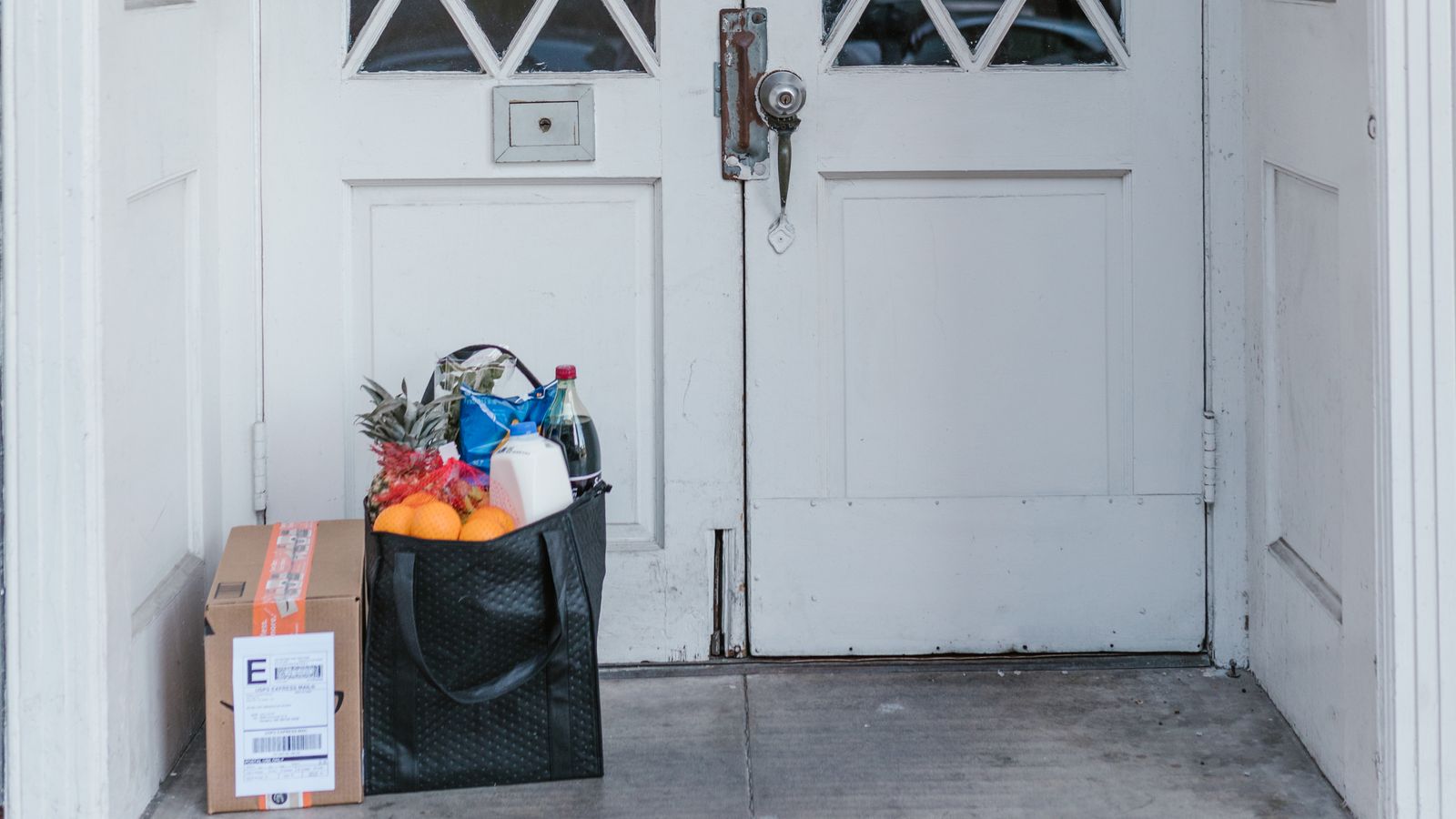
A refused cash on delivery parcel pays shipping both ways and earns nothing. How to calculate refusal and RTO correctly, what drives them and what to fix at each stage of the funnel.
The COD refusal rate is the share of orders delivered to the address that the customer turns down at the door: refused divided by delivered. It measures behaviour at the door, not cash. Cash is buyout, paid divided by shipped, which also counts failed deliveries. That is why the two always travel together.
In cash on delivery, a refused order never shows up as an expense. It shows up as an order that existed, consumed ad spend, picking, packing and shipping, and never turned into cash. That makes refusal the most expensive and least visible cost in a COD operation in Europe.
Below: how to measure refusal and RTO, what they cost, where they come from and what to fix at each stage of the funnel. Market figures only appear where there is a linked public source.
Refusal, failed delivery, RTO and returns
Every parcel that leaves the warehouse ends in one of three outcomes:
- Paid: the customer received it and paid at the door.
- Refused: the parcel reached the address, the customer was there and said no. No payment.
- Failed delivery: the parcel never reached the customer. Incomplete address, wrong phone number, nobody home on every attempt, pickup deadline missed, lost parcel.
Refused plus failed delivery is what logistics teams call RTO, return to origin: the parcel goes back to the warehouse with no payment.
A return is a fourth event that happens later: the customer received the item, paid, and changed their mind. In the EU the consumer has 14 days to do that, as the official Your Europe portal explains. A return involves a refund and hits your books differently, so do not add it to refusals. On the order status page you can see how a refused parcel appears in the dashboard.
How to calculate the COD refusal rate
There are three indicators, each with its own denominator. None of them divides by created orders: an order cancelled before dispatch cost no shipping and should not dilute the number.
- Refusal rate = refused ÷ delivered to the address. Measures customer behaviour at the door.
- Failed delivery rate = failed deliveries ÷ shipped. Measures what is lost before the door.
- Delivery success rate, or buyout = paid ÷ shipped. The number your bank account sees.
RTO rate is refused plus failed deliveries, divided by shipped. The sanity check for any report is the count: paid, refused and failed must add up to everything shipped. If they do not, some orders still have no final status, and the period is not ready to close.
A hypothetical example with round numbers:
| Stage | Orders | Calculation |
|---|---|---|
| Created | 1,200 | Not a base for anything |
| Cancelled at confirmation | 200 | Removed before shipping cost |
| Shipped | 1,000 | Base for buyout, failed deliveries and RTO |
| Failed deliveries | 60 | 60 ÷ 1,000 = 6.0% failed delivery rate |
| Delivered to the address | 940 | Base for the refusal rate |
| Refused at the door | 75 | 75 ÷ 940 = 8.0% refusal rate |
| Paid | 865 | 865 ÷ 1,000 = 86.5% buyout |
| RTO | 135 | 135 ÷ 1,000 = 13.5% RTO rate |
This is the definition we use across our content: refusal on delivered orders, because that is what measures the decision at the door. The calculation is not the mistake. Reporting it alone is: "8% refusals" sounds like 92% of orders paid, while the bank receives 86.5%. The 60 failed deliveries vanish from the conversation. So refusal never appears on its own: it always sits next to buyout.
If your report shows only one number, it is almost always the prettiest one. Ask for refusal, failed delivery and buyout, each on its own base.
Close each cohort by ship date, and only once nearly every order has a final status. Also track the share of created orders that get shipped: aggressive confirmation lowers refusals and volume at the same time.
Why refusals destroy COD margin
A refused order always consumes:
- acquisition cost (the ad is already paid for);
- picking, packing and outbound shipping;
- the per-order COD handling fee, where the contract has one;
- return shipping;
- warehouse inspection and restocking, when the product comes back sellable.
And it brings in zero revenue. Sometimes the product comes back, sometimes it does not (opened packaging, opened hygiene item, transit damage).
Here is the effect in a hypothetical example. Round numbers, VAT excluded, and none of them are N1 costs or prices: a 39 euro ticket, 8 euro product cost, 10 euros of ad spend per shipped order, 7 euros outbound including handling, 6 euros return including inspection, and 20% of returned products unsellable.
| Metric | Operation A | Operation B |
|---|---|---|
| Orders shipped | 1,000 | 1,000 |
| Paid (buyout) | 850 (85%) | 700 (70%) |
| RTO (refused + failed) | 150 | 300 |
| Revenue | 33,150 | 27,300 |
| Ads + outbound shipping | 17,000 | 17,000 |
| Product cost on paid orders | 6,800 | 5,600 |
| Return shipping and inspection | 900 | 1,800 |
| Product written off | 240 | 480 |
| Profit | 8,210 | 2,420 |
Fifteen more points of RTO cut profit by more than 70%. The fixed cost per shipped order (ads and outbound) is identical in both columns. What changes is how many paid orders carry it. That is why COD margin has to be calculated per paid order, as shown step by step in how to calculate COD margin.
The seven causes of COD refusals
1. Impulse buying. COD removes payment friction, which is good for conversion. The same missing friction lets through orders from people who have not really decided. Some of those turn into refusals when it is time to open the wallet.
2. Weak or missing confirmation. Without contact between order and dispatch, fake, duplicate and regretted orders leave the warehouse with the good ones. Poor confirmation (a script read aloud, a call days later, no mention of the amount) barely filters anything.
3. Address and phone quality. A bad address or wrong phone number rarely shows up as a refusal. It shows up as a failed delivery, which costs almost the same and takes longer to surface.
4. Long delivery times. Impulse has a shelf life. According to Eurostat, slower than expected delivery was the problem most often reported by EU online shoppers in 2025, cited by 20% of them. With card payment, that becomes a complaint. With COD, it becomes a refusal.
5. Misleading creative. When the ad overstates results, size or box contents, the customer buys the promise and refuses the product. It is a marketing problem that lands on the logistics invoice.
6. Price surprise. The customer expected one amount and the courier asks for another: shipping added on the last screen, a bundle they did not understand, a currency they do not recognise. The same Eurostat survey shows 5% of online shoppers faced costs higher than indicated. In Hungary, for example, COD is collected in forint (HUF), so the advertised price should be in HUF.
7. Nobody home. The customer was out, did not answer the courier and did not collect from the pickup point. Technically a failed delivery, but often a silent refusal: people who changed their mind tend to simply stop answering.
How to reduce COD returns, stage by stage
Refusal is decided before the door. Each stage of the funnel has its own lever.
Ad creative and product page
Show the real product with scale (in a hand, next to a familiar object), what is in the box and an honest delivery time. A promise the product cannot keep lifts conversion today and refusals five days later. Measure refusal per creative, not only cost per order.
Checkout
Final price in local currency on the product page, shipping included. Address fields in the country's format (postcode, house number, flat), autocomplete, and a phone number validated against the national prefix. A summary before submit: "you will pay X on delivery".
Phone or WhatsApp confirmation
One contact between order and dispatch that confirms three things: the person exists and placed the order, the full address, and the exact amount to pay at the door. Fast (same day), short and in the local language. No confirmation, no shipment. Track cancellations at confirmation per traffic source: when one campaign cancels a lot, the problem is the ad.
Delivery time
Fewer days between click and door means less time for the customer to cool off. That is why local stock matters more in COD than in prepaid. In N1's cash on delivery operation, orders ship from our warehouses in Europe to the customer's country.
Tracking and pre-delivery notice
A message when the order ships and another the day before or the day of delivery, always repeating the amount due. It reduces no-shows and removes the surprise. Where pickup points are common, state the collection deadline.
Delivery attempts
Know how many attempts the courier makes in each country and how long a parcel waits at the pickup point before it goes back. Between a failed attempt and the next one, a call to the customer (reschedule, fix the address) recovers some orders that would otherwise return.
Cause, signal and fix
| Cause | Signal in your report | Fix |
|---|---|---|
| Impulse | High refusals on aggressive offer campaigns | Mandatory confirmation and short delivery time |
| Weak confirmation | Fake or duplicate orders reaching the door | Same-day confirmation repeating amount and address |
| Address and phone | Failed deliveries above refusals | Validation at checkout and at confirmation |
| Long delivery time | Refusals rise with days between order and delivery | Local stock and same-day dispatch |
| Misleading creative | One creative far above the others | Change the promise, not only the audience |
| Price surprise | Refusals concentrated in bundles or one country | Final price in local currency on the page |
| Nobody home | Many failed attempts before RTO | Pre-delivery notice and rescheduling |
Track it by country, product and affiliate
The operation-wide average hides almost everything. Split refusal, failed delivery and buyout at least three ways:
- By country. Cultural acceptance of paying at the door, courier networks and pickup habits vary from market to market. Compare countries side by side, never as an average. COD by country in Europe and the COD Europe map 2026 show how much each market relies on cash on delivery.
- By product and offer. The same product can have different refusal rates as a single unit and as a bundle, or at different price points.
- By affiliate and creative. In an affiliate operation, refusal is the best signal of traffic quality. An affiliate who brings many orders and few paid orders is expensive. Paying on paid orders rather than created orders aligns incentives; N1's affiliate system works on that data.
The most common misreading: an aggressive campaign lifts orders and refusals together, and the dashboard shows growth while profit falls. Watch paid orders, not created orders. When the two lines diverge, start with the traffic source.
What is a normal COD refusal rate?
There is no reliable public benchmark for COD refusal or RTO rates by country and category. There are directional references.
In Romania, according to a statement by Elena Gheorghe, PayU GPO's country manager, published by The Paypers in April 2025, purchases paid on delivery have an 11% return rate, against 4% to 5% for those paid online. The source does not say whether that figure combines refusals, failed deliveries and returns, or what the denominator is. It shows the direction (paying at the door multiplies the loss), not a target.
Context also shifts over time. In the Gulf, the Checkout.com MENA report (May 2024) found that preference for cash on delivery fell from 41% to 20% between 2020 and 2023. The more digital alternatives customers have, the more COD is left with buyers who do not yet trust the store.
Why there is no reliable number:
- Different definitions. Some divide by created orders, others by shipped, others by delivered. Some call failed deliveries refusals; others add returns.
- Different mix. Category, ticket size, country, delivery time and traffic source move refusals more than the payment method itself.
- Publishers have an interest. The 20% to 40% RTO figures that circulate online usually come from companies selling confirmation or logistics software, with no published method. We do not use them as a reference.
The best benchmark is your own history, by country, product and affiliate, with the same definition every month. If your refusal rate sits at 25% or 30%, the payment method is rarely the problem. It is one of the seven causes above.
Frequently asked questions
Are refusals and returns the same thing?
No. A refusal is the customer declining the parcel at the door and not paying. A return is the customer receiving it, paying and withdrawing later within the legal cooling-off period. In COD, refusals are far more frequent and dominate the cost.
What is the difference between refusal rate and RTO rate?
RTO (return to origin) counts every parcel that comes back unpaid: refusals plus failed deliveries. The refusal rate counts only the customers who said no at the door. RTO rate divides by shipped orders; refusal rate divides by orders delivered to the address. Never divide either by created orders.
Does phone or WhatsApp confirmation reduce refusals?
It usually does, and the effect is bigger the worse the traffic quality. Confirmation must be fast and repeat the exact amount due. If it delays dispatch by days, it gives back part of the gain through longer delivery times.
Can you charge a customer who refused a COD order?
In practice it is rarely worth it. Directive 2011/83/EU, which governs distance sales in the EU, does not address refusal at the door, and treatment varies by country. Low order values and collection costs make prevention the realistic path. For specific cases, ask a local lawyer.
Are refusals higher on high-ticket items?
Generally yes: the more cash due at the door, the more room for second thoughts. Measure your refusals by price band before drawing conclusions. The trade-offs are covered in COD or prepayment.
Put the numbers to work
Refusals are not fixed at the door. They are fixed in the creative, the checkout, the confirmation and the delivery time. N1 runs cash on delivery in 16 markets (12 in Europe and 4 in the Gulf), shipping from our warehouses, with a dashboard to follow paid and returned orders by country and product, and payout at D+2.
Run your margin numbers with the method in how to calculate COD margin, then talk to a specialist and request a proposal.