How to sell nutra in Europe with cash on delivery: rules, ads and countries
· by Ariel Patrício · in Cash on Delivery · 14 min read
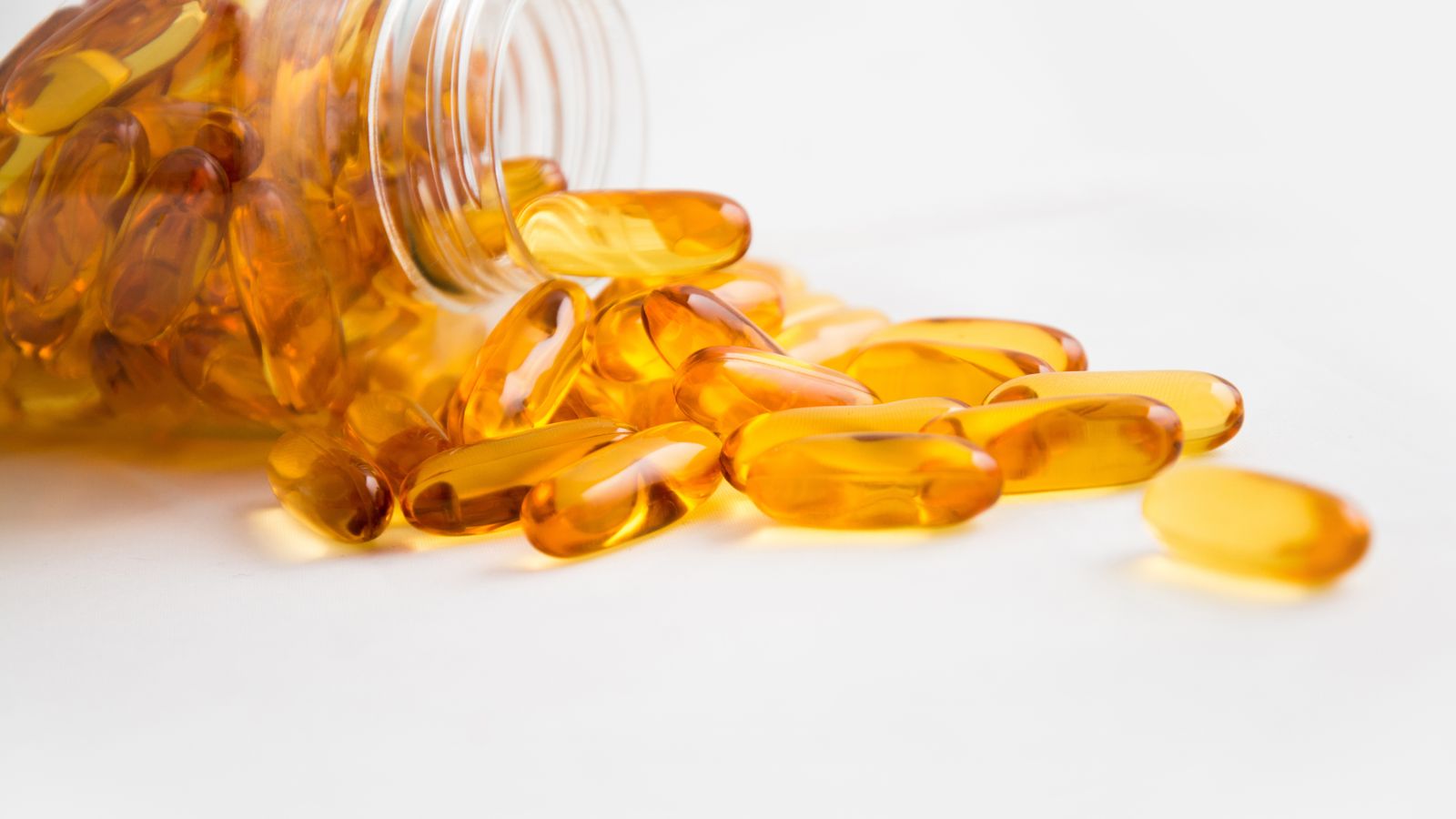
In the EU, nutra means food supplements, and that changes the game: only authorised health claims, labels in the local language and a notification in each country. What you can say, how to advertise and where COD helps.
To sell nutra in Europe is to sell food supplements under European Union law: the product is a food, not a medicine, it cannot claim to treat or cure disease, and it can only use health claims the EU has authorised. Each country asks for a notification and a label in its language. Cash on delivery helps conversion in Central and Eastern Europe.
Updated on November 14, 2026.
"Nutra" is what affiliates and media buyers call supplements and wellness products sold through an offer page and paid traffic: weight loss, joints, sleep, hair, male performance, digestion. In the US, Latin America and much of Asia, a lot of nutra offers run on bold promises and testimonials. In the EU, that same copy is illegal in many cases, and the ad gets pulled before the first order comes in.
This post is the map for taking a nutra offer to Europe with cash on delivery (COD): what the rules allow, what changes in your ads, what you can say, and how to choose a country and a business model. For the official overview of how supplements are regulated, the European Commission keeps a food supplements page that links to every EU act cited below.
This post describes public rules. It is not legal or regulatory advice and does not assess any product. Check your formula, label, notification and creatives with a regulatory specialist before you sell.
What counts as nutra in the EU market?
"Nutra" does not exist in EU law. What exists are product categories, and the category your product falls into decides everything that comes after:
- Food supplement. Directive 2002/46/EC defines a food supplement as a food meant to supplement the normal diet, sold in dose form (capsules, tablets, powder sachets, drops). Most nutra offers fit here.
- Medicinal product. If a product, through its composition or the way it is presented, claims to treat or prevent disease, the authority can classify it as a medicine. Under EU rules, when there is doubt between a medicine and another category, the medicines rules prevail. That means a marketing authorisation, and selling through an affiliate offer page stops being viable.
The practical consequence: your copy defines the category. The same powder, with the same label, can be a supplement on one page and an unauthorised medicine on another, just because the second page says it "treats" something.
Why does nutra pair well with cash on delivery in Eastern and Southeastern Europe?
Two reasons make COD a good fit for nutra in this region.
People are used to paying at the door. According to ECDB, 80.3% of online shops in Bulgaria and 80.1% in Slovakia offer payment on delivery, and 60.7% in Poland. The figure measures what shops offer, not the share of orders, but it shows shoppers in these countries expect to see the option at checkout.
First-purchase distrust. Nutra is an impulse buy from a brand the customer does not know, coming from an ad. Paying only on receipt lowers the barrier to that first order.
The other side is refusal. Romanian data compiled by The Paypers, quoting PayU GPO, puts the return rate at 11% for purchases paid on delivery, against 4% to 5% for those paid online. That is one country and one source, so do not read it as a European average. For nutra the effect is stronger: an inflated promise in the ad turns into regret at the door. Our post on the COD refusal rate shows how to measure it and bring it down.
What do EU rules allow and forbid for supplements?
There are four blocks of rules. Each one links to the official text on EUR-Lex.
1. A supplement does not treat disease
Directive 2002/46/EC forbids attributing to a supplement the property of preventing, treating or curing a human disease, on the label, in the presentation and in advertising. Regulation (EU) No 1169/2011, in Article 7, extends that ban to all foods and to their advertising.
2. A health claim must be authorised
Regulation (EC) No 1924/2006 bans any health claim that is not authorised and included in the EU lists (Article 10). The permitted claims, with the conditions of use for each, are in the EU Register of nutrition and health claims, run by the European Commission. There is no "similar" claim allowed by analogy.
Article 12 of the same regulation bans three types of claim that show up often in nutra offers:
- suggesting that health could be affected by not consuming the product;
- referring to the rate or amount of weight loss;
- referring to recommendations of individual doctors or health professionals.
So "lose 10 kg in 30 days" and "recommended by Dr. So-and-so" are out, even if the ad platform let them through.
3. Notification and label, country by country
There is no single EU authorisation for supplements. Under Article 10 of the directive, each Member State can require whoever places the product on its market to notify the competent authority and send a model of the label. Procedures differ in ways that change your timeline: Bulgaria asks for a registration with a decision, not just a notice, and Croatia has two routes depending on the composition. Confirm the procedure with each national authority before you sell.
The label must be in the language of the country. Article 15 of Regulation 1169/2011 lets each Member State require its official language, and for online sales the mandatory information must be shown on the page before the purchase is concluded (Article 14). Your product page counts as a label too.
4. Novel and restricted ingredients
An ingredient that was not consumed to a significant degree in the EU before 15 May 1997 is a "novel food" and can only be sold if it is authorised on the Union list, under Regulation (EU) 2015/2283. The Commission keeps a Novel Food status Catalogue, useful as a starting point but not legally binding. A formula built for the US, Brazil or another non-EU market needs to be reviewed ingredient by ingredient, including vitamin and mineral doses, which still vary by country.
How do Meta's ad policies add to EU law?
If you run nutra on Facebook and Instagram, the law is the first barrier. The platform's policy is the second. The points that weigh most, according to Meta's official pages:
- Adult audience only. Under the Health and Wellness standards, ads for dietary, health or weight loss and weight gain products must be targeted to people aged 18 or older.
- No sensational bait. The same policy bans sensational language with exaggerated or extreme claims, and promises of a specific result within a set time frame without qualification.
- No attacks on appearance. Negative self-perception claims about a person's body are banned, and weight ads cannot show close-ups of fat being pinched.
- No cure for incurable disease. The policy bans claims to cure or eliminate diseases such as diabetes or cancer.
- "Unsafe" supplements are Meta's call. The Drugs and Pharmaceuticals policy bans promoting unsafe substances, products or supplements, as determined by Meta in its sole discretion. A product that is legal in the EU can still have its ad rejected.
On some points Meta's policy is looser than the law: with qualifications, it allows a time frame for results on weight products, while Article 12 of Regulation 1924/2006 bans any reference to the rate or amount of weight loss. The stricter rule always wins. Policies change often: check the version in force on the day you launch.
How do you write nutra creatives without cure claims?
In practice, nutra creatives that run in Europe swap the promise of a result for an honest description of the product and how to use it. A few rules of thumb:
- Talk about the product, not the disease. Ingredients, format, daily dose and routine.
- Use only claims from the register, with its wording and its condition. If vitamin C is in the formula at the required amount, the authorised claim can be used. If your main ingredient has no authorised claim, do not invent one.
- No before-and-after of a disease. A "before" photo with a symptom and an "after" that looks cured is a treatment claim.
- Testimonials are claims too. What a customer "says" in the ad is the advertiser's responsibility.
- Local currency and the total at the door. In Hungary, the customer pays in forint (HUF). Price confusion turns into refusals.
Affiliates posting from their own profiles have one more duty: label the content as advertising. Our post on the cash on delivery affiliate model in Europe explains the EU transparency rule.
What can you say and what can't you say?
Generic examples, only to show the reasoning. Before using any sentence, check the exact wording and conditions of use in the EU Register.
| Type of sentence | Generic example | Status | Why |
|---|---|---|---|
| Authorised function claim | "Vitamin C contributes to the normal function of the immune system" | Allowed, if the product meets the condition of use in the register | It is on the EU lists (Regulation 1924/2006, Article 13) |
| Product description | "60 capsules, 1 a day, with vitamin D3 and zinc" | Allowed | It is information, not a health claim |
| Preventing or curing disease | "Ends diabetes" or "cures arthritis" | Not allowed | A supplement does not treat disease (Directive 2002/46/EC; Regulation 1169/2011, Article 7) |
| Rate of weight loss | "Lose 10 kg in 30 days" | Not allowed | Regulation 1924/2006, Article 12 |
| Doctor recommendation | "Dr. X recommends it" | Not allowed | Regulation 1924/2006, Article 12 |
| Fear of not consuming | "Without this, your liver will fail" | Not allowed | Regulation 1924/2006, Article 12 |
| Invented or "similar" claim | "Detoxes your body" with no authorised claim | Not allowed | Only authorised claims are valid (Article 10) |
| Comparison with medicine | "Stronger than pharmacy drugs" | Not allowed | Suggests a medicinal effect and runs into Meta's policy |
| Attack on appearance | "Tired of that belly?" | Not allowed in Meta ads | Health and Wellness policy |
How do you choose the country to sell nutra in?
There is no "best country for nutra". There is the country where the numbers work for your product. The criteria that weigh most:
- COD habit. Where paying at the door is the norm, first-order conversion tends to be higher. See COD by country in Europe and the COD Europe map 2026.
- Regulatory route. A notification due by the day of sale is not the same as a registration with a prior decision. Plan your calendar around it and confirm with the authority.
- Accepted formula. Maximum doses of vitamins and minerals and the lists of plant extracts change from country to country.
- Language and currency. Label, page, creative and order confirmation in the local language, and the price in the currency collected at the door.
- Margin with refusals built in. Run the numbers with our guide on how to calculate COD margin before you choose.
N1 runs COD in 16 markets: Poland, Spain, Portugal, Romania, Hungary, Bulgaria, Croatia, Greece, Germany, Italy, Slovakia and the Czech Republic in Europe, plus Saudi Arabia, the UAE, Kuwait and Qatar in the Gulf.
Nutra affiliate or your own brand: which model fits?
Nutra affiliate
You promote the offer of a brand that already has stock and operations in Europe and earn a commission per delivered and paid order. Label, notification and stock are the producer's responsibility. The creative and the promise you make are yours, and that is where the affiliate's regulatory risk lives.
- Good for: affiliates with traffic who want to test Europe without inventory.
- Watch out for: copy carried over from the US, LatAm or Asia. What converts there can be illegal here.
- Where to start: live offers, with the countries for each one, are in the product catalogue, and the commission mechanics are on the affiliate system page. If you are comparing networks, our post on international affiliate platforms covers digital, nutra and physical products with COD.
Your own brand
You define the formula, manufacture, label, notify and ship the batch to a European warehouse. It is the longer road, and registration is usually the slowest step. In return, the offer is yours and nobody can take the product away from you.
- Good for: producers who already validate offers in their home market and want an asset in Europe.
- Watch out for: a formula designed for another market and ingredients that count as novel food in the EU.
- Where to start: the production and private label page shows how N1 connects you with a European manufacturer and handles label and registrations, with the batch going straight into our warehouses in Europe.
If you are still choosing between the two, our post on the COD supplier in Europe compares sourcing models with a checklist.
Frequently asked questions
What is nutra?
It is affiliate and media-buyer slang for supplements and wellness products sold through an offer page and paid traffic. In the European Union, most of these products are classified as food supplements and follow Directive 2002/46/EC.
Can I sell nutra in Europe with cash on delivery?
Yes, as long as the product meets the supplement rules of the destination country: accepted formula, label in the local language, notification or registration, and only authorised claims. COD is common in Central and Eastern Europe and helps with the first purchase.
Can I reuse the copy that works in my home market?
Almost never. Claims to treat disease, weight loss within a set time and doctor recommendations are banned by Regulation 1924/2006 and Directive 2002/46/EC. Rewrite your copy starting from the authorised claims in the EU Register.
Does Meta accept supplement ads?
Yes, with restrictions: audience aged 18 or older, no sensational promises, no result time frame without qualification and no disease cures. Meta can also reject supplements it considers unsafe, at its own discretion. Check the current policies before launching a campaign.
Is one notification valid for all of Europe?
No. Notification is national, with its own authority, form and language. Each country where you sell needs its own procedure.
Is an affiliate liable for what the ad says?
The creative and the promise belong to whoever runs the ad. Label and notification stay with the producer, but an illegal claim in an affiliate's ad is the affiliate's problem and takes the offer down. When in doubt, use only the sentences the producer has approved.
Next step
If you have traffic, browse the live offers in the catalogue. If you want to launch your own supplement brand in Europe, see production and request a proposal, or talk to a specialist on WhatsApp. Regulatory compliance of the product remains with whoever places it on the market.
Sources
- Directive 2002/46/EC on food supplements, EUR-Lex, accessed November 14, 2026.
- Regulation (EC) No 1924/2006 on nutrition and health claims made on foods, EUR-Lex, accessed November 14, 2026.
- EU Register of nutrition and health claims, European Commission, accessed November 14, 2026.
- Regulation (EU) No 1169/2011 on the provision of food information to consumers, EUR-Lex, accessed November 14, 2026.
- Regulation (EU) 2015/2283 on novel foods, EUR-Lex, accessed November 14, 2026.
- Novel Food status Catalogue, European Commission, accessed November 14, 2026.
- Food supplements, European Commission, accessed November 14, 2026.
- Health and Wellness, Advertising Standards, Meta, accessed November 14, 2026.
- Drugs and Pharmaceuticals, Advertising Standards, Meta, accessed November 14, 2026.
- Cash on Delivery Is Most Used in Middle and Central European eCommerce, ECDB, June 2025, accessed November 14, 2026.
- Romania 2025: analysis of payments and ecommerce trends, The Paypers, accessed November 14, 2026.
Read also
- Cash on delivery affiliate in Europe: commission, confirmation and payout
- COD refusal rate: how to calculate it and how to lower it
- International affiliate platforms: digital, nutra and physical products with COD
- Physical product affiliate programs: where to find them and how to pick an offer
- COD supplier in Europe: sourcing models compared