COD supplier in Europe: how to choose one and what to ask first
· by Lucas Reda · in Cash on Delivery · 13 min read
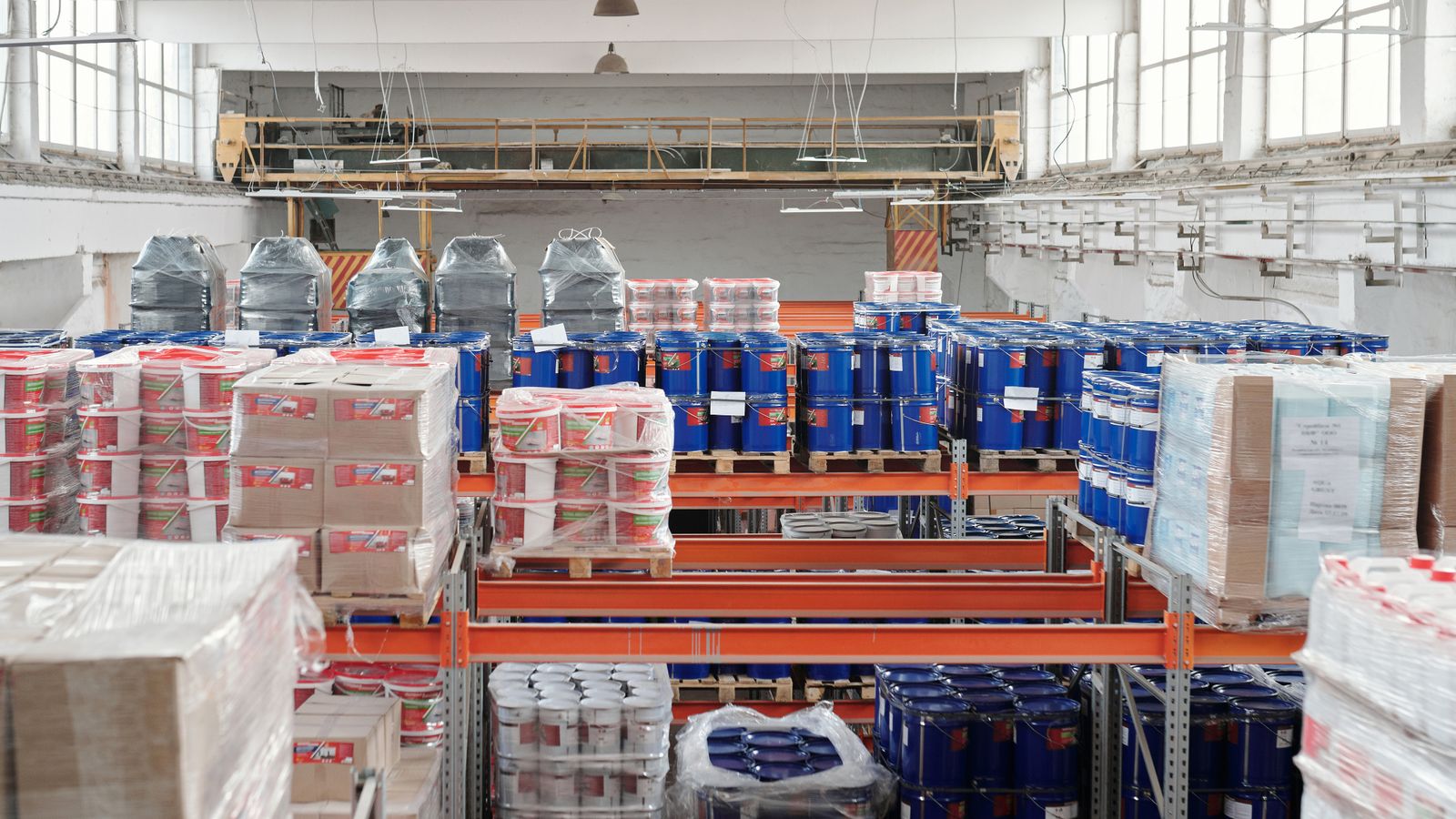
A COD supplier in Europe is more than whoever sells you the product: it covers local stock, order confirmation, delivery, cash collection and payout. See the models, the checklist and the questions to ask before you sign.
A cash on delivery supplier in Europe is whoever covers the full COD order chain: a compliant product, stock close to the customer, order confirmation, delivery with payment at the door and the payout to you. To choose one, compare where the stock sits, which countries have COD, who confirms orders, the refusal rule and the payout timing.
Updated on November 14, 2026.
People searching for a "COD supplier in Europe" usually want two things at once: a product to sell and someone who turns that product into a delivered parcel and then into money. With cash on delivery, those two jobs cannot be split. If the collection fails, you do not get paid. If the product takes three weeks to arrive, the customer refuses it.
This guide is about choosing that supplier: what it has to handle, the four most common sourcing models, a checklist table and the questions to ask before you sign. If you are still weighing whether COD dropshipping from China can work at all, start with COD dropshipping in Europe: why local stock works. If the model itself is new to you, read how COD dropshipping works first.
What does a COD supplier actually do?
In card-paid dropshipping, a supplier is whoever holds the product and ships it. In COD, that definition is too narrow. An order only becomes money after six steps, and each one needs a clear owner:
- Product. The physical item, with label, manual and warnings in the local language and compliant with European Union rules.
- Local stock. The product must already be in Europe when the order comes in. Cash on delivery with intercontinental shipping tends to end in refusal, because the customer forgets they ordered.
- Confirmation. Someone validates the order before dispatch, by phone or message, in the customer's language.
- Delivery. Picking, packing, dispatch and delivery attempts.
- Collection. The courier collects at the door, in local currency. In Hungary, for example, the customer pays in forint (HUF), not in euros.
- Payout. The amount collected is reconciled order by order and reaches you.
The most common mistake is signing with someone who covers step 1 and finding out later that steps 2 to 6 have no owner. The post on COD reconciliation and payout shows where money gets lost when nobody answers for the last mile.
Why does a COD supplier need stock in Europe?
COD works where shoppers are used to paying at the door, and that habit is strong in Central and Eastern Europe. According to ECDB, 80.3% of online stores in Bulgaria and 80.1% in Slovakia offer payment on delivery, and 60.7% in Poland. The figure measures what stores offer, not the share of orders, but it shows that in these markets COD is the norm, not the exception.
A customer who pays at the door has little patience: they have not paid anything yet, so walking away costs them nothing. The longer the gap between the click and the doorbell, the higher the refusal. That is why COD runs on stock already positioned on the continent. The post on COD refusal rate covers this effect, and the COD dropshipping in Europe guide explains why shipping one parcel at a time from Asia breaks the model.
To see how each country behaves before you pick a supplier, check COD by country in Europe and the COD Europe map 2026.
The 4 COD sourcing models in Europe
There is no single right model. There is the model that fits the capital, the time and the risk you are willing to take on.
1. China product supplier + European 3PL
You buy the product from a manufacturer or sourcing agent in China, import a batch into Europe and hire a warehouse (3PL) that stores, ships and, in some cases, runs COD.
- Upside: lower product cost and full freedom of choice.
- What you take on: import, taxes, product compliance, minimum order quantity, capital tied up in stock and coordination between supplier, warehouse, courier and whoever confirms orders.
- Watch out: a 3PL stores and ships, but not every 3PL confirms orders, collects COD in several countries or reconciles the payout. Ask first.
The post on EU VAT and OSS for non-EU sellers covers the tax side of importing, and you should validate it with an accountant.
2. COD platform with a catalog
A platform offers products already stocked in Europe, connects to your store and handles confirmation, delivery, collection and payout. You pick the product, build the offer and buy the traffic.
- Upside: you start without importing a batch and without building the chain alone.
- What you take on: marketing, store, selling price and the promise you make to the customer.
- Watch out: COD countries, integrations and payout rules vary a lot between platforms. Compare what each one publishes, with date and source, before you commit. If you want to start without buying stock, read how to sell in Europe without inventory.
3. Affiliate
You do not sell the product as your own. You promote the offer of a brand that already runs stock in Europe and earn a commission per order delivered and paid. Store, stock, delivery and collection stay with the producer and the operation.
- Upside: lowest capital exposure. Your risk is the ad spend.
- What you take on: creatives, traffic and the quality of the orders you generate.
- Watch out: commission follows the paid order, not the order created. The post on cash on delivery affiliate marketing in Europe explains the mechanics.
4. Private label
You define the product, produce it with a manufacturer (in Europe or elsewhere), put your own label on it and send the batch to a European warehouse. It is the slowest model to start and the only one where the product is an asset you own.
- Upside: nobody can take the offer away from you, and your margin does not depend on a supplier's price.
- What you take on: formulation, labeling, registrations, compliance and a longer lead time to the first sale.
- Watch out: in regulated categories such as supplements and cosmetics, registration is usually the longest step. If you sell supplements, read how to sell nutra in Europe.
The models side by side
| Model | Upfront capital | Who handles stock | Who answers for the product | Time to first sale |
|---|---|---|---|---|
| China + 3PL | High (batch + freight + taxes) | You, with the 3PL | You | Long |
| COD platform with catalog | Low to medium | The platform | Defined by contract | Short |
| Affiliate | Low (ad spend only) | The producer | The producer | Short |
| Private label | High | You, with the warehouse | You | The longest |
Checklist: how to evaluate a cash on delivery supplier
Use this table as a script for the call. Ask for a written answer on every line.
| Criterion | What to ask | Answer you want | Red flag |
|---|---|---|---|
| Stock origin | Is the product already in Europe when the order comes in? | Local stock, with visible quantity per product | "Ships from China, arrives in a few weeks" |
| COD countries | In which countries do you collect on delivery today? | A closed list, per country, with collection currency | "We cover all of Europe" with no list |
| Order confirmation | Who confirms, on which channel and in which language? | Owner, channel and discard criteria defined | "The customer already confirmed at checkout" |
| Refused orders | What happens to a refused parcel and who pays the return? | Written rule, with where the product goes and the cost | "That hardly ever happens" |
| Payout timing | How many days between delivery and money in your account? | A defined term, counted from a clear event | Vague term or "it depends" with no criteria |
| Payout currency | In which currency are you paid and who handles FX? | Currency and conversion stated | FX with no rule |
| Reconciliation | Can you see the amount for each order? | Order-by-order statement | Only a period total |
| Integration | Does it connect to your store (Shopify, CartPanda) without spreadsheets? | Native integration or documented API | Orders sent by spreadsheet |
| Product compliance | Who answers for the product in the EU and for the local-language label? | Defined owner, documents available | "You don't need anything" |
| Contract | Are the rules in a contract? | Contract covering payout, refusal, returns and exit | Everything agreed over chat |
Three lines need more explanation.
Refused orders. In COD, refusal is part of the math. The parcel comes back, someone pays the return (RTO) and the product may or may not go back into stock. At the same list price, a supplier that puts intact returns back on the shelf leaves you more margin than one that writes them off. If the rule is not written down, the cost shows up on your statement without warning. To run the numbers, see how to calculate COD margin.
Payout timing and currency. Ask which event starts the clock: delivery, the courier's confirmation or a weekly close. "D+2" counted from delivery is very different from "D+2" counted from the end of the month.
Compliance. Regulation (EU) 2023/988, known as GPSR, says in Article 16 that a consumer product in its scope cannot be placed on the market unless an economic operator established in the EU is responsible for it. Article 19 requires online offers to show clearly the manufacturer, the EU responsible person (when the manufacturer is outside the bloc), product identification with a picture and safety warnings in the consumer's language. Food, including supplements, follows its own rules. Decide who that responsible person is before you sell, and validate it with a specialist. The GPSR responsible person guide goes deeper. At N1, for example, the platform is not the GPSR economic operator for the seller's product.
Red flags in a COD supplier
Some warning signs show up in the very first call:
- A promise of "every country in Europe". COD does not work the same everywhere, and collection requires an operation in each country. Ask for the list.
- Refusals treated as a detail. A supplier that cannot explain what happens to a refused order has not run real volume yet.
- Payout with no statement. If you only receive a total, you cannot check anything.
- "Available" stock with no real quantity. Ask to see the quantity per product. Phantom stock becomes canceled orders after you have already paid for the ads.
- No label in the local language. For food, Regulation 1169/2011 lets each country require its own language on the label, and GPSR asks for safety warnings in a language the consumer understands. A product labeled in English or Chinese at the door means refusals and risk.
- Promised margin or results. Nobody knows your buyout rate before you run traffic.
Questions to ask a COD supplier before you sign
Take this list to the meeting:
- In which countries do you collect on delivery today, and in which currency in each?
- Where is the stock for the product I want to sell?
- Who confirms orders, on which channel, in which language and with which discard criteria?
- What happens to a refused order, who pays the return and does the product go back into stock?
- How long does the payout take, counted from which event, and in which currency am I paid?
- Can I see each order, from delivery status to amount paid out, in a dashboard?
- Do you integrate with my store (Shopify, CartPanda) or do I depend on spreadsheets?
- Who answers for the product in the EU and who handles the local-language label?
- What is the rule for returns after payment?
- Are all the answers above in the contract?
Once you have the answers, do the math. The calculation has to hold with refusals, return freight and ad spend included. To see why the number that decides everything is the share of orders actually paid, read the post on COD buyout rate.
Where N1 fits
N1 is one of the options for non-EU sellers and affiliates who want to sell in Europe with cash on delivery. We run COD in 16 markets: 12 in Europe (Poland, Spain, Portugal, Romania, Hungary, Bulgaria, Croatia, Greece, Germany, Italy, Slovakia and the Czech Republic) and 4 in the Gulf (Saudi Arabia, the United Arab Emirates, Kuwait and Qatar).
The models N1 supports:
- Catalog. Products from brands that already hold stock in our warehouses, open to affiliates. The list, with the countries for each offer, is in the product catalog.
- Your product. You send the batch to our warehouse network in Europe, and the operation handles dispatch, delivery and collection.
- Private label. Production brokers manufacturer, label and registrations, and the batch goes straight into our warehouses.
Your store connects through the Shopify integration or the CartPanda integration. COD payouts are reconciled order by order, paid out on D+2, and withdrawals can go to a global account or to crypto. Product compliance stays with whoever places the product on the market.
Frequently asked questions
What is a COD supplier in Europe?
It is whoever covers, alone or with partners, the COD order chain: a compliant product, stock in Europe, confirmation, delivery with payment at the door and the payout to the seller. A product-only supplier covers just one part of that chain.
Can I do COD dropshipping in Europe with products shipped from China?
With direct shipping from China on every order, the long transit pushes refusals up, because the customer has not paid anything yet. The common path is to import a batch into a European warehouse and ship from there. The COD dropshipping in Europe guide covers this in detail.
Who pays the shipping on a refused order?
It depends on the contract. Usually the seller pays the return, and the difference between suppliers is what happens to the product that comes back. Get the rule in writing before you start.
What is a normal COD payout time?
There is no single standard. Each supplier sets its own, and what matters is which event starts the count. At N1, the payout is on D+2. Always compare the starting event, not just the number.
Do I need a company in Europe to sell with COD?
It depends on the model and the product. For products in the scope of GPSR, there must be a responsible economic operator established in the EU. Tax and corporate questions vary case by case: validate them with an accountant.
Next step
If you want to evaluate N1 with your own product or pick an offer from the catalog, see the cash on delivery page and request a proposal, or talk to a specialist on WhatsApp.
Sources
- Cash on Delivery Is Most Used in Middle and Central European eCommerce, ECDB, June 2025, accessed 2026-10-07.
- Regulation (EU) 2023/988 on general product safety (GPSR), EUR-Lex, accessed 2026-11-14.
- Regulation (EU) No 1169/2011 on the provision of food information to consumers, EUR-Lex, accessed 2026-11-14.