Dropshipping With Payment on Delivery (COD): How It Works From Order to Payout
· by Lucas Reda · in Cash on Delivery · 10 min read
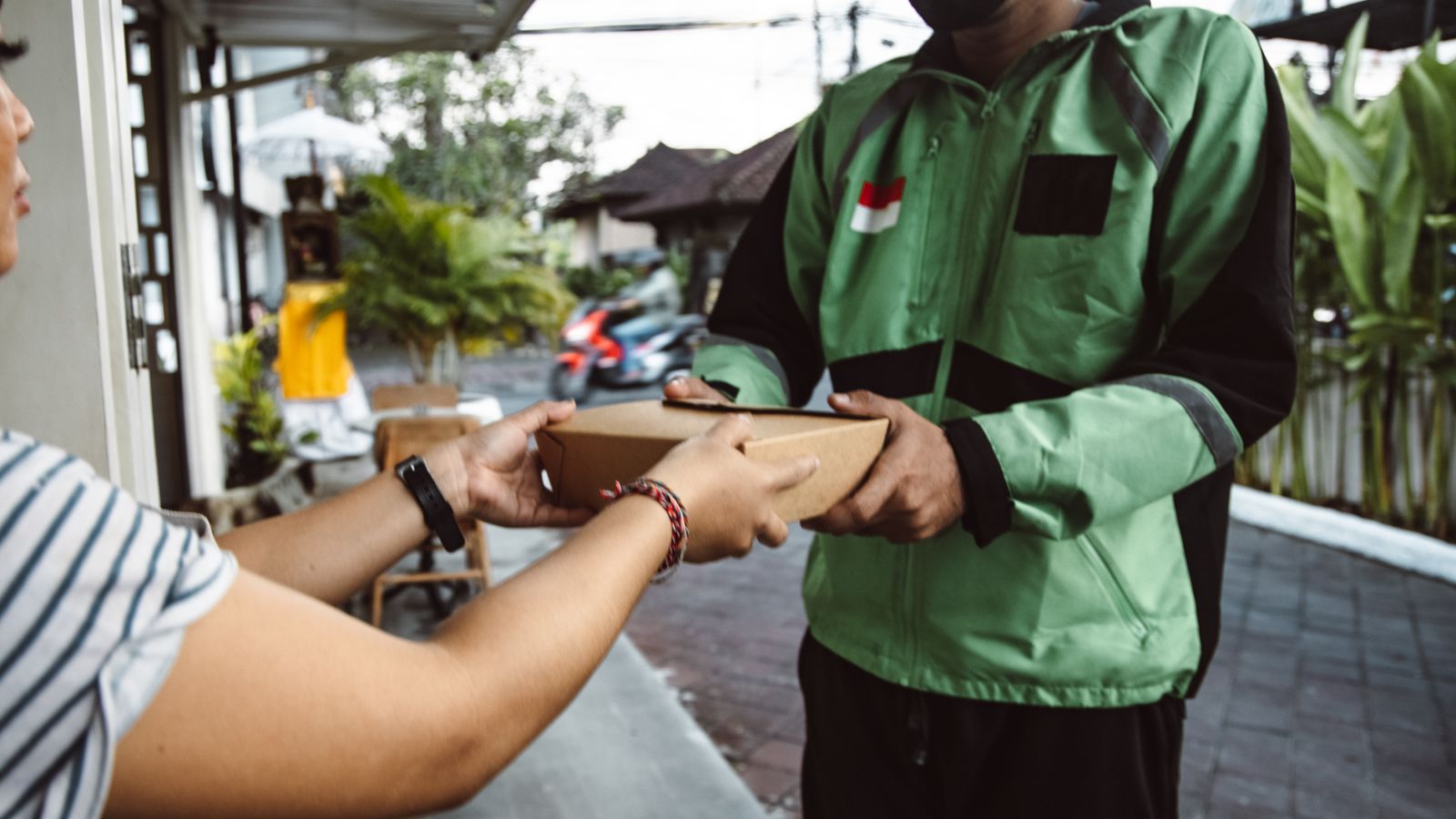
COD dropshipping combines selling without your own stock with collection only on delivery. See the full flow, who does what, where the money sits idle, how to calculate margin with refusals and the mistakes that break new operations.
Dropshipping with COD is the model in which the seller advertises and sells products without holding stock, and the customer pays only when the order arrives. A logistics operator picks, dispatches and delivers, collects at the door and pays the seller later. Profit depends on buyout, margin per dispatched order and working capital.
Dropshipping and cash on delivery are two models that, together, look simple: you advertise, the order comes in, someone delivers, the customer pays, you get paid. The problem is that between the ad and the money in your account there are six or seven steps where margin can vanish without warning, and most of them only show up after you have already scaled the ad.
This guide walks through the whole flow, from click to reconciliation, shows who does what, where the money sits idle, how to build the margin math with refusals inside, and which mistakes most often sink new operations. Market figures only appear with a public source linked at the end, and the numerical examples are hypothetical, to illustrate the reasoning.
What COD dropshipping is, in practice
In traditional dropshipping, the customer pays online, the seller passes the order to the supplier and the supplier ships straight to the customer. In COD dropshipping, the difference is in payment: there is no upfront charge. The order is confirmed, dispatched and collected at the door.
That changes three important things:
- Who bears the payment risk. In dropshipping paid online, money comes in before delivery. In COD, the risk that the customer does not pay stays with the seller.
- When the money arrives. Only after delivery and reconciliation, which weighs on working capital.
- What determines profit. It stops being just unit margin and becomes margin per dispatched order, with refusals and return freight inside.
The model exists in several regions. In Central and Eastern Europe, payment on delivery is a habit in several countries, and the operation usually uses local stock to guarantee a short delivery time. In the Gulf, COD is a conversion lever alongside cards and digital wallets. The guide What is cash on delivery (COD) gives the base of the concept.
Who does what in the flow
A COD dropshipping order passes through five roles. Understanding each avoids surprises about responsibility.
- Seller. Chooses the product, creates the offer, buys the traffic, maintains the store and handles support. Bears the payment risk of COD.
- Store platform. Where the order is born (for example, your connected store).
- Confirmation operation. Calls or messages to validate the order before dispatch, in the customer's language.
- Logistics operator and carrier. Picks the order, packs, dispatches, delivers, collects and returns what is refused.
- Reconciliation and payout. Compares what was collected with what was delivered and remits to the seller.
N1 acts as the platform that connects these ends for the seller, in European markets and in the United Arab Emirates and Saudi Arabia. Responsibility for choosing the product, the offer and complying with the product's rules in the destination market remains with the seller.
The full flow, from click to payout
- Ad and page. Traffic arrives at the product page or checkout, normally from social networks.
- Order. The customer chooses to pay on delivery and enters name, phone number and address.
- Automatic validation. The system checks phone format, address and duplicates.
- Human confirmation. Call or WhatsApp, in the customer's language. It is the step that filters fake orders and early second thoughts.
- Picking and dispatch. The confirmed order goes to the warehouse and leaves with the carrier.
- Delivery attempt. The courier contacts the customer, delivers and collects.
- Refusal or absence. The parcel returns if the customer refuses or is not found.
- Reconciliation. The amount collected is matched to each order.
- Payout. The seller receives the amount, minus the agreed costs.
The most dangerous point is step 4. An unconfirmed order that gets dispatched is the biggest margin leak in the model. Each fake or doubtful order costs outbound freight, return freight and handling, with no chance of revenue.
Where the money sits idle
COD demands working capital, and many new operations break because of it, even with positive margin on paper.
Money goes out before it comes in. You pay for the ad on the day of the click, for product and freight at dispatch, and only receive after delivery and payout. Between one end and the other there is an interval, and during it you need to finance the operation with your own cash.
A hypothetical example: if you spend 100 thousand currency units a month on ads and product and the cycle between spend and payout is several weeks, a significant part of the revenue has not yet arrived when the next round of ads has to be paid. If buyout falls, the hole grows. The post on COD reconciliation and payout shows where the money is slow and where it gets lost.
So the rule for beginners is: size the ad budget by the cash that can bear the full cycle, not by the revenue the ad dashboard shows.
The margin math with refusals inside
The math that matters is per dispatched order, not per paid order.
A hypothetical example, just to illustrate:
- Dispatched orders: 100.
- Paid orders: 80 (80% buyout).
- Margin per paid order, after product, outbound freight, packaging, confirmation fee and method fee: 35.
- Cost of each unpaid order (outbound freight, return and handling): 14.
- Ad cost per dispatched order: 10.
Result: 80 × 35 = 2,800, minus 20 × 14 = 280, minus 100 × 10 = 1,000, equals 1,520 of profit on 100 dispatched orders, or 15.2 per dispatched order.
Now see what happens if buyout falls to 70%: 70 × 35 = 2,450, minus 30 × 14 = 420, minus 1,000, equals 1,030, or 10.3 per dispatched order. Ten points of buyout took away about a third of the profit. That is why buyout, not revenue, is the number you track. For the field-by-field method, see how to calculate the margin of a product in COD.
Choosing a product for COD dropshipping
The right product for COD is not the same as for dropshipping paid online. Some practical criteria:
- Room in the margin. It has to bear refusals, returns and ads.
- Low to mid ticket. High values increase refusal on cold traffic.
- A promise that is visual and easy to keep. The product has to match the ad at the door.
- Suitable weight and volume. Expensive freight destroys margin when the order comes back.
- Market regulation. Cosmetics, supplements, electronics and children's products require registration and labeling. Research the destination market's rules before choosing.
- Resale possible. A product that comes back and can be resold loses less than one lost in the return.
Choosing a market
Each market has a buyer and risk profile. Some questions to decide:
- Does the local consumer have a habit of paying on delivery? In Central and Eastern Europe, in several countries, yes. In the Gulf, COD complements cards and wallets.
- Can you confirm orders in the customer's language?
- What are the tax and import regime? In the UAE, VAT is 5%, and in Saudi Arabia, 15%.
- What is the market's sales calendar? Black Friday and Christmas in Europe; Ramadan, Eid and White Friday in the Gulf.
The guides to COD by country in Europe, cash on delivery in the UAE and in Saudi Arabia deepen each decision, and the comparison COD in the Gulf versus COD in Europe shows what changes between regions.
Order confirmation: the step that decides the result
If you can improve only one thing in the operation, improve confirmation.
- Customer's language. Machine-translated confirmation conveys distrust.
- Right channel. Call, WhatsApp or SMS, depending on the market.
- Short script. Confirm product, price, address and availability to receive.
- Attempts at different times. Many people do not answer the first contact.
- Discard criterion. Define when an unconfirmed order stops being dispatched.
- Record keeping. Note the reason for each unconfirmed order. It is data for improving the ad.
The post on the COD refusal rate shows how confirmation practices translate into numbers.
Mistakes that break new operations
Scaling ads without measuring buyout. Revenue grows and cash does not keep up.
Calculating profit per paid order. It hides the cost of what was not paid.
Dispatching without confirming. It is the most expensive leak in the model.
Promising in the ad what the product does not deliver. The refusal comes at the door.
Mixing markets in the same account. Buyout in Italy and in Saudi Arabia have different drivers. Measure by market and by campaign.
Ignoring product regulation. Goods held at customs or out of compliance become a total loss.
Underestimating working capital. The cycle between spend and payout has to fit in your cash.
Not reconciling. Without checking what was collected and what was remitted, discrepancies go unnoticed.
How to start without burning cash
A conservative roadmap, which you adjust to your case:
- Choose one product and one market, not several.
- Define the minimum buyout your margin supports.
- Start with small volume and confirm every order.
- Measure by dispatch cohort, waiting for delivery and payment time.
- Break the numbers down by traffic source and cut what destroys margin.
- Only scale when buyout stabilizes across two or three cohorts.
- Reconcile weekly.
Where N1 fits into this math
N1 is a fulfillment and cash-on-delivery platform for dropshipping and e-commerce sellers who want to sell with COD in European markets and in the United Arab Emirates and Saudi Arabia. We integrate the store, follow the order from dispatch to reconciliation and keep buyout and payout visible in a single dashboard. Product, offer, audience and the regulatory compliance of the product remain the seller's decision and responsibility.
To evaluate an operation, request a proposal on the cash on delivery page or talk to a specialist on WhatsApp.
Frequently asked questions
What is COD dropshipping?
It is the dropshipping model in which the customer pays only on delivery. The seller advertises without holding their own stock, a logistics operator picks and dispatches, the courier collects at the door and the amount is paid to the seller after reconciliation.
Is COD dropshipping profitable?
It is when margin per dispatched order supports refusals, return freight and ads. The number that decides is buyout. Calculate profit per dispatched order before scaling.
Do I need working capital for COD dropshipping?
Yes. Money goes out with the ad, product and freight before coming back with the payout. Size the ad budget by the cash that can bear the full cycle.
What is the main cause of loss in COD dropshipping?
Dispatching orders without confirmation and scaling ads without measuring buyout. Both mistakes multiply lost freight and hide the problem behind high revenue.
Can I do COD dropshipping in any country?
COD works best where there is a habit of paying on delivery or where part of the audience distrusts paying online, and each market has its own tax, language and regulation. Evaluate by market before opening.
Do I need to confirm all orders?
It is the practice with the biggest impact. An unconfirmed order that gets dispatched generates outbound and return freight with no chance of revenue. Define a discard criterion for those who do not confirm.
Sources
- Cash on delivery is most used in Middle and Central Europe, ECDB, accessed 2026-09-28.
- Checkout.com's 4th annual MENA report finds cash on delivery usage halved, Checkout.com, May 2024, accessed 2026-10-03.