What Is Cash on Delivery (COD)? A Complete Guide for Online Sellers
· by Ariel Patrício · in Cash on Delivery · 10 min read
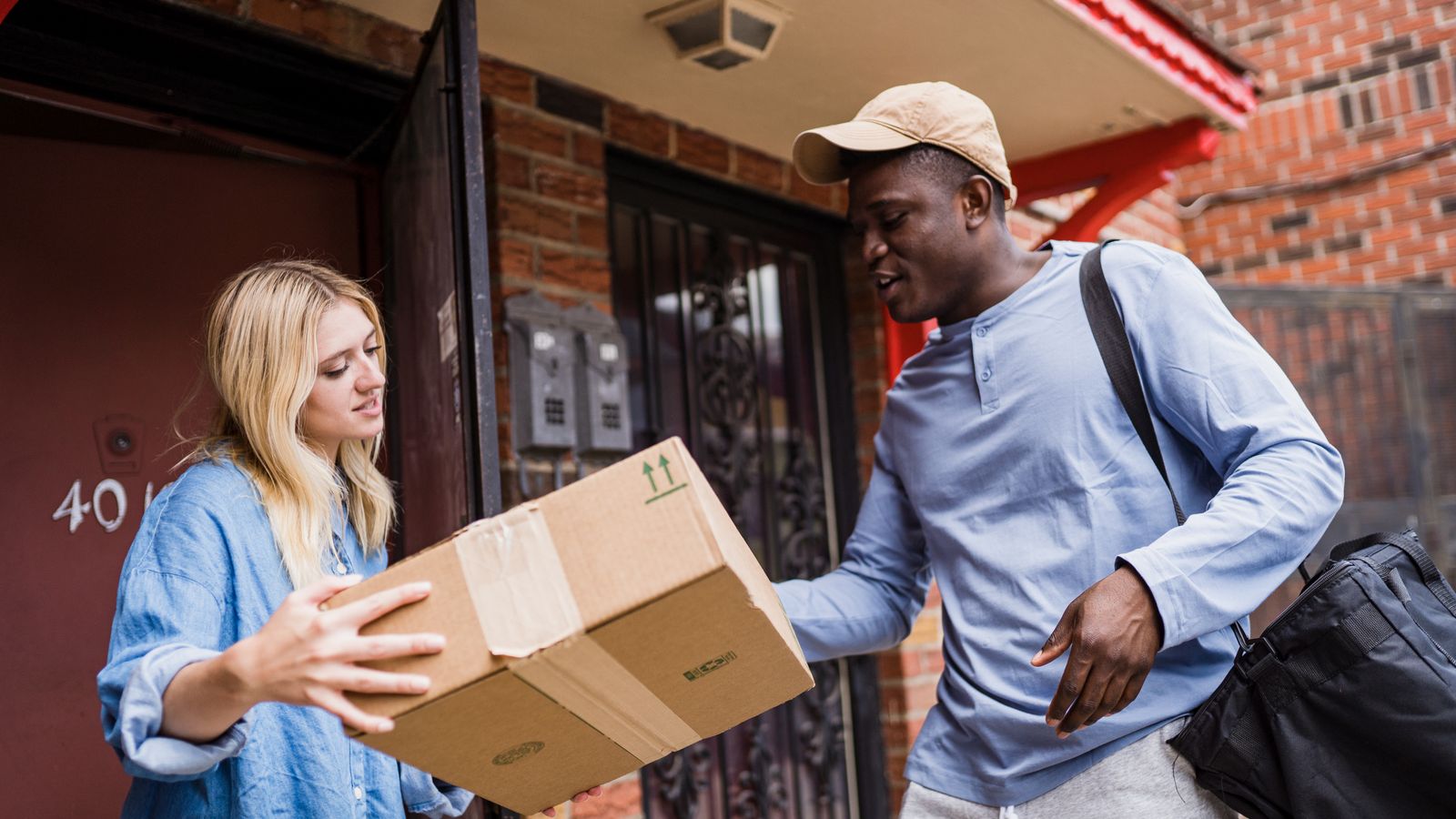
Cash on delivery, or payment on delivery, is the model in which the customer pays only when the order arrives. See the definition, the step-by-step flow, the advantages and risks for the seller, the metrics that matter and where COD is used.
Cash on delivery (COD), or payment on delivery, is the sales model in which the customer pays only when the order is received, in cash or, in some cases, by card on the courier's handheld terminal. For the seller, COD reduces buyer distrust and lifts conversion, but it brings refusal risk and delayed receipt of funds.
The expression appears in stores worldwide under different names: contra entrega in Portuguese, contrassegno in Italy, contra reembolso in Spain, utánvét in Hungary, الدفع عند الاستلام in Arab countries. The mechanism is the same, and the consequences for cash flow, margin and operations are far bigger than the simplicity of the concept suggests.
This guide is the starting point: it defines COD, shows the full flow of an order, compares advantages and risks, presents the metrics that decide the outcome, indicates where the method is used and explains when it is worth offering. Market figures appear only with a public source linked at the end, and the numerical examples are hypothetical, just to illustrate the math.
What is cash on delivery, in one definition
COD is a payment method deferred until delivery. The order is placed and confirmed with no upfront charge. The product is dispatched. When it reaches the address, the courier collects the agreed amount. Only then does the sale turn into money.
Three characteristics define the model:
- Payment risk stays with the seller. If the customer refuses or is not present, the seller has already paid for product, packaging and outbound freight.
- The money passes through an intermediary. The courier collects, the carrier consolidates and the payout to the seller happens later, in cycles.
- Order confirmation is part of the process. Since there is no prior payment, the store needs to validate that the order is real before dispatching.
Do not confuse COD with deferred payment or with a bank slip or voucher. In COD, the charge happens in hand, at the door, at the moment of delivery. In deferred payment, there is a later due date. With a voucher, payment is upfront or concurrent with the order, through another channel.
How a COD order flows, step by step
- Choice at checkout. The customer selects "pay on delivery" and enters name, phone number and address.
- Confirmation. The store or the operation calls or sends a message, usually by WhatsApp or SMS, to confirm that the order is real, the address is right and the customer agrees to receive it. It is the filter that weighs most on the result.
- Picking and dispatch. The order leaves the stock and goes to the carrier.
- Delivery attempt. The courier attempts delivery at the address and collects the amount on the spot.
- Collection. The customer pays in cash or, depending on the market, by card on the terminal.
- Return in case of refusal. If the customer refuses or is not found after the attempts, the parcel goes back to the warehouse, with the cost of outbound and return freight and handling.
- Reconciliation and payout. The carrier collects the amounts, reconciles them with the orders and remits to the seller. The post on COD reconciliation and payout explains why this money is slow and where it gets lost.
Two practical observations. First: COD moves working capital. You pay for product and freight before receiving, and the payout period enters your cash flow. Second: an order cancelled before dispatch costs no freight, which is why active confirmation is so valuable.
Advantages of COD for the seller
- Higher conversion with a wary audience. A customer who has never heard of the store buys with less fear when they pay only after receiving.
- Access to those who do not pay online. Part of consumers have no card, do not trust typing details into a site, or prefer cash.
- Less card fraud. With no online card, there is no fraud chargeback on the order.
- Competitive differentiator in markets where the method is a habit. In markets with a strong COD culture, not offering the method reduces conversion.
- Pairs well with social media and video traffic. It is a warm but wary audience, and COD removes the payment barrier.
Risks and costs of COD
- Refusal at the door. The customer backs out at the moment of paying, from second thoughts, lack of cash or because the product does not match the ad.
- Fake or unanswered orders. Incorrect details, pranks and nonexistent phone numbers generate lost freight.
- Outbound and return freight. Every unpaid order has logistics cost with no revenue.
- Time to receive funds. The money arrives after delivery, and the cycle weighs on working capital.
- Reconciliation risk. A gap between what was collected and what was remitted requires checking.
- Method fee. Depending on the operator, collection on delivery has its own cost, which must enter the margin math.
The metrics that decide the outcome
There are three numbers that people mix up and that are not the same thing.
- Refusal rate: orders refused at the door divided by orders delivered to the address. It measures customer behavior at the moment of paying.
- Buyout (acceptance rate): orders paid divided by orders dispatched. It includes what never reached the door (wrong address, absence, loss). It is the number that rules cash.
- Margin per dispatched order: what is left after product, ads, outbound freight, return freight and handling, divided by all dispatched orders.
A hypothetical example to show the difference. Imagine 1,000 dispatched orders. Fifty never reach the door, and 950 are delivered. Of those, 90 are refused and 860 are paid. The refusal rate is 90 ÷ 950 = 9.5%. Buyout is 860 ÷ 1,000 = 86%. Anyone looking only at refusal thinks 90.5% of volume turns into money, but the bank receives 86%.
Our post on the COD refusal rate shows how to calculate it, what is normal and how to lower it.
How to calculate whether COD is profitable
The correct math uses the dispatched order as the base:
- Revenue from paid orders.
- Minus the product cost of all orders that left, including those that came back, if the product cannot be resold.
- Minus outbound freight on all orders and return freight on the unpaid.
- Minus ad cost, confirmation, packaging and method fees.
- Divide by the number of dispatched orders.
A frequent mistake is dividing profit by paid orders. That hides the loss caused by those who did not pay. The post on how to calculate COD margin explains each field with an example.
Where COD is used
The method exists worldwide, with very different weight by region.
- Central, Eastern and Southern Europe. Payment on delivery is part of the buying habit in several countries. ECDB research shows, for example, that the share of online stores offering cash on delivery exceeds 80% in Bulgaria and Slovakia. That measures offer by stores, not the share of orders paid at the door. The guide to COD by country in Europe details the picture, and the post Cash on Delivery in Europe: More Than a Trend, a Culture is the starting point for the continent.
- Middle East. Checkout.com records that regional COD preference fell from 41% in 2020 to 20% in 2023, with about 10% in the UAE, Saudi Arabia and Kuwait. The method remains relevant for new buyers and little-known stores. See the guides to cash on delivery in the UAE and cash on delivery in Saudi Arabia, plus the comparison COD in the Gulf versus COD in Europe.
- South Asia, Southeast Asia, Africa and Latin America. COD has a historically strong presence in markets with lower card penetration and banking access.
The reading rule: do not compare COD numbers across regions without checking what each source measures. Stated preference, share of transactions, share of value and share of stores offering it are different measures.
When it is worth offering COD
COD tends to work well when:
- You sell to cold traffic, with a brand still unknown.
- The ticket is low or mid and the margin supports refusals.
- The market has a habit of paying on delivery or part of the audience distrusts paying online.
- You have an order confirmation process working and measure buyout by campaign.
COD tends to work poorly when:
- The ticket is very high and the margin is tight.
- The product is hard to resell once returned.
- There is no order confirmation or buyout measurement.
- The market has already moved mostly to digital payment and COD only attracts low-quality orders.
A frequent solution is to offer COD alongside online payment. The post COD or prepayment? How to decide market by market shows how to decide.
Good practices for operating COD
- Confirm every order before dispatching, in the customer's language and through the channel they use.
- Validate phone and address at checkout.
- Be faithful to the ad. A promise the product does not keep becomes a refusal.
- Measure by dispatch cohort and by traffic source, never just the overall average.
- Include refusals in the margin math before scaling ads.
- Track reconciliation. Compare what was collected, what was remitted and what was held.
- Respect the product and regulation of the destination market. Cosmetics, supplements and electronics have their own rules.
Where N1 fits into this math
N1 is a fulfillment and cash-on-delivery platform for sellers who want to sell with COD in European markets and in the United Arab Emirates and Saudi Arabia. The store is integrated, the order follows the flow of confirmation, dispatch, delivery and reconciliation, and buyout and payout numbers are visible in one dashboard. Product, offer and audience decisions remain the seller's.
If you want to evaluate an operation, request a proposal on the cash on delivery page or talk to a specialist on WhatsApp.
Frequently asked questions
What does cash on delivery mean?
It means "payment on delivery". The customer places the order without paying in advance and pays on receipt, in cash or by card on the courier's terminal, depending on the market.
Is COD the same as "contra entrega"?
Yes. "Contra entrega" is the usual Portuguese translation of cash on delivery. In other languages, the term changes: contrassegno (Italian), contra reembolso (Spanish), utánvét (Hungarian).
Who pays the freight when the customer refuses the order?
In general, the cost of outbound freight, return and handling stays with the seller, unless a refusal charge is provided for in the contract with the logistics operator. That is why refusal enters the margin math.
What is the difference between refusal rate and buyout?
Refusal rate measures refused orders over orders delivered to the address. Buyout measures paid orders over dispatched orders and includes what never reached the door. Buyout is the number that reflects cash.
Does COD increase sales?
It tends to raise conversion of cold traffic and wary buyers, but the gain only becomes profit if buyout and margin can support refusals. Measure the result per dispatched order, not per created order.
Does COD carry fraud risk?
There is no card fraud on the order, but there are fake orders, nonexistent phone numbers and pranks. Confirmation before dispatch is the main defense.
In which countries is COD most used?
There is strong use in several countries of Central, Eastern and Southern Europe, parts of the Middle East, South Asia, Southeast Asia, Africa and Latin America. Intensity varies widely, and statistics measure different things, so compare with care.
Sources
- Cash on delivery is most used in Middle and Central Europe, ECDB, accessed 2026-09-28.
- Checkout.com's 4th annual MENA report finds cash on delivery usage halved, Checkout.com, May 2024, accessed 2026-10-03.