COD vs prepaid: should you offer cash on delivery in Europe and the Gulf?
· by Ariel Patrício · in Cash on Delivery · 14 min read
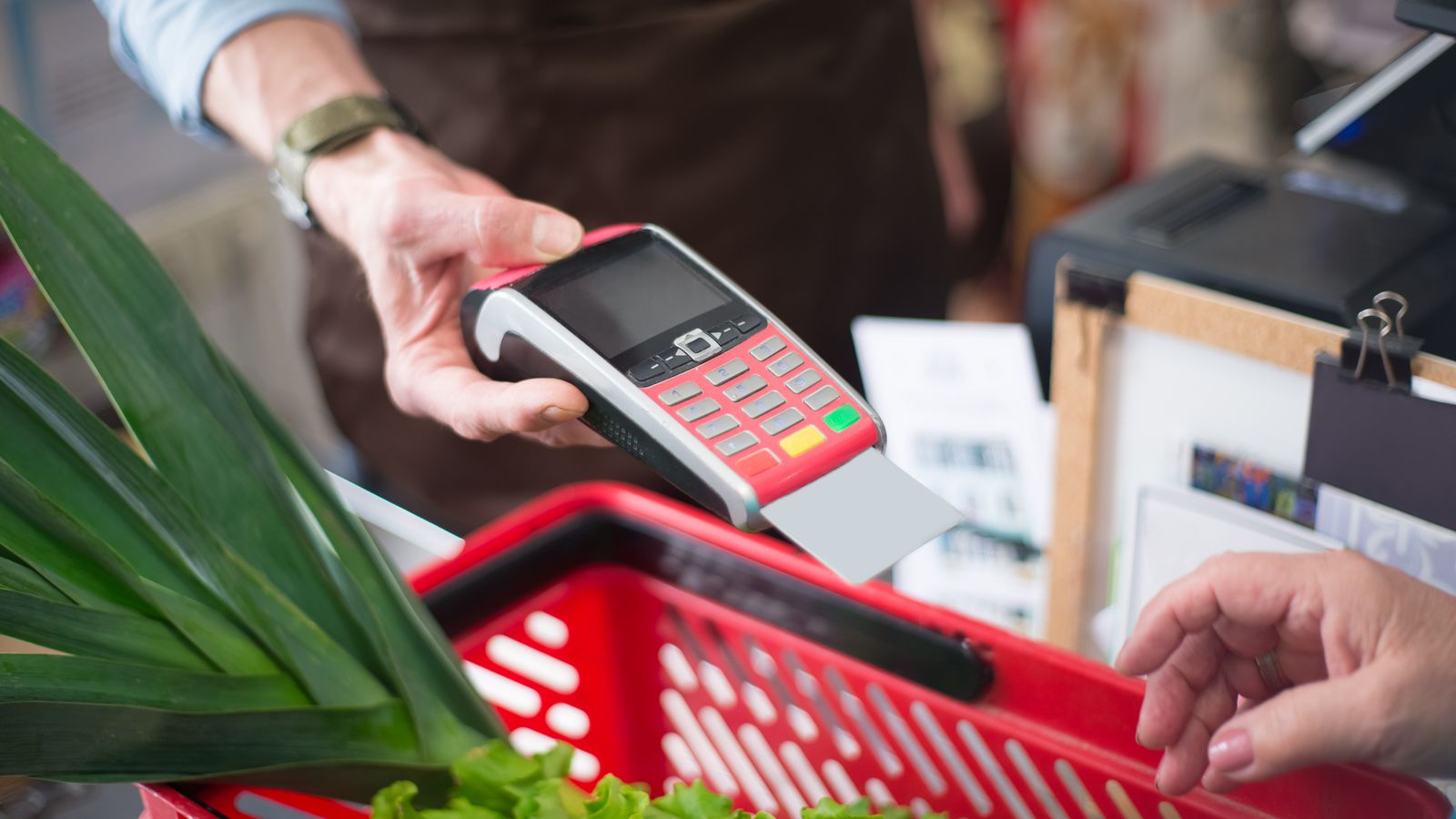
Cash on delivery pays off in some markets and hurts in others. A country-by-country decision table, COD vs prepayment compared, hybrid models and a worked example.
There is no global answer to COD vs prepaid. Cash on delivery pays off where it is a buying habit (Bulgaria, Romania, Slovakia, Croatia) and for unknown brands selling low-ticket products. Prepayment wins where shoppers already pay online without hesitation (Spain, Portugal, Germany, the urban Gulf). Most of the time, the right answer is to offer both.
"Should I offer cash on delivery?" is usually asked as if it were a question about company identity. It is not. It is a decision per market, per product and, ultimately, per order. The same store may need COD in Bulgaria and MB WAY in Portugal, and forcing the wrong method costs conversion on one side and margin on the other.
This guide breaks the decision into four parts: what each method buys and what it costs, a country table built on public data, the hybrid models that work, and a worked example you can redo with your own numbers. Market data comes from public sources listed at the end. All numerical examples are hypothetical.
What each method actually buys
Prepayment buys cash and predictability. Money arrives at checkout, no parcel comes back because the buyer refused it, and logistics cost per sale is lower. The price is conversion: in markets where shoppers will not hand money to a store they do not know, part of your traffic abandons checkout.
Cash on delivery buys conversion and market entry. It removes the buyer's risk and lets you sell where your brand means nothing yet. The price is doorstep refusals, outbound and return shipping on unpaid orders, order confirmation, and a longer cash cycle, because the money only exists after the customer pays and the operator remits it.
It is not a choice between good and bad. It is a choice about which cost you would rather carry: checkout abandonment or doorstep refusal.
Cash on delivery vs prepayment, side by side
| Criterion | Cash on delivery (COD) | Prepayment |
|---|---|---|
| Checkout conversion | Higher with cold traffic and unknown brands | Higher with buyers who already trust paying online |
| Refusal risk | Real: buyer refuses at the door or cannot be reached | Close to zero; the risk becomes returns and refunds |
| Cash flow | You pay for product and shipping first; you get paid after delivery and remittance | Paid at checkout (minus the acquirer's settlement delay) |
| Payment cost | COD collection fee, confirmation, return shipping | Acquirer or wallet fee |
| Chargebacks | No card chargeback on the order | Yes, for fraud or disputes |
| Fraud | Fake orders, invalid phone numbers, pranks | Stolen cards, card testing |
| Ticket size | Works worse as the amount due at the door grows | Indifferent to ticket size |
| Operations | Needs active confirmation and reconciliation | Needs fraud screening and dispute handling |
Two points deserve attention. First, COD does not remove the right of withdrawal: in the EU, Directive 2011/83/EU gives consumers 14 days to withdraw from a distance purchase, whether they paid upfront or on delivery. Second, prepayment also has "refusals", under other names: returns, refunds and chargebacks. Compare net results, not approval rates.
Decision table by market
N1 runs cash on delivery in 16 markets: 12 in Europe and 4 in the Gulf. The weight of COD varies a lot between them. The table uses public data only and states what each source measures, because "share of stores offering COD", "share of shoppers who have used it" and "share of purchases paid on delivery" are different numbers.
| Market | Role of COD | Public data point | Offer alongside |
|---|---|---|---|
| Bulgaria | Habit | 80.3% of online stores offer it (ECDB, 2025) | Card |
| Romania | Habit | About two thirds of transactions (ARMO association, European E-commerce Report 2025) | Card, buy now pay later |
| Slovakia | Habit | 80.1% of stores offer it (ECDB, 2025) | Card |
| Croatia | Strong | 42% of online shoppers paid with pouzeće (Ipsos, 2023) | Card |
| Greece | Strong, shifting | 85.6% of stores offer it (ECDB, 2025); local association reports a shift to cards and wallets | Card, Apple Pay, Google Pay |
| Hungary | Strong, moving to card on delivery | Card on delivery 35% vs cash on delivery 30% in preference; 56% prepay when they can (PwC and DKSZ, 2026) | Card on delivery, prepayment |
| Czech Republic | Relevant | Dobírka is the no. 1 method offered by stores (ECDB); 13% of shoppers name dobírka (APEK survey) | Online card, Apple Pay, Google Pay |
| Poland | Relevant, minority | 60.7% of stores offer it (ECDB); 33% of shoppers have used it, 4% as their main method (Gemius, 2025) | BLIK |
| Italy | Optional | 52% of stores offer it (ECDB, 2024); 11% of purchases paid on delivery or on use, 1.2% in cash on delivery (Netcomm, 2025) | Digital wallet, card |
| Spain | Optional | 4.1% of online purchases; 26.1% of shoppers used it at least once in 2024 (ONTSI) | Card, Bizum |
| Portugal | Optional | No public COD figure found; MB WAY described as the local standard (European E-commerce Report 2025) | MB WAY, card |
| Germany | Optional | The local "pay after delivery" habit is invoice: 26.1% of online revenue in 2025 (EHI) | Invoice (Rechnung), PayPal |
| Saudi Arabia | Complementary | COD preference around 10% in 2023 (Checkout.com) | mada, card, wallets |
| United Arab Emirates | Complementary | Preference around 10% in 2023 (Checkout.com) | Card, wallets |
| Kuwait | Complementary | Preference around 10% in 2023 (Checkout.com) | Card, KNET |
| Qatar | Complementary | No country-level public data found | Card, wallets |
How to read it:
- Habit: COD should be the main checkout button. Without it, you lose most of the audience.
- Strong or relevant: offer COD and prepayment side by side. Let net results decide, not each method's share.
- Optional: prepayment is the default. COD is an extra for cold traffic and impulse products, if margin can absorb refusals.
- Gulf: Checkout.com reports that regional COD preference fell from 41% in 2020 to 20% in 2023. COD still converts buyers who do not know the store, but a COD-only checkout loses sales. COD in the Gulf vs Europe covers the differences in addresses, language and calendar.
Country detail for Europe is in COD by country in Europe and in the COD Europe Map 2026.
Signals that a market wants COD
- Local competitors show pay on delivery at checkout.
- There is a native word for it (utánvét, dobierka, pouzeće, наложен платеж, ramburs).
- A meaningful share of buyers does not use cards online or distrusts foreign stores.
- You have no brand recognition there yet and sell through cold social traffic.
Three out of four already justify a test.
Signals that COD will not pay off
- Your margin cannot absorb double-digit refusals. See how to calculate COD margin.
- The ticket is high enough that money on the street becomes a risk.
- Local buyers already pay by card, wallet or instant payment without thinking.
- You need the money on the day of the sale.
Point 4 is the most underestimated. The COD cash delay is not a flaw to fix. It is how the model works: the product ships, the courier collects, the carrier consolidates, and only then is the money remitted. COD reconciliation and payout shows where that money waits.
Hybrid models that work
The best answer is rarely "COD only" or "prepaid only". The common setups:
Prepaid with a discount
Keep COD and offer a small discount, or free shipping, to buyers who pay upfront. Buyers who trust you switch to prepayment, and those who do not keep buying. In the EU, offering a discount for a payment method is allowed. The reverse, surcharging card payments, is banned for the cards and transfers covered by the Payment Services Directive (PSD2), Article 62.
COD with a fee
Some stores charge extra for paying on delivery to rebalance the cost. Mind the legal limit: Article 19 of Directive 2011/83/EU bans charging consumers, for using a payment method, fees above the cost the trader bears for that method. Check the amount and how you display it with a local lawyer or accountant before applying it. In habit markets, a fee can also kill the conversion you were trying to buy.
Card on delivery
The courier takes payment on a card terminal instead of cash. For the buyer it is still paying on receipt. For you, it reduces reliance on cash. Hungary is the clearest case: the PwC and DKSZ survey shows card on delivery (35%) already ahead of cash on delivery (30%) in buyer preference. In Hungary, COD is collected in forint (HUF).
Local methods instead of international cards
In many markets, COD's real competitor is not Visa. It is the local method people use every day:
- Poland: BLIK. The Gemius 2025 report shows 72% of online shoppers using BLIK, against 33% who have ever paid on delivery.
- Portugal: MB WAY, described by the national association as the local standard.
- Spain: Bizum, which has become a standard checkout option according to the Spanish association in the European E-commerce Report 2025.
- Germany: buying on invoice (Rechnung), often provided through services such as Klarna. It is Germany's "pay after you receive it", with 26.1% of online revenue in 2025 according to EHI.
- Saudi Arabia: the mada network. Kuwait: KNET.
Where a strong local method exists, it usually solves the same objection COD solves (not typing a card into an unknown store) without the cost of doorstep refusal.
By product type
The market sets the starting point. The product adjusts it.
| Product type | Leaning | Why |
|---|---|---|
| Impulse, low ticket (gadgets, beauty, accessories) | Strong COD | Fast decision, the ad is the shop window, and the perceived risk of paying first is the main obstacle |
| Supplements and nutraceuticals | Strong COD, with regulatory care | Good fit with cold traffic; requires a notified product and a label in the local language |
| Mid ticket with variants (apparel, shoes) | Hybrid | Wrong size leads to refusal; COD converts, but exchanges weigh |
| High ticket (electronics, furniture) | Prepaid or card on delivery | A large amount at the door raises second thoughts and in-transit risk |
| Repeat purchases (consumables, subscriptions) | Prepaid after the first order | The buyer already trusts you; COD only earns its cost on the first sale |
A Slovak platform data point illustrates the last row: most customers who choose dobierka are placing their first order with that store and switch to card on later orders (TOUCHIT, Upgates data, 2026). It is platform data without published methodology, so treat it as a hint, not a rule.
Worked example: the same ad spend with and without COD
Hypothetical round numbers, just to show the logic. A 49 euro product, 8 euro product cost, 6 euro outbound shipping, 4 euro return shipping, 5,000 euros of ad spend. A 3% card fee on prepaid and a 2% collection fee on COD. Returned parcels go back to stock.
Scenario A, prepaid only: 200 paid orders.
- Revenue: 200 × 49 = 9,800 euros
- Costs: product 1,600, shipping 1,200, card fee 294, ads 5,000 = 8,094 euros
- Profit: 1,706 euros, received almost immediately
Scenario B, COD only: the same ads generate 320 orders. Confirmation cancels 48 before dispatch (0.50 euro confirmation cost per order created). 272 ship. With an 80% buyout, 218 are paid and 54 come back.
- Revenue: 218 × 49 = 10,682 euros
- Costs: product 1,744, outbound 1,632, returns 216, collection fee 214, confirmation 160, ads 5,000 = 8,966 euros
- Profit: 1,716 euros, received after delivery and remittance
Scenario C, COD at 70% buyout: of 272 shipped, 190 are paid and 82 come back.
- Revenue: 9,310 euros
- Costs: product 1,520, outbound 1,632, returns 328, fee 186, confirmation 160, ads 5,000 = 8,826 euros
- Profit: 484 euros
What the numbers show: COD brought 60% more orders created but only 9% more paid orders, with profit almost identical to prepaid at an 80% buyout. Ten points less buyout cut profit by more than two thirds. That is why the decision depends on the market's real buyout, measured by dispatch cohort, not on the order count in your dashboard. COD refusal rate explains how to measure it.
How to test without betting the business
- Pick one market and one product with comfortable margin.
- Run COD and prepayment in parallel, in the same checkout, with the same ads.
- Compare paid orders and profit per shipped order, not orders created.
- Give orders time to close the loop: COD has no result until delivery and remittance.
- Decide for that market only, and review every quarter.
Step 3 separates a useful test from a misleading one. COD almost always wins on orders created and does not always win on paid orders.
Frequently asked questions
Should I offer cash on delivery?
Yes in markets where it is a habit (Bulgaria, Romania, Slovakia, Croatia) and, in mixed markets, if you are an unknown brand with an impulse product and a margin that can absorb refusals. Where buyers pay online without hesitation, COD tends to bring lower-quality orders.
Can I offer COD and prepayment at the same checkout?
Yes, and in strong COD markets that is usually the best setup. Buyers who trust you pay first, and those who do not still buy. A small prepaid discount helps move part of the audience.
Which is riskier, cash on delivery or card?
They carry different risks. COD risks refusals, fake orders and lost shipping. Cards risk chargebacks, fraud and refunds. COD has no card chargebacks, but each refused order costs outbound and return shipping.
Does offering COD cannibalise prepayment?
Partly. Some buyers who would have paid upfront choose to pay on delivery. That is why you compare the total checkout result, not each method's share.
Can I charge a fee for cash on delivery?
In the EU, Directive 2011/83/EU bans payment-method fees above the cost the trader bears for that method. Validate the amount and its display with a local professional. A prepaid discount is usually the simpler route.
Does COD work in the Gulf?
As an alternative, not as the main method. COD preference fell to around 10% in the UAE, Saudi Arabia and Kuwait in 2023, according to Checkout.com. Offer cards, wallets and local methods alongside it.
Where N1 fits
N1 runs cash on delivery in 16 markets, 12 in Europe and 4 in the Gulf, with our warehouses in Europe, order confirmation, delivery, reconciliation and payout on D+2, with withdrawals to a global account or in crypto. You connect your store, choose the payment method per market, and track buyout and payouts in one dashboard. Product, offer and product compliance decisions stay with you.
To assess your case, see the cash on delivery solution and request a proposal, or talk to a specialist on WhatsApp.
Sources
- Cash on Delivery Is Most Used in Middle and Central European eCommerce, ECDB, June 2025.
- European eCommerce Market Size 2024, ECDB, October 2024.
- European E-commerce Report 2025 (light version), Ecommerce Europe and EuroCommerce, 2025.
- E-commerce w Polsce 2025, Gemius, PBI, IAB Polska and ALK.
- Digitális Kereskedelmi Körkép, PwC Hungary and DKSZ, September 2026.
- Pouzeće raste iz godine u godinu, eCommerce Hrvatska with Ipsos data, July 2024.
- Stav české e-commerce, Česká e-commerce with APEK.
- L'eCommerce B2c in Italia supererà i 62 miliardi, Consorzio Netcomm, April 2025.
- Compras online en España 2025, ONTSI.
- Smartphone statt Portemonnaie: Mobile Payment boomt, EHI Retail Institute, May 2026.
- Checkout.com's 4th annual MENA report, Checkout.com, May 2024.
- Dobierka na Slovensku prežíva aj v ére okamžitých platieb, TOUCHIT with Upgates data, June 2026 (platform data).
- Directive 2011/83/EU and Directive (EU) 2015/2366, EUR-Lex.