Cash on delivery in Portugal: how envio à cobrança works, safety and when it pays
· by Ariel Patrício · in Cash on Delivery · 12 min read
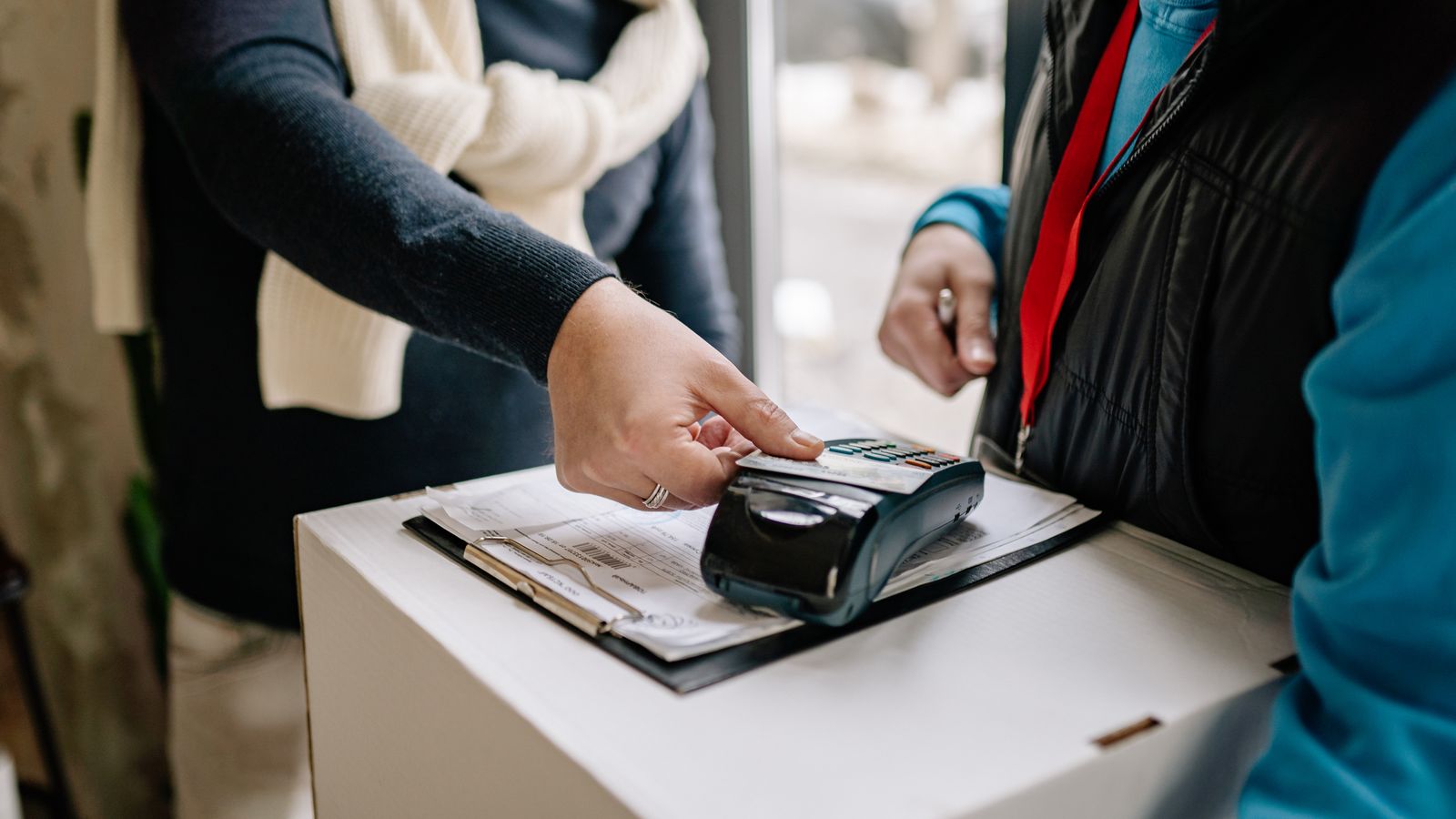
With envio à cobrança, the Portuguese customer pays on delivery and the carrier passes the money to the seller. How COD works in Portugal, how it compares with MB WAY, what to tell buyers who ask if it is safe and how to avoid refusals.
Cash on delivery in Portugal, locally called envio à cobrança, is a delivery where the customer pays for the order on receipt, in cash or with a Multibanco card, and the carrier passes the amount to the seller by bank transfer or postal money order. Only 7.4% of Portuguese online shoppers use it, but it is seen as safe and helps convert buyers who do not know the store yet.
Updated on November 14, 2026.
In Portugal, cash on delivery (COD) goes by two names: envio à cobrança (literally "shipment on collection") and pagamento na entrega ("payment on delivery"). Those are the words a Portuguese buyer sees at checkout and on the carrier's notice, so use them on your store. The mechanics are the same as anywhere else: the store ships without being paid, the carrier collects at the door and sends the money back to the seller later.
This guide is for non-EU sellers and affiliates selling into Portugal cross-border. But many people who search for "envio à cobrança" are consumers asking whether it is safe or a scam. Answering that question well, on the product page and in customer service, is part of selling with payment on delivery. That is why it gets its own section below.
How does cash on delivery work in Portugal, step by step?
- The customer chooses to pay on delivery at checkout and leaves a name, mobile number (telemóvel) and address (morada).
- The store confirms the order, by call or message, before shipping.
- The store ships with the collection service and states the exact amount to collect: product, shipping (portes) and any fee.
- The courier (estafeta) collects on delivery. If the customer is not home, a notice is left and the parcel usually waits at a pickup point for a period set by the operator.
- The carrier passes the amount to the seller, after deducting whatever was agreed.
- If the customer refuses or does not pick it up, the parcel goes back to the sender.
For a concrete reference on how the service works in the country, read the public terms of Portugal's main postal operator, CTT. On the Expresso para Amanhã page, CTT states that it accepts cash on delivery shipments up to 2,500 euros and that the recipient can pay in cash or by Multibanco. In the terms for sending parcels online (clause 5.5), the collected amount is returned to the sender by postal money order (carta-vale) or by bank transfer to the IBAN provided. On the Correio Registado page, the operator adds that Multibanco on delivery depends on availability. The COD surcharge is paid by the sender, and each operator publishes its own price.
Two points in those terms matter for sellers:
- The money does not arrive on delivery day. It goes through the operator, which pays out later. Between shipping and cash in the account, the operation needs working capital.
- Claim deadlines are short. In the general terms for Expresso parcel transport (clause 12.4), a claim for an unpaid collection must be made in writing within 30 days of the date the collection should have been received. If you do not reconcile every order, you miss that window without noticing. The post on COD reconciliation and payout shows how to do it.
How big is cash on delivery in Portugal?
Small, in volume. According to the Impact of the Digital Economy in Portugal 2025 study by ACEPI and Porto Business School (p. 51, in Portuguese), which reproduces the CTT eCommerce Report (500 shoppers, multiple answers allowed), these are the payment methods used for online purchases:
| Payment method | Online shoppers who use it (ACEPI 2025) | When the store gets the money | Main risk for the store |
|---|---|---|---|
| MB WAY | 47.4% | At purchase | Low; friction for buyers without the app |
| PayPal | 44.4% | At purchase | Disputes and reversals |
| Multibanco reference | 34.6% | When the customer pays the reference | Order created and never paid |
| Credit or debit card | 29.6% | At purchase | Chargebacks |
| Payment on delivery | 7.4% | After delivery and payout | Refusal at the door and cash tied up |
So Portugal is a market where COD is a niche. Portuguese shoppers mostly pay upfront, and MB WAY (a mobile wallet tied to the national Multibanco network, where you pay with a phone number) is the default. To compare with countries where COD is the majority, see COD by country in Europe.
Still, niche does not mean irrelevant. The question is not how many people use it, but who: the shopper who does not know your brand, who does not want to leave bank details with a new store, or who does not have MB WAY.
Is cash on delivery safe in Portugal? The answer for your customer
This is the section for answering the consumer. Adapt it, in European Portuguese, for your store's FAQ page and for customer service.
What the consumer association says
DECO PROteste, the main consumer protection association in Portugal, writes in its guide on consumer rights when shopping online that the safest option is to pay on delivery or to use methods that do not share bank details with the merchant, such as MB WAY. In its guide to online payment methods, DECO lists the advantage (no bank details entered at the store) and the drawbacks: there may be an extra fee, delivery can take longer and sometimes the exact amount in cash is needed.
The real risks, and how the consumer stays protected
Payment on delivery protects against one risk: paying and receiving nothing. It does not protect against all of them.
- Fake store. The GNR (Portugal's national guard) describes, on its page about online scams, sites that copy real stores and usually lack basic information: physical address, company name, landline, and they rarely issue an invoice. Before buying, the consumer should look for the store's name, address, NIF (Portuguese tax number) and contacts.
- Product different from the ad. On delivery, you pay before using the product. Buyers who paid on delivery have the same rights as those who paid upfront: 14 days to withdraw without giving a reason, according to Your Europe, and a 3-year legal guarantee in Portugal, under Decree-Law 84/2021.
- Fake "delivery fee" messages. With COD, the amount is paid to the courier or at the pickup point. An SMS or email with a link to pay a fee before delivery is not part of the service and should be treated as suspicious.
- A charge that was not agreed. The consumer should keep the order confirmation with the total price and the invoice delivered with the parcel.
If something goes wrong, the path is to complain to the store, file a complaint in the electronic Complaints Book (Livro de Reclamações) and, in case of fraud, report it to the PSP or the GNR.
What the store should show so the customer trusts it
- Company name, address, NIF, email and phone, visible in the footer and on the contact page.
- The total amount to pay at the door, including shipping and fees, at checkout and in the confirmation.
- The 14-day return policy and the guarantee, written in plain language.
- How the customer can pay on delivery (cash, card) and whether the exact amount is needed.
- A customer service contact that answers before delivery.
Why offer cash on delivery next to MB WAY?
Not to replace MB WAY. To capture the buyers who would not use any digital method at that store.
- First purchase from an unknown store. Trust is the barrier. The ACEPI study (p. 40) lists lower trust in digital payments among the reasons Portugal shops online less than the EU average: 60.5% of Portuguese people aged 16 to 74 bought online in 2025, against 73.6% in the EU, according to Eurostat.
- Social media traffic. Someone arriving from an ad decides in seconds. Not asking for bank details removes one objection.
- Buyers outside the digital mainstream. Some shoppers have neither MB WAY nor a card they use online.
The cost of offering it is refusal: the order ships, is not paid and comes back. So the rule is simple: COD only makes sense if your margin survives the worst delivery scenario. Run the numbers per shipped order, with refusals included, and compare formats in COD or prepayment. If you are new to the model, start with what is cash on delivery.
How do you reduce refusals with cash on delivery in Portugal?
There is no public data on the refusal rate in Portugal. The levers are the same as in any market:
- Confirm every order before shipping, by call or WhatsApp, in European Portuguese (not Brazilian Portuguese). It is the cheapest filter against fake orders and buyer's remorse.
- Show the exact total at checkout, in the confirmation and in the shipping message. A surprise at the door becomes a refusal.
- Ship from local stock. The longer the lead time, the more time the customer has to change their mind before the courier arrives.
- Notify before delivery, with tracking and a message the day before, so the customer has the money ready and is at home.
- Validate address and mobile number at checkout, with the Portuguese postcode format (0000-000).
- Stay true to the ad. Overpromising in the creative is the most common cause of refusal at the door.
The full guide, with the formula and the causes, is in COD refusal rate.
How N1 runs cash on delivery in Portugal
Portugal is one of the 12 European markets where N1 operates cash on delivery, alongside Poland, Spain, Romania, Hungary, Bulgaria, Croatia, Greece, Germany, Italy, Slovakia and the Czech Republic, plus 4 markets in the Gulf. In practice:
- The product sits in our warehouses in Europe, and every order ships from European stock, with no customs per order and no surprise tax at the door.
- The order is confirmed before dispatch, and only validated orders go out.
- Delivery and collection happen at the door, in euros.
- Reconciliation is order by order, and the amount collected is paid out on D+2, with withdrawal to a global account or in crypto.
This works for sellers who already have a product and want to sell in Portugal with cash on delivery, and for those who want to start without stock, promoting offers as an affiliate. For the full model, see cash on delivery in Europe. And if you are still choosing a business model, the guide to dropshipping in Portugal covers legality, taxes and suppliers.
Frequently asked questions
What is envio à cobrança?
It is the Portuguese name for cash on delivery: the customer pays for the order on receipt, not at purchase. The carrier collects the amount set by the seller and then passes it on. You will also see it called pagamento na entrega.
How does payment on delivery work for the seller?
The seller ships with the collection service and states the amount. The courier collects on delivery, and the carrier returns the money to the seller, by transfer to the IBAN or by money order, depending on the contract. If the customer refuses, the parcel goes back to the sender.
Is cash on delivery safe in Portugal?
For the consumer, DECO considers it one of the safest methods, because it does not require sharing bank details with the store. The remaining risk is buying from a fake store: check the seller's name, address and NIF, and keep the invoice. The 14 days to withdraw and the 3-year guarantee also apply to buyers who pay on delivery.
How do customers pay for a COD parcel in Portugal?
To the courier or at the pickup point, in cash or with a Multibanco card, when the operator has a terminal available. At CTT, for example, the limit is 2,500 euros per parcel.
Who pays the cash on delivery fee?
The COD surcharge is charged to the sender, who may or may not pass it on to the customer in the price. If you pass it on, it should appear at checkout, so there is no surprise at the door.
Is it worth offering cash on delivery in a Portuguese online store?
As an option next to MB WAY and cards, it usually pays off for new stores and social media traffic. Only 7.4% of shoppers use it, according to ACEPI, but they are precisely the ones who would not buy otherwise. With order confirmation and local stock, refusals stay under control.
Sell with cash on delivery in Portugal
If you want to offer envio à cobrança in Portugal without building carrier contracts, order confirmation and reconciliation from scratch, N1 runs the operation from our warehouses in Europe, with payout on D+2. Talk to a specialist and request a proposal.
Sources
- Expresso para Amanhã, CTT (in Portuguese), accessed 2026-10-07.
- Terms and conditions for sending parcels online, CTT, clause 5.5 (in Portuguese), accessed 2026-10-07.
- Correio Registado, CTT (in Portuguese), accessed 2026-10-07.
- General terms for Expresso parcel transport, CTT, clause 12.4 (in Portuguese), accessed 2026-10-07.
- Impact of the Digital Economy in Portugal 2025, ACEPI and Porto Business School, pp. 40 and 51 (in Portuguese), accessed 2026-10-07.
- Online shopping: consumer rights, DECO PROteste (in Portuguese), accessed 2026-10-07.
- Online payment methods: using them safely, DECO PROteste (in Portuguese), accessed 2026-10-07.
- Online scams, GNR (in Portuguese), accessed 2026-10-07.
- Returning goods bought online, Your Europe, accessed 2026-11-14.
- Decree-Law 84/2021 (guarantees in the sale of goods), Diário da República (in Portuguese), accessed 2026-10-07.
- isoc_ec_ib20: online purchases in the last 12 months, Eurostat, accessed 2026-10-07.