EU-Mercosur agreement and e-commerce: what changes for sellers in 2026
· by Lucas Reda · in Cash on Delivery · 21 min read
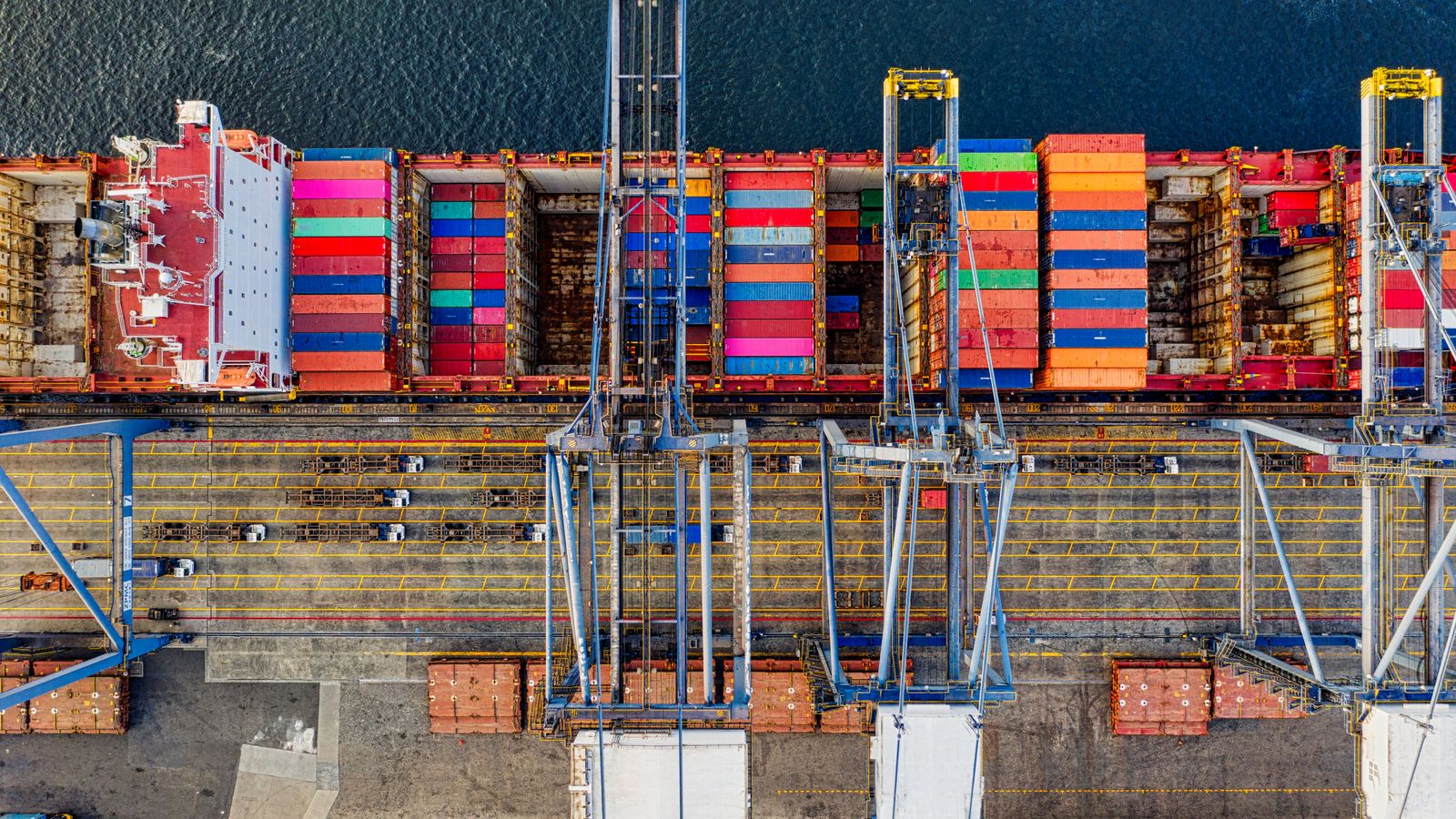
The deal cuts EU tariffs on goods originating in Mercosur, but IOSS parcels still pay €3 per item. Where it really helps, how rules of origin work, which sectors gain and what does not change.
The trade part of the EU-Mercosur agreement has applied provisionally since May 1, 2026, cutting or removing EU import duties on goods originating in Argentina, Brazil, Paraguay and Uruguay. It does not fix B2C parcels under €150: shipped under IOSS, they pay the €3 flat duty per item anyway. The real gain is on bulk stock imports.
Updated on November 3, 2026.
Since May, the headline has been the same: "the EU-Mercosur deal removes tariffs on most Mercosur exports to Europe." That is true, and it says little to a cross-border e-commerce seller. Zero tariffs apply to goods that originate in Mercosur, backed by a proof of origin and declared the right way at EU customs. A small parcel shipped from São Paulo or Buenos Aires to a consumer in Madrid rarely meets all three conditions.
This guide is written for non-EU sellers, especially those based in Mercosur countries, who sell to European consumers. It separates what the agreement changes from what it does not, with an official source for each claim. It builds on two related posts: the end of the €150 de minimis and the €3 duty and GPSR and the EU responsible person.
Disclaimer: this article describes public rules based on official sources. It is not customs or tax advice. Tariff classification, origin rules and proof of origin depend on your exact product. Check every operation with a licensed customs broker and a tax adviser before your first shipment.
Where does the EU-Mercosur agreement stand in 2026?
The EU-Mercosur Interim Trade Agreement has been provisionally applied since May 1, 2026, between the EU and all four Mercosur countries: Argentina, Brazil, Paraguay and Uruguay. Full entry into force still needs the European Parliament's consent, which is on hold while the EU Court of Justice reviews the text.
The timeline, from official sources:
| Date | What happened | Source |
|---|---|---|
| Dec 6, 2024 | Negotiations concluded | Brazilian government |
| Jan 9, 2026 | EU member states formally approve the deal and allow provisional application | European Commission |
| Jan 17, 2026 | Signature in Asunción, Paraguay | Brazilian government |
| Jan 21, 2026 | European Parliament asks the EU Court of Justice for an opinion (334 to 324 votes) | European Parliament |
| Mar 4, 2026 | Brazilian Senate approves the deal unanimously | Brazilian Senate |
| Apr 28, 2026 | Decree 12,953 brings the deal into Brazilian law | Brazilian government |
| May 1, 2026 | Provisional application of the trade part begins | European Commission |
| Jul 1, 2026 | EU scraps the €150 customs duty relief and introduces a €3 duty per item | European Commission |
| Nov 1, 2026 | €2 Union handling fee per item on distance sales applies (Delegated Regulation (EU) 2026/2152) | EUR-Lex |
| Jul 1, 2028 | Scheduled end of the temporary €3 duty | European Commission |
| Up to 12 years | EU removes duties on about 95% of Mercosur goods | Brazilian government |
| Up to 15 years | Mercosur removes duties on about 91% of EU goods | Brazilian government |
The European Commission's page on the agreement confirms the January 9 approval and provisional application from May 1. The European Parliament explains it can only vote on consent after the Court's opinion, and that a negative opinion would block entry into force unless the agreement is amended. Brazil's Siscomex page on the agreement lists the decree, the implementing ordinances and the manuals (in Portuguese).
In practice: preferences can be used today. The legal risk is long-term. There is no date for the Court's opinion, and opinions of this kind usually take more than a year.
What does the EU-Mercosur agreement change for e-commerce?
For e-commerce, the agreement changes the cost of moving Mercosur-made stock into the EU, not the cost of shipping parcel by parcel. The difference is the type of import.
A Mercosur product can reach a European consumer through two doors:
- B2C parcel, order by order. The customer buys, the order leaves Brazil or Argentina and crosses the border already addressed to them. For customs, this is a "distance sale of imported goods". Since July 1, 2026, consignments up to €150 in this flow have their own rule.
- Commercial bulk import. You ship a batch of goods, it is cleared as a normal import and stored in a warehouse. Each order then ships from inside the EU.
Free trade agreements are built for the second door. The first door runs into a separate EU rule.
Why doesn't the agreement help B2C parcels under €150?
Because every B2C consignment up to €150 declared under IOSS pays the €3 flat duty per item, whether or not the goods originate in Mercosur. A free trade preference can only be claimed outside IOSS, on a full customs declaration, which rarely pays off for a small parcel.
The detail is in the Commission's guidance on the €3 customs duty and the Union handling fee (version of October 5, 2026). The points that matter:
- Council Regulation (EU) 2026/382 abolished the €150 duty relief and introduced a duty of €3 per item from July 1, 2026 to July 1, 2028. An "item" is each tariff classification in the parcel, not each unit.
- The Commission states that the regulation imposes the temporary duty on all IOSS transactions. Any goods imported under IOSS pay the €3, whatever declaration dataset is used.
- Goods with a trade agreement preference can avoid the €3, but only if declared on the full H1 dataset with a preference code, and only if VAT was not collected through IOSS.
- Even with a preference, a distance sale remains subject to the €2 per item Union handling fee, in force since November 1, 2026 under Delegated Regulation (EU) 2026/2152. It applies to distance sales of imported goods of any value, including above €150, on top of the €3 duty.
Now picture a real parcel. To claim the preference outside IOSS, each consignment needs a full declaration in the destination country, a proof of origin, and import VAT collected on arrival. With cash on delivery and no IOSS, that VAT is usually collected from the customer at the door, on top of the order value. A customer who expected to pay €49 sees a different number and refuses the parcel.
Hypothetical example, round numbers. A €60 order with a T-shirt and a cap, shipped from Brazil under IOSS. Two tariff classifications: €6 in flat duty. With the handling fee, in force since November 1, 2026, another €4. The agreement removes none of that €10. Outside IOSS, you would swap those costs for a full declaration, a proof of origin and VAT charged at the door. For a parcel that size, the math rarely works.
The full rule is explained in our post on the EU de minimis removal and the €3 duty. Amounts and dates can change: the €3 duty is temporary and the Commission may propose widening it; as of November 3, 2026 no change had been published. Check the EU customs reform page before you decide.
Where the agreement really helps: bulk stock in an EU warehouse
The agreement helps when you import a batch of goods originating in Mercosur, clear them for free circulation on arrival and sell from a warehouse inside the EU. The consumer sale is then no longer an import, so the €3 duty and the €2 fee no longer hit each order.
Why does this work? The Commission's guidance defines a distance sale of imported goods by four elements. One of them is that the goods are outside the EU at the time of supply. When the batch was imported and released for free circulation before the customer orders, the sale happens with the goods already in the EU. The bulk import pays the normal EU tariff, or the agreement's preferential rate if the goods originate in Mercosur and origin is proven.
Three things operators learn fast:
- Release for free circulation on entry. The Commission's guidance says that goods sold to consumers while stored in a customs warehouse (not yet cleared) are treated as imported at each sale, pay the €3 duty and the handling fee, and generally cannot use trade agreement preferences. Ask your broker which procedure the batch will enter under.
- Import VAT on the batch. The batch pays import VAT. Each sale then carries the VAT of the buyer's country. Holding stock in an EU country usually requires a VAT registration there. The VAT One Stop Shop portal explains how non-EU sellers declare cross-border sales.
- An importer in the EU. Someone must act as importer, with an EORI number. The importer claims the preference, based on the proof of origin issued by the Mercosur exporter.
Hypothetical example, round numbers. A batch of 1,000 pairs of shoes with a customs value of €20,000. If the normal duty on that line were 8%, the bill would be €1,600. With the full preference, zero. With a partial preference in the first staging year, somewhere in between. That is €1,600 spread over a thousand sales, not €3 charged on every order. The actual rate for each line is in TARIC, the EU's official tariff database.
This is the model N1 runs: the batch goes to our warehouses in Europe and each order ships from there for local delivery. The full setup, from import to fulfillment, is on our Europe structure page.
What are rules of origin, and why doesn't "made in China" resold from Brazil count?
Rules of origin decide whether a product "is from Mercosur" under the agreement. Only goods wholly obtained in the bloc, or sufficiently processed there under the specific rule for their tariff heading, get the lower tariff. Buying a finished product abroad and reselling it from Brazil or Argentina does not create origin.
In plain terms:
- Wholly obtained means born in the bloc: fruit harvested in Brazil, honey produced in Uruguay, beef from cattle raised in Argentina.
- Sufficient processing means the product changes its nature inside the bloc, under the rule for each heading. It can be a change of tariff classification (the imported input becomes a different product), a cap on non-originating content or a required production step. Brazil publishes a lookup of product-specific rules by HS heading.
- Minimal operations do not count. Repacking, labeling, kitting or changing the box of an imported product does not transform it.
Earbuds bought in China and resold from São Paulo are still Chinese. A serum made in Brazil with imported actives may or may not be Brazilian: it depends on its heading's rule. The mistake we see most often from new sellers is assuming origin from the supplier's address. The rule for the heading decides, not the invoice.
Some features of the origin chapter, according to the Brazilian government:
- 10% tolerance for non-originating materials in general, with specific flexibilities for textiles.
- Cumulation only between the parties. An Argentine or European input can count as originating in a Brazilian product. A Chinese input cannot.
- Non-alteration. Goods may pass through distribution centers in other countries as long as they are not altered on the way.
For footwear, according to the Brazilian footwear association Abicalçados, the rule requires at least 60% regional content for lower-value shoes and bans uppers imported from outside the agreement. That is the lock against transshipment.
To test a product, the Commission offers the ROSA rules of origin self-assessment tool on Access2Markets.
Certificate of origin or self-certification: how is origin proven?
Origin is proven by a statement on origin made by the exporter (self-certification). During a five-year transition, a certificate of origin issued by an authorized body can also be used, optionally.
On the Mercosur side:
- In Brazil, the Siscomex page describes self-certification with a five-year transition in which certificates are optional, and verification run by the exporting country. SECEX Ordinance 490 of April 29, 2026 covers certification and self-certification. The Ministry's technical note says the declaration identifies the company by its CNPJ tax ID, carries a single signature and names no legal entity other than the producer or exporter.
- In Argentina, Disposición 1/2026 sets the procedure for exporters to issue the origin declaration for exports to the EU.
- For quota products (meat, sugar, ethanol, honey and others), an official quota certificate is needed on top of the origin declaration.
On the EU side, the statement on origin goes on a commercial document, usually the invoice, that describes the product in enough detail to identify it. The Commission's export factsheet points traders to Access2Markets and ROSA. Keep every document that supports origin: product specs, input invoices, production costs. In a verification, that file is what keeps the preference.
If you are not the manufacturer, ask your supplier one direct question: "Does this product meet the EU-Mercosur rule of origin, and will you issue the origin declaration?" If the answer is vague, assume no preference until proven otherwise.
Which products gain the most under the EU-Mercosur agreement?
Sellers of Mercosur-made goods that faced high EU tariffs, and whose tariffs fall quickly, gain the most. The EU will remove duties on about 95% of Mercosur goods, immediately or in 4, 7, 8, 10 and 12-year stages, according to the Brazilian government factsheet. Brazil's industry confederation CNI estimates, as reported by Agência Brasil, that more than 80% of the products Brazil sells to the EU already enjoy zero tariffs in the first phase.
For the categories that matter most in e-commerce:
| Category | Before the agreement | What the agreement does | What it means for sellers |
|---|---|---|---|
| Cosmetics (make-up and skin care) | The EU's general duty on heading 3304 is already zero for every country | Little or nothing on tariffs | The cost is CPNP, labeling and the responsible person, not customs |
| Footwear | EU duties between 3.5% and 17%, according to Abicalçados | Phased out over up to 10 years; leather shoes within 7 years | Gradual gain, with a strict origin rule (60% and uppers from the bloc) |
| Apparel | General EU duty of 12% on most finished garments | Long staging for clothing | Real advantage only in the medium term, and only for originating goods |
| Food and drinks | Mixed tariffs; many items under quotas | Quota-free fruit with duties removed; quotas for honey, rice, sugar and bulk cachaça; bottled cachaça under 2 liters liberalized in 4 years | Check the quota and staging for your line before pricing |
| Food supplements | Some headings carry an agricultural component in the duty | Depends on heading and staging | Classification comes first; notification rules do not change |
Two readings to avoid mistakes:
- Cosmetics sell well online, but the agreement barely moves their EU landed cost. There is nothing to cut where the duty was already zero. Regulatory compliance is still the real cost.
- "Phased out over up to 10 years" is not zero today. Check which staging category your line falls in. In year one, the cut may be partial.
To see what European shoppers actually buy online, by category and country, read our post on the best-selling products in Europe.
What changes and what doesn't: the summary table
| Topic | Does the agreement change it? | Where it stands |
|---|---|---|
| EU import duty on originating goods | Yes | Reduced or removed according to each line's staging |
| B2C parcels up to €150 under IOSS | No | €3 per item until July 1, 2028, Mercosur origin or not |
| €2 handling fee per item | No | In force since Nov 1, 2026 on distance sales of any value, preference or not |
| VAT | No | VAT of the buyer's country; import VAT on the batch |
| GPSR (general product safety) | No | EU economic operator and listing information still required |
| Cosmetics | No | CPNP notification, safety report and EU responsible person |
| Food supplements | No | National notification and labeling in each country |
| Food labeling | No | Local-language labels under Regulation 1169/2011 |
| Proof of origin | New | Exporter's statement on origin; optional certificate during transition |
| EU goods in Mercosur | Yes | Mercosur duties fall over up to 15 years |
What the agreement doesn't change: VAT, GPSR, labels and notifications
The agreement changes import tariffs. It changes none of the EU's market rules. A Mercosur product with a zero tariff must still meet every requirement a European product meets.
- VAT. Consumption tax is due in the buyer's country. The agreement does not reduce VAT or create exemptions.
- GPSR. Regulation (EU) 2023/988 requires an economic operator established in the EU for every product sold there, and manufacturer and responsible person details in the online listing. N1 is not the GPSR economic operator for sellers' products. See our post on GPSR and the EU responsible person.
- Cosmetics. Regulation (EC) 1223/2009 requires an EU responsible person, a safety report and CPNP notification before sale.
- Food supplements. Directive 2002/46/EC lets each country require notification, and many do.
- Food labeling. Regulation (EU) 1169/2011 sets mandatory information, in the language of the country of sale.
When a product needs registration or notification (supplements, cosmetics), N1 provides an EU responsible party for that purpose where needed, through our consulting and production services. That is not the same as the GPSR economic operator role.
The other side: cheaper EU goods in Mercosur
The agreement runs both ways: Mercosur will remove duties on about 91% of EU goods over up to 15 years. Sellers in Brazil, Argentina, Uruguay or Paraguay who compete with European imports will see that competition get cheaper, step by step.
The European Commission lists the duties Mercosur used to charge on EU goods: wine up to 35%, olive oil up to 31.5%, chocolate 20%, cheese up to 28%, cars up to 35%, pharmaceuticals up to 14%. According to the Brazilian government, about 9% of goods stayed on Mercosur's exclusion list, and some sensitive items have up to 30 years.
For Mercosur e-commerce, that cuts two ways:
- Importers of European products should see margins improve as tariffs fall, if the goods originate in the EU and origin is proven.
- Local manufacturers competing with European brands (wine, cheese, chocolate, imported cosmetics) will face cheaper rivals over the years. It is a good reason to treat Europe as a sales channel, not just a threat.
Pros and cons of the agreement for cross-border sellers
Pros:
- Lower or zero tariffs on Mercosur-origin goods, including bulk stock imports.
- Proof of origin through self-certification, without depending on a third-party certificate.
- Predictability: published staging schedules and preferences already in effect.
- At the end of staging, tariff parity with countries that already had EU deals, such as Vietnam, according to Abicalçados' reading for footwear.
Cons and limits:
- No help for B2C IOSS parcels, the model most new sellers start with.
- Requires real origin: resold imports get nothing.
- Slow staging for the most common consumer categories (footwear and apparel).
- Long-term legal risk until the EU Court of Justice rules.
- Cheaper European competition at home.
What this means if you sell with cash on delivery from local stock
For COD sellers in Europe, the agreement reinforces a decision the end of the €150 relief had already pushed: sell from local stock, not from international parcels.
The logic is simple. With stock in an EU warehouse, the order ships from nearby, arrives in days, and the customer pays at the door only the order value, with no surprise VAT. The €3 duty and the handling fee stay out of each order's math. If the product is made in Mercosur and meets the rule of origin, the batch also enters at the agreement's rate.
N1 runs cash on delivery in 16 markets: 12 in Europe (Poland, Spain, Portugal, Romania, Hungary, Bulgaria, Croatia, Greece, Germany, Italy, Slovakia and the Czech Republic) and 4 in the Gulf (Saudi Arabia, the UAE, Kuwait and Qatar). Orders ship from our warehouses, COD is reconciled order by order and payouts are made on D+2. In Hungary, COD is collected in forints (HUF). Customs and tax on the batch remain the responsibility of the seller and their broker and accountant.
Before shipping a batch, model your margin with shipping, refusals and CPA using our guide on how to calculate COD margin. If you have no product of your own yet, see how to sell in Europe without inventory.
Checklist before your first preferential batch
- Classify the product (HS/CN/TARIC) with your broker. Without the right code, nothing below works.
- Check the duty and staging category for the line in TARIC and in the published schedules.
- Test the rule of origin for the heading in the Siscomex lookup or in ROSA. If there are non-bloc inputs, calculate the share.
- Decide who issues the origin declaration: you, if you manufacture and export, or your supplier.
- Appoint the EU importer, with an EORI number, and set the entry procedure (release for free circulation on arrival).
- Sort out VAT in the warehouse country with your accountant.
- Sort out product compliance: GPSR, labels, cosmetics or supplement notification.
- Keep the origin file for at least the period the rules require (three years under Argentina's rule, for example).
Frequently asked questions
Is the EU-Mercosur agreement in force?
Yes, the trade part has been provisionally applied since May 1, 2026, between the EU and all four Mercosur countries. Full entry into force needs the European Parliament's consent, which waits for the EU Court of Justice's opinion. Meanwhile, tariff preferences can already be used.
Does the EU-Mercosur agreement remove the €3 duty on parcels?
No. Under the Commission's guidance, every consignment up to €150 declared under IOSS pays €3 per item, with or without Mercosur origin. The preference can only be claimed outside IOSS, on a full declaration, and distance sales stay subject to the €2 per item handling fee, in force since November 1, 2026.
Which products get zero tariffs under the EU-Mercosur agreement?
About 95% of Mercosur goods will reach zero EU tariffs, some immediately and others in 4, 7, 8, 10 or 12 years. Brazil's CNI estimates that more than 80% of the products Brazil sells to the EU already have zero tariffs in the first phase. Footwear and apparel are in longer stages; check your line in TARIC.
Do I need a certificate of origin to export to the EU from Mercosur?
Not necessarily. The agreement uses self-certification by the exporter. For the first five years, a certificate from an authorized body can be used optionally. Quota products also need an official quota certificate.
Can Chinese products resold from Brazil get the lower tariff?
No. Only goods originating in Mercosur qualify: wholly obtained in the bloc, or sufficiently processed there under the rule for their tariff heading. Repacking, labeling or kitting does not create origin.
What are the pros and cons of the EU-Mercosur deal for e-commerce?
The upside is lower tariffs on Mercosur goods imported in bulk and origin proven by self-certification. The downside is that IOSS parcels gain nothing, footwear and apparel phase in slowly, and European goods will get cheaper in Mercosur markets.
Want to move Mercosur-made stock into Europe?
If your product originates in Mercosur and you want to sell with cash on delivery from local stock, N1 runs the operation from our warehouses in Europe and the Gulf. Talk to a specialist and request a proposal.
Sources
- The EU-Mercosur trade agreement, European Commission, accessed 2026-11-03.
- Factsheet: Provisional application of the EU-Mercosur agreement, how to export goods and services, European Commission, accessed 2026-10-08.
- EU-Mercosur: MEPs demand a legal opinion on its conformity with the EU treaties, European Parliament, January 21, 2026.
- The temporary EUR 3 customs duty and the Union handling fee: guidance for Member States and Trade, DG TAXUD, European Commission, version of October 5, 2026.
- EU customs reform, European Commission, accessed 2026-11-03.
- Commission Delegated Regulation (EU) 2026/2152, Union handling fee, EUR-Lex, OJ L of 22/10/2026.
- Council Regulation (EU) 2026/382, EUR-Lex.
- The One Stop Shop, European Commission.
- Acordo entre Mercosul e União Europeia, Siscomex, Brazilian government (Portuguese), accessed 2026-10-08.
- EU-Mercosur Partnership Agreement factsheet, Brazilian government (Portuguese).
- Product-specific rules of origin by HS heading, Siscomex (Portuguese).
- Disposición 1/2026, Ministry of Economy, Argentina (Spanish).
- CNI: Mercosur-EU deal zeroes tariffs on 80% of exports to Europe, Agência Brasil (Portuguese), April 29, 2026.
- Regulation (EU) 2023/988 on general product safety, EUR-Lex.
- Regulation (EC) 1223/2009 on cosmetic products, EUR-Lex.
- Directive 2002/46/EC on food supplements, EUR-Lex.
- Regulation (EU) 1169/2011 on food information, EUR-Lex.
- TARIC and Access2Markets, European Commission.
- Agreement with the EU will open opportunities for Brazilian footwear, Abicalçados (Portuguese), January 12, 2026.