EU de minimis removal: the 3 euro duty and 2 euro fee for non-EU sellers
· by Lucas Reda · in Cash on Delivery · 21 min read
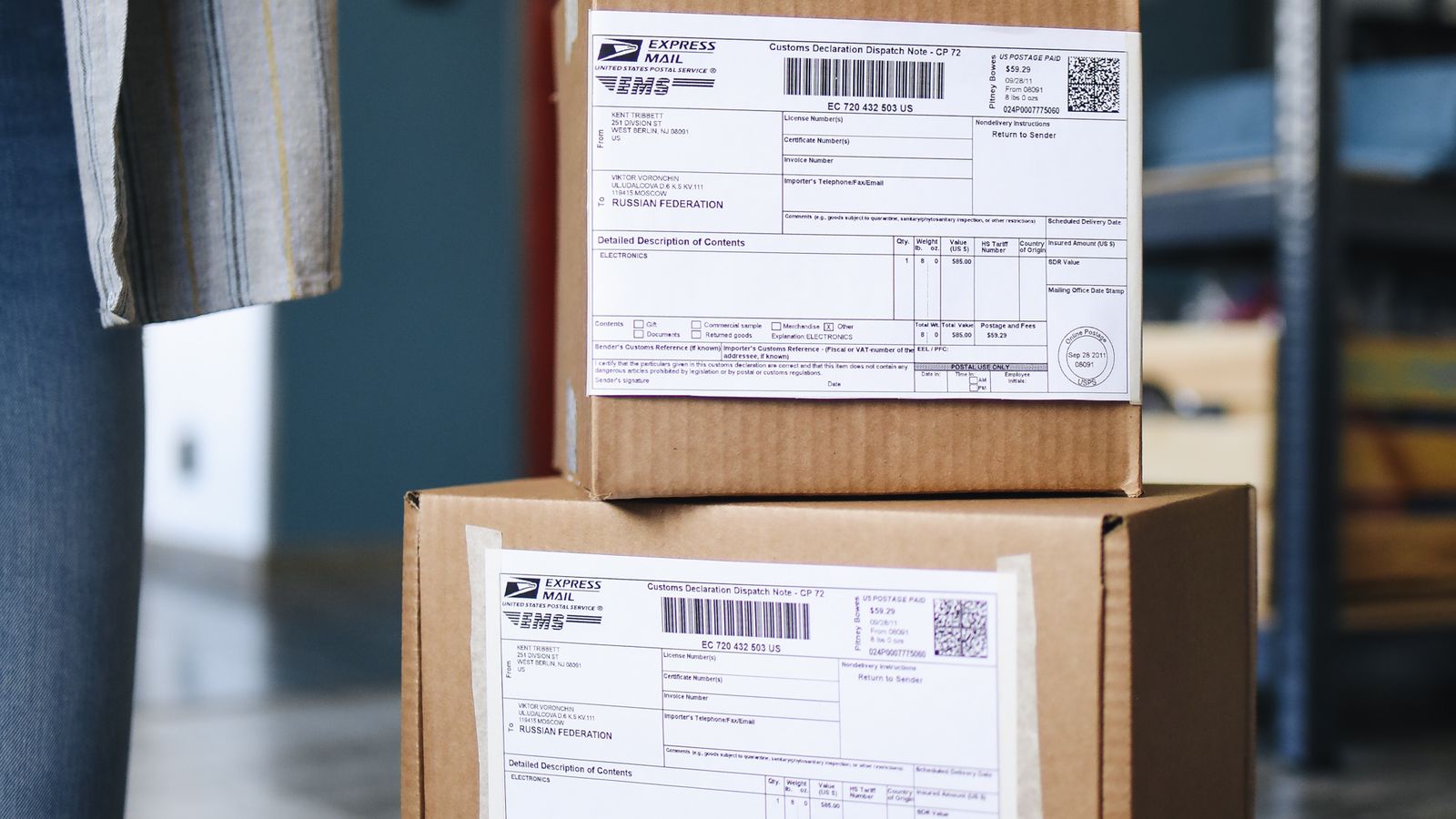
Since July 2026 every parcel up to 150 euros sold from outside the EU pays 3 euros per item, and since 1 November a 2 euro handling fee is added. What the EU customs reform does to a non-EU seller's margin, and why local stock changes the math.
Since 1 July 2026, the EU no longer exempts parcels of up to 150 euros from customs duty. Every distance sale from outside the EU in that range pays a flat 3 euros per item, meaning per tariff classification. Since 1 November 2026, a 2 euro handling fee per item applies on top, at any value. Non-EU sellers shipping order by order carry the cost.
Updated on November 3, 2026.
Most coverage of the EU de minimis removal is written for logistics buyers or for consumers who shop on Asian marketplaces. This guide is for the seller on the other side: a non-EU business (in Brazil, Latin America, the US or Asia) selling to European consumers through its own store, an affiliate offer or cash on delivery (COD). The question here is not "what does a parcel cost now?" but "how much margin did I just lose, who pays, and how do I set up the operation so this does not break it".
Disclaimer: this article summarises public EU rules from official sources. It is not customs or tax advice. Your tariff classification, VAT scheme and import set-up should be validated with a customs broker and an accountant who specialises in EU VAT.
What is the EU de minimis removal?
The EU de minimis removal is the end of the customs duty relief for consignments worth up to 150 euros, replaced by a temporary flat duty of 3 euros per item. Until 30 June 2026, a low-value parcel from outside the EU paid VAT but no import duty. Since 1 July 2026, it pays 3 euros per item.
The legal basis is Council Regulation (EU) 2026/382 of 11 February 2026, which deleted Articles 23 and 24 of the Duty Relief Regulation. According to DG TAXUD's guidance and legal text, the flat duty applies from 1 July 2026 until 1 July 2028. After that, the plan is to charge the normal duty rate of each product, whatever the parcel value.
The Commission gives the rationale on its EU customs reform page: 5.9 billion low-value e-commerce items entered the EU in 2025, most of them duty-free. The political target is the large Asian platforms. Every other non-EU seller is caught by the same rule.
One point that trips people up: VAT has been due from the first euro since 1 July 2021, when the 22 euro VAT exemption ended, as the Commission's VAT One Stop Shop portal records. The 3 euro duty does not replace VAT. It comes on top of it. Our guide to COD dropshipping in Europe covers the VAT side for parcels shipped from outside the EU.
EU customs reform 2026 timeline: from 2021 to the 2028 Data Hub
The table separates what is already in force from what the law schedules for the coming years.
| Date | What changes | Status on 3 Nov 2026 |
|---|---|---|
| 1 Jul 2021 | 22 euro VAT exemption ends; destination VAT from the first euro; IOSS launched | In force |
| 11 Feb 2026 | Council adopts Regulation (EU) 2026/382, ending the 150 euro customs relief | Published |
| 1 Jul 2026 | Flat 3 euro duty per item on distance sales up to 150 euros; product identifiers voluntary | In force |
| 19 Sep 2026 | New Union Customs Code, Regulation (EU) 2026/2108, published in the Official Journal (in force 20 Sep) | In force, phased application |
| 21 Sep 2026 | Commission adopts Delegated Regulation (EU) 2026/2152, C(2026) 6694, setting the handling fee at 2 euros per item | Adopted |
| 22 Oct 2026 | Delegated Regulation (EU) 2026/2152 published in the Official Journal; in force the same day | Published |
| 1 Nov 2026 | 2 euro handling fee per item on every distance sale of imported goods, whatever the value; product identifiers mandatory; TARIC code Y126 on declarations | In force |
| 1 Dec 2027 | Commission assesses whether the Customs Data Hub will be ready on time | Set in law |
| 1 Jul 2028 | Flat 3 euros ends; normal duty per product; Data Hub opens to e-commerce; lower handling fee for distance-sales customs warehouses | Scheduled; may be postponed if the Data Hub is late |
The 1 November date is in Article 2 of Delegated Regulation (EU) 2026/2152. The other dates are in DG TAXUD's guidance on the temporary 3 euro duty and the Union handling fee (version of 5 October 2026). The regulation itself lets the Commission propose extending the transitional duty if the Data Hub is not operational by July 2028. So 2028 is a legal date, not a promise.
How the 3 euro duty is counted: per tariff classification, not per unit
The 3 euro duty is charged per item, and under the new Union Customs Code an "item" is the goods in a consignment that share the same tariff classification, the same description and, where the declaration requires it, the same origin. Five identical T-shirts are one item. A T-shirt and a watch are two.
The European Commission uses exactly that example: five T-shirts pay 3 euros; T-shirts plus a watch pay 6 euros. Here is what it means for typical orders (hypothetical examples with simplified classifications):
| Hypothetical order | Value | Distinct classifications | Flat duty (3 euros per item) | With handling fee (plus 2 euros per item) |
|---|---|---|---|---|
| 1 face serum | 39 euros | 1 | 3 euros | 5 euros |
| 3 units of the same serum ("buy 3" offer) | 79 euros | 1 | 3 euros | 5 euros |
| Serum + stone face roller bundle | 59 euros | 2 | 6 euros | 10 euros |
| Serum + roller + toiletry bag | 69 euros | 3 | 9 euros | 15 euros |
| Earbuds + case + cable | 49 euros | 3 | 9 euros | 15 euros |
Three details from the official guidance that few people mention:
- The declaration type changes the count. The simplified H7 declaration uses the 6-digit HS code. The full H1 declaration uses the 10-digit TARIC code and the origin. In DG TAXUD's own example, three women's suits of different fabrics are one item in H7 and three items in H1. Because of IT limitations, the charge is applied per declaration line.
- You cannot group everything under the highest rate. The simplification that let different classifications be declared on one line is not allowed where the 3 euro duty applies.
- Separate parcels are separate consignments. The same order shipped in two boxes counts as two consignments, each with its own items. Splitting an order to stay under 150 euros saves nothing. It multiplies the charge.
The 150 euro threshold is measured on intrinsic value: the price of the goods, excluding transport and insurance when they are shown separately on the invoice. Above 150 euros there is no flat duty. The normal tariff rate applies, with a full declaration.
EU customs reform handling fee: what is already in force?
The 2 euro per item handling fee has applied since 1 November 2026 to every distance sale of imported goods, whatever the value. The Union handling fee was created by Article 20 of the new Union Customs Code, Regulation (EU) 2026/2108, to cover the cost to customs of processing the flood of small parcels.
The amount is set in Commission Delegated Regulation (EU) 2026/2152 of 21 September 2026 (document C(2026) 6694), published in the Official Journal of the EU, L series, on 22 October 2026. Article 1 says the Union handling fee of Article 20(2) of the new Code "shall be EUR 2 per item". Article 2 says the act enters into force on the day of publication and "shall apply from 1 November 2026". With publication, the date stopped being a forecast: the fee now applies. The version sent to the Council in September, document ST 13480/26, carries the explanatory memorandum, which is useful to understand how the amount was set.
How it differs from the 3 euro duty, according to the same guidance:
- It also applies above 150 euros. The handling fee covers every distance sale of imported goods, whatever the value. The act's explanatory memorandum and the Commission's addendum to the VAT e-commerce explanatory notes (revised version of 6 October 2026) both say so explicitly.
- It is not temporary. The 3 euros end in 2028; the handling fee stays, with its amount reviewed every two years.
- It is non-refundable. A returned or refused parcel does not get the fee back.
- It applies even with a tariff preference. A product that escapes the 3 euros through a trade agreement still pays the 2 euros if it is a distance sale.
- It needs a new code. Since 1 November, the declaration of every distance sale must carry TARIC document code Y126, which triggers the charge.
- It is part of the VAT base. The Commission treats the fee as an incidental expense of the supply, so VAT is due on it. Under IOSS, no VAT is due on the 2 euros at importation, because the import itself is VAT-exempt; but if you charge the fee to the customer at checkout, it forms part of the taxable amount declared in your IOSS return. Without IOSS, the 2 euros go into the base of the import VAT the carrier collects.
In practice, since 1 November the minimum customs cost of a one-item order up to 150 euros shipped from outside the EU is 5 euros, before VAT. Above 150 euros, it is the product's normal duty plus 2 euros per item.
Who declares and who pays the EU 150 euro customs duty?
Whoever declares the goods to customs pays the duty, and the law sets an order for that. DG TAXUD's guidance describes a cascade that applies until 30 June 2028:
- Is there an IOSS registration? Then the IOSS holder (the seller or the platform), or its indirect representative, declares and pays. This is DDP: the customer paid everything at checkout and receives the parcel with nothing to pay.
- No IOSS, but the special arrangements are used? The user of the special arrangements (in practice the postal operator or carrier) declares, and VAT is collected from the buyer on delivery.
- Neither? The importer's indirect representative declares, and the importer is the consumer. In practice the carrier takes that role, pays and collects from the recipient at the door, usually with its own service fee. This is DAP.
- Only as a last resort does the consumer declare alone, and only in the few Member States that offer a free online declaration.
The Commission sums it up: the seller or importer declares and pays. The difference between DDP and DAP is who takes money out of their pocket first. Under DDP, you pay and build it into the price. Under DAP, your customer pays at the door, and you find out the cost in the form of a refused parcel.
One more useful detail: with IOSS, the declaration can be lodged in any Member State. Without IOSS, it must be lodged in the Member State of destination.
Scope: IOSS only, or every distance sale?
Readings differ here. The text of Regulation 2026/382 names two situations: imports with VAT collected through IOSS, and "postal consignments", a concept redefined to cover the other distance sales up to 150 euros, except goods that benefit from a tariff preference. The official guidance is explicit: the intention is to apply the 3 euros to every distance sale up to 150 euros, whatever the VAT scheme (IOSS, special arrangements or standard VAT). Some service providers still write that non-IOSS parcels pay the full tariff instead. For margin planning, use the official reading. The same regulation requires the Commission to check every month, from 1 October 2026, whether trade is being diverted to avoid the duty, and to propose an extension if so.
Outside the scope of both the 3 euros and the handling fee: B2B sales and imports that are not distance sales, such as a bulk import of stock, covered below.
How much margin does it take? Two examples
On a 39 euro order with one item, the fixed customs cost becomes 5 euros, about 15% of revenue net of VAT. The numbers below are hypothetical round figures for a product shipped order by order from outside the EU under IOSS, delivered to a country with 21% VAT.
Example 1: a 39 euro order, one product.
- Price to the customer, VAT included: 39.00 euros.
- VAT (21%) collected through IOSS: 6.77 euros. Net revenue: 32.23 euros.
- Flat duty: 3.00 euros. Handling fee (since 1 November): 2.00 euros.
- Total customs cost: 5.00 euros, or 15.5% of net revenue.
If your contribution margin before the reform was 8 euros per order, it is now 3 euros. Your maximum CPA dropped with it.
Example 2: a 59 euro bundle with two classifications.
- Price to the customer, VAT included: 59.00 euros. Net revenue (21%): 48.76 euros.
- Two classifications: 6.00 euros of flat duty plus 4.00 euros of handling fee.
- Total customs cost: 10.00 euros, or 20.5% of net revenue.
The bundle, the classic way to raise average order value, is now proportionally more expensive than the single product. It is counterintuitive, which is why so many sellers will get their pricing wrong.
Now add cash on delivery. Under IOSS, duty and handling fee are paid at import, before delivery. If the customer refuses the parcel, the 5 or 10 euros are gone. With a hypothetical 25% refusal rate, the customs cost per delivered order in example 1 rises from 5.00 to 6.67 euros. Our guide to the COD refusal rate shows how that number builds up, and how to calculate COD margin walks through the full unit economics.
What to do now: classification, bundles, pricing and checkout
Four changes fit into a week and prevent most of the damage.
1. Classify every product correctly
The charge depends on the code, and the code is the declarant's responsibility. Get the HS code of every SKU (the first six digits are the same worldwide, whether your origin system calls it NCM in Brazil, HTS in the US or the national tariff in Asia) and ask your broker for the matching 10-digit TARIC code. Vague descriptions like "accessories" or "cosmetics" invite checks. Since 1 November 2026, product identifiers have been mandatory on the declaration, according to DG TAXUD. Misclassifying to pay less is an offence, not a strategy.
2. Redesign bundles
In an order-by-order model, every new classification in a bundle costs 5 euros. Prefer quantity bundles (three units of the same product) over mixed bundles (product plus a free gift from another category). A cheap gift with a different classification can cost more in fees than it is worth. If the gift drives conversion, compare the conversion gain with the 5 euros per order.
3. Reprice and reset your CPA
Redo the margin per SKU with the customs cost inside. On low-ticket products the flat fee hurts far more: 5 euros on a 19 euro order is a quarter of revenue. Below roughly 30 euros, selling order by order from outside the EU becomes hard to sustain.
4. Make checkout transparent
If you sell DDP, say "duties and taxes included, nothing to pay on delivery". If you sell DAP, state clearly that there may be a charge at the door. The worst combination is a customer who discovers an extra charge only when the courier rings the bell. With COD, that surprise turns into an RTO.
Why EU stock changes the math
With stock in a European warehouse, the goods cross the border once, in bulk, as a commercial import, and the sale to the consumer happens later, with the product already inside the EU. That sale is not a "distance sale of imported goods", so it pays neither the 3 euros nor the handling fee per order.
Step by step:
- The bulk import is commercial. You (or the importer acting for you) declare the batch on a full declaration and pay the normal TARIC duty on the customs value, plus import VAT. The rate depends on the product: some cosmetics and electronics carry low or zero duty; textiles are usually higher. The cost is per batch, not per order.
- The consumer sale is domestic or intra-EU. A customer in the same country as the warehouse buys in a domestic sale, with local VAT. A customer in another EU country buys in an intra-EU distance sale, with their country's VAT, declared through the OSS Union scheme. The Commission's One Stop Shop page explains who can use which scheme; a non-EU seller with stock in the EU normally needs a VAT registration in the warehouse country plus the OSS.
- Import VAT paid on the batch is usually recoverable in the national VAT return of the warehouse country, under that country's rules. Confirm with a local accountant.
Hypothetical comparison: 500 units of a serum at 6 euros cost, plus 1 euro of freight to the EU per unit. If the product's TARIC code carried a 4% duty (a hypothetical rate), the duty on the batch would be about 0.28 euros per unit, plus clearance costs spread across the batch. Shipped order by order, the same product would pay 5 euros per parcel. Run the numbers with your product's real code.
Three traps to avoid:
- The sale must happen after the goods are cleared into the EU. The official guidance has an anti-abuse clause: if customs concludes that a "bulk" shipment is really a set of already-sold orders, with an individual label per customer, it treats each one as a distance sale and charges the 3 euros and the handling fee per item.
- A customs warehouse is not a shortcut. Goods sold while stored in a customs warehouse, before release for free circulation, are also meant to pay the 3 euros and the handling fee, according to the same guidance. The dedicated distance-sales customs warehouse, with a lower handling fee, only exists from 1 July 2028.
- Trade agreements apply to the batch, not the parcel. A tariff preference can only be claimed outside IOSS, on a full declaration with proof of origin. For goods of Mercosur origin, for example, that makes more sense on the bulk import than on individual parcels. Our post on the EU–Mercosur agreement for e-commerce explains the rules of origin.
If you do not have your own product yet, the route described in selling in Europe without inventory goes through catalogue and affiliate offers for products that are already in the warehouse.
What it means for COD shipped from China, Brazil or anywhere outside the EU
A parcel stuck in customs is a refused parcel. With COD, the customer decides on the ad and pays days later at the door. Anything that stretches that gap or adds a charge raises refusals.
The reform hurts the direct-shipping model in three ways:
- More time in customs. Mandatory product identifiers, classification checks and the anti-abuse clause mean more parcels held for verification. Every extra day is a customer cooling off.
- Charges at the door. Without IOSS, the carrier pays duty, handling fee and VAT and collects them from the customer, together with the COD amount. The customer expected to pay 39 euros and is asked for more. Anyone who has run COD knows what happens next.
- Cost lost on refusal. Under IOSS, duty and fee are already paid. The refused parcel comes back (or not: from far away, abandoning it is often cheaper than returning it) and the customs money does not.
National charges add up too. Romania, one of Europe's strongest COD markets, introduced through Law 239/2025 (Art. XXII) a logistics tax of 25 lei per parcel up to 150 euros sent from outside the EU in distance sales, applicable since 1 January 2026. The law says parcels not delivered to the final recipient are not taxed, but a parcel returned after delivery does not get the tax back. It stacks on top of the EU's 3 euros and handling fee.
Our guides on COD dropshipping in Europe and how dropshipping with COD works show why direct shipping was already fragile before the reform. Now it is also more expensive.
What changes if you sell with cash on delivery and local stock
If you already run on stock in Europe, the reform barely changes the day-to-day order: the product leaves a European warehouse, the courier collects only the order amount, and a refused parcel goes back on the shelf. The flat per-order charge does not exist in that model.
That is how N1 works. Stock sits in our warehouses in Europe and the Gulf, and cash on delivery runs in 16 markets: 12 in Europe (Poland, Spain, Portugal, Romania, Hungary, Bulgaria, Croatia, Greece, Germany, Italy, Slovakia and the Czech Republic) and 4 in the Gulf (Saudi Arabia, the United Arab Emirates, Kuwait and Qatar). The cash collected at the door is paid out on D+2. The bulk import, VAT and classification remain the seller's responsibility, with their accountant; warehousing, delivery and collection are ours. See our warehouse network and our cash on delivery solution.
If you sell cosmetics, supplements or electronics, EU stock also has to comply with product safety rules. Our post on the GPSR and the EU responsible person covers what listings and labels must show.
Frequently asked questions
Who pays the EU 3 euro customs duty?
The declarant. With IOSS, that is the seller or the platform, which builds the amount into the price. Without IOSS, it is usually the carrier, which collects from the customer on delivery. The consumer declares alone only in residual cases.
Is the EU 3 euro duty per parcel or per item?
Per item, meaning each distinct tariff classification in the consignment. Five units of the same product pay 3 euros. Two products with different classifications pay 6 euros, even in the same parcel.
When does the EU customs reform handling fee start?
It already has: the fee applies from 1 November 2026. The 2 euro per item amount is set in Delegated Regulation (EU) 2026/2152, adopted by the Commission on 21 September and published in the Official Journal on 22 October 2026. It covers every distance sale of imported goods, whatever the parcel value.
Does the 3 euro duty apply above 150 euros?
No. Above 150 euros the normal duty rate of the product applies, with a full declaration. The 2 euro handling fee, however, has applied at any value since 1 November 2026, as long as it is a distance sale of imported goods.
Does the EU de minimis removal apply to B2B shipments?
No. Both the 3 euro duty and the handling fee apply to distance sales to consumers. A B2B import, including a bulk shipment of stock to your own EU warehouse, pays the normal tariff rate and import VAT instead.
Does stock in an EU warehouse pay the 3 euro duty?
The bulk import of stock is not a distance sale: it pays the product's normal duty and import VAT, once. Later sales from stock already cleared into the EU pay neither the 3 euros nor the handling fee per order. Goods sold before clearance remain in scope.
Sources
- Council Regulation (EU) 2026/382, EUR-Lex, accessed 2026-10-08.
- Regulation (EU) 2026/2108, new Union Customs Code, EUR-Lex, accessed 2026-10-08.
- The temporary EUR 3 customs duty and the Union handling fee, version of 5 Oct 2026, DG TAXUD, European Commission, accessed 2026-10-08.
- Commission Delegated Regulation (EU) 2026/2152, 2 euro Union handling fee, EUR-Lex, OJ L of 22 Oct 2026, accessed 2026-11-03.
- Delegated Regulation C(2026) 6694, Council document ST 13480/26, Council of the EU, accessed 2026-10-08.
- Addendum to the VAT e-commerce explanatory notes: VAT treatment of the 3 euro duty and the 2 euro handling fee, revised version of 6 Oct 2026, European Commission, accessed 2026-11-03.
- EU Customs Reform, DG TAXUD, European Commission, accessed 2026-10-08.
- Guidance and legal text: temporary flat fee on low-value imports until 1 July 2028, DG TAXUD, accessed 2026-10-08.
- Ensuring fairness and safety: 3 euro customs duty for low-value parcels, European Commission, accessed 2026-10-08.
- VAT One Stop Shop and The One Stop Shop, European Commission, accessed 2026-10-08.
- Law no. 239/2025, Art. XXII, Romanian Parliament, published by ANAF, accessed 2026-10-08.
Want to move your operation off order-by-order shipping and sell from local stock with cash on delivery? Talk to a specialist and request a proposal.